
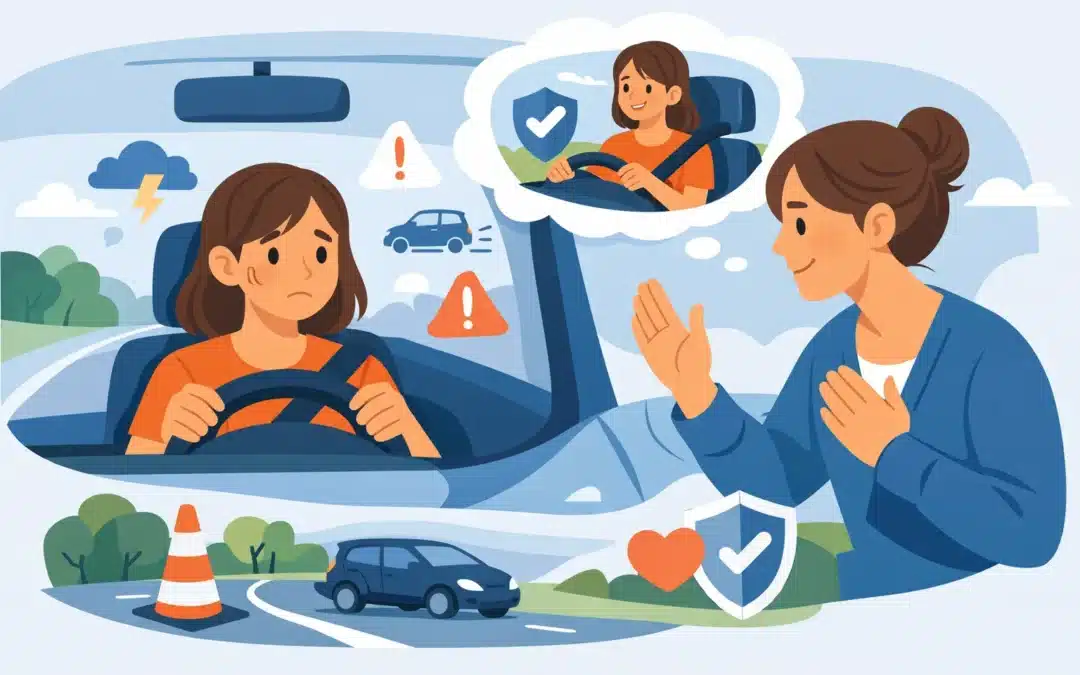
A teen may know the rules of the road and still freeze when it is time to merge, make a left turn, or pull into a busy parking lot. That reaction is common. Learning to manage teen driving anxiety is not about pushing a nervous new driver to “get over it.” It is about building skill, familiarity, and confidence one manageable drive at a time.
For parents, the hard part is often knowing when to encourage a teen and when to slow down. California driving requires real decision-making in traffic, not just passing a written test. The best approach combines calm support at home, regular practice, and professional instruction that gives teens a clear path forward.
Why Teen Driving Anxiety Happens
Driving puts a lot of new responsibilities in front of a teen at once. They must watch traffic signals, judge speed and distance, check mirrors, steer smoothly, follow signs, anticipate other drivers, and listen to directions. A learner may understand each task separately but struggle to manage them all in real time.
Anxiety can also grow after one uncomfortable experience. A stalled start at an intersection, a horn from another driver, a close call in a parking lot, or a correction from a parent can feel much bigger to a first-time driver than it does to an experienced one. Teens may begin avoiding the situation that made them uncomfortable, which can delay the practice they need.
Some nervousness is healthy. It can make a new driver more alert and less likely to take unnecessary risks. The concern is anxiety that causes a teen to avoid driving completely, panic behind the wheel, lose focus, or become discouraged after every mistake.
How to Manage Teen Driving Anxiety Step by Step
The goal is not to make every drive feel easy right away. The goal is to make each practice session predictable enough that the teen can improve without becoming overwhelmed.
Start with the right difficulty level
Do not begin every lesson in the busiest part of town. Start in a quiet neighborhood, an empty parking lot, or a familiar route with wide streets and light traffic. Let the teen practice smooth braking, turns, lane position, backing up, and stop-sign procedures before adding harder conditions.
As skills improve, increase the challenge gradually. A teen who is comfortable driving on neighborhood streets may be ready for busier intersections next. Later, they can practice lane changes, larger roads, freeway entrances, and driving in moderate traffic. Moving too fast can raise anxiety. Moving too slowly can also create frustration, so progress should match the student’s actual skill level.
Keep practice sessions short and specific
A long drive can turn into sensory overload for a nervous beginner. Shorter sessions often work better, especially at the start. Thirty to forty-five minutes with one or two clear goals can be more productive than an unfocused afternoon of driving.
Before leaving, agree on the purpose of the lesson. It might be practicing right turns, holding a steady speed, parking, or approaching controlled intersections. Afterward, identify one thing that improved and one skill to work on next time. This helps teens see progress instead of remembering only what felt difficult.
Give directions early and calmly
Late directions create stress. Saying “Turn here!” when the turn is already approaching can cause a teen to brake suddenly or make an unsafe decision. Give directions well in advance, using simple language and a calm voice.
It also helps to avoid constant commentary. Parents naturally want to correct every small issue, but too many instructions can make a teen feel watched and incapable. Save immediate corrections for safety concerns. For smaller mistakes, wait until the car is parked, then discuss what happened and how to handle it differently next time.
Replace criticism with useful feedback
Comments such as “You are driving too close” or “You never check your mirrors” can make an anxious teen more defensive. Specific coaching gives them something they can do on the next attempt.
For example, say, “Leave more space behind the car ahead so you have time to brake smoothly,” or “Check your rearview mirror before you slow down.” Focus on the driving behavior, not the teen’s personality. A mistake does not mean they are a bad driver. It means they are still learning.
Practice calm routines before the car moves
A simple pre-drive routine can reduce uncertainty. Have the teen adjust the seat, mirrors, steering wheel, and climate controls before shifting into drive. Ask them to silence or store their phone, buckle up, review the route, and take a slow breath before pulling away.
If anxiety rises during a lesson, do not argue through it. Direct the teen to pull over safely when possible. Give them a moment to reset, then decide whether continuing is appropriate. Sometimes a short break is enough. Other times, ending the lesson and trying again another day is the safer choice.
When Professional Lessons Make a Difference
Many teens learn well with a parent, but family practice is not always the best setting for every skill. Parents may be nervous themselves, short on time, or unsure how California road-test standards are evaluated. Teens may also react more calmly to guidance from a trained instructor than from a parent.
A professional instructor provides a structured lesson plan and can introduce skills in the right order. The instructor can work on areas that commonly cause anxiety, including unprotected left turns, lane changes, parking, freeway driving, and road-test maneuvers. Training vehicles with instructor controls also give new drivers an added measure of safety while they learn.
For families in North Orange County and nearby communities, Teen Driving Academy offers DMV-licensed, pre-screened instructors and behind-the-wheel lessons designed specifically for permit holders. A structured package can help teens practice consistently rather than waiting weeks between drives. That consistency matters because confidence fades when practice is too infrequent.
Professional lessons do not replace parent practice. They work best together. The instructor can teach a skill correctly, while parents provide low-pressure opportunities for the teen to repeat it on familiar roads.
Help Teens Prepare for the Road Test Without Adding Pressure
The DMV road test can become a major source of anxiety because it feels like a final judgment. Remind your teen that the test measures safe driving habits on one day. It does not determine whether they will become a capable driver over time.
Practice the skills likely to be evaluated: safe starts and stops, mirror checks, intersections, lane changes, turns, backing, speed control, and awareness of pedestrians and traffic conditions. Rather than repeatedly calling these “test skills,” frame them as everyday safe-driving habits. This keeps the focus on real readiness instead of memorizing a performance.
A practice road test can be useful when a teen is close to scheduling the DMV exam. It shows where they need additional work and makes the process feel more familiar. Still, avoid scheduling a test simply because a deadline is approaching. If a teen is not yet ready to drive safely and confidently, a little more instruction is a better investment than a rushed attempt.
Signs Anxiety Needs More Support
Driving nerves usually improve with patient practice. However, take a closer look if your teen has panic symptoms, refuses to drive after several calm sessions, becomes unusually distressed before every lesson, or cannot focus safely behind the wheel. There may be a bigger issue than normal beginner discomfort.
Start by reducing the pressure and discussing what specifically feels scary. Is it traffic, making mistakes, disappointing a parent, or an earlier incident? A professional instructor may help by creating emotional distance from family expectations. If anxiety is affecting other areas of life as well, consider speaking with a qualified health professional.
The safest drivers are not the ones who never feel nervous. They are the ones who learn how to stay calm, make careful choices, and keep practicing until their skills match the responsibility of being on the road.