
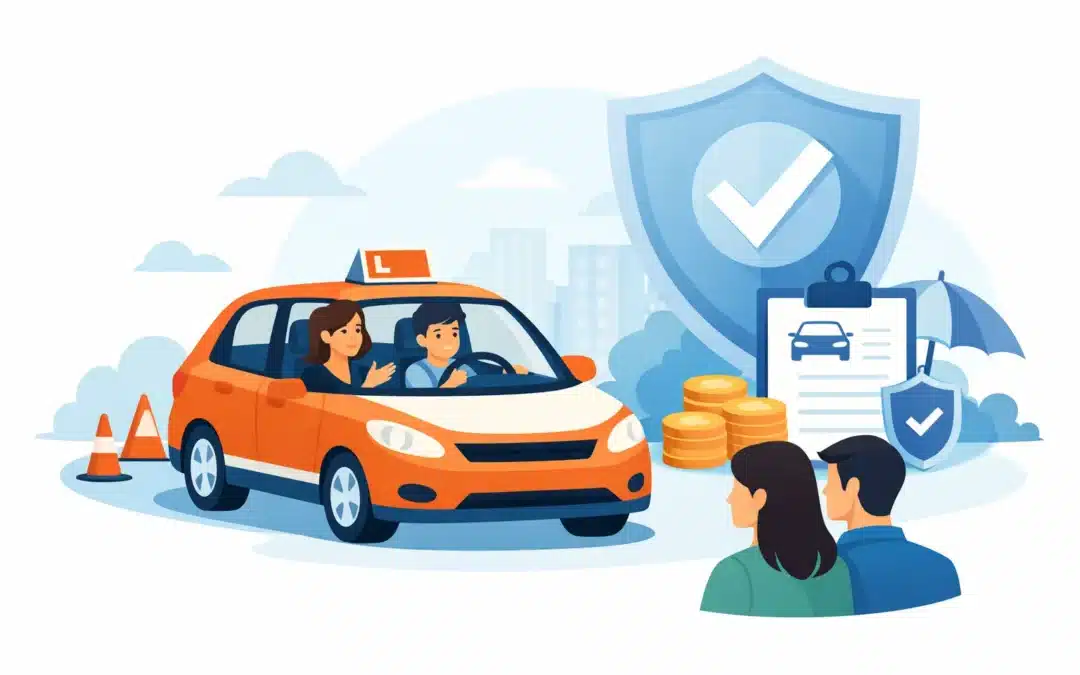
A teen gets behind the wheel of a vehicle they do not own, with an instructor they have just met. For parents, the question is immediate: are driving lessons insured? In most cases, a reputable licensed driving school carries insurance for its instruction vehicles and business operations. But “insured” does not mean every possible cost or situation is automatically covered in the same way.
Before booking lessons, parents should understand what a driving school’s policy generally covers, where personal auto insurance may still matter, and what questions reveal whether a school takes safety seriously.
Are Driving Lessons Insured Through the School?
When a student takes behind-the-wheel lessons in a school-owned vehicle, the school should have commercial auto insurance appropriate for driver training. That policy is generally designed to protect the school, its instructor, the student driver, passengers, and others on the road if an accident occurs during an authorized lesson.
California driving schools must meet state requirements to operate, and a DMV-licensed school is expected to maintain the necessary credentials for its vehicles and instructors. Still, licensing is not a reason to skip questions. Families should feel comfortable asking a school to explain its insurance practices in plain language.
A properly operated lesson also has safeguards beyond insurance. Training vehicles typically have an instructor brake, and the instructor is there to intervene, guide decisions, and keep the lesson within the student’s current ability level. Insurance helps manage the financial consequences of an accident. Good instruction is what helps reduce the chance of one happening.
What School Insurance Usually Covers
The exact terms depend on the school’s insurer and policy limits, but commercial coverage for a driving school often addresses several major risks.
First, liability coverage may respond if the training vehicle causes injury to another person or damage to another vehicle or property. This is the coverage most people think of after a collision.
Second, the school may carry coverage for damage to its own training vehicle, such as collision or comprehensive coverage. If a student makes a mistake that damages the school car during a lesson, the school’s commercial policy is usually the starting point for handling that damage.
Third, the policy may include protection related to uninsured or underinsured drivers. If another driver causes a crash but does not have sufficient insurance, this type of coverage can be especially relevant.
That said, parents should not assume that every expense is covered without limits. Policies can include deductibles, exclusions, claim procedures, and coverage limits. Medical bills, personal belongings, missed work, and other losses may be handled differently depending on the details of the accident and the applicable policies.
Does Your Personal Auto Insurance Cover a Teen During Lessons?
Usually, a teen’s driving lesson in a school vehicle is handled under the driving school’s insurance rather than a parent’s personal auto policy. The student is operating the school’s vehicle as part of a supervised, paid lesson, so the school’s commercial coverage is generally the relevant policy.
However, personal auto insurance can still be part of the larger picture. If your teen is practicing in your family car outside of a lesson, your own policy is the one that matters. Parents should contact their insurance provider when a teen receives a permit and ask how the company handles permitted drivers, licensed teen drivers, household members, and occasional practice driving.
This matters because a permit does not make a teen invisible to your insurer. Some carriers want a teen listed at the permit stage, while others have different procedures until the teen is licensed. The answer can affect coverage, premiums, and claims, so it is better to ask before an accident than after one.
If a lesson is being given in a parent-owned vehicle instead of a school vehicle, the situation changes again. The family’s auto insurance may be primary, and the driving school may have requirements or restrictions about using a private vehicle. Do not assume a school’s normal training-vehicle policy applies to your car.
The Questions Parents Should Ask Before Enrolling
You do not need to become an insurance expert to choose a responsible driving school. A brief conversation can provide useful clarity. Ask whether lessons are conducted in school-owned, commercially insured vehicles and whether the cars have an instructor brake.
Also ask what happens if there is a collision during a lesson. A professional school should be able to describe its safety process, how it communicates with parents, and how claims are handled if necessary. The answer should be direct, not vague or defensive.
It is also reasonable to confirm that instructors are properly licensed and screened. Insurance is one layer of protection, but the instructor is the person making real-time decisions in traffic. An experienced instructor knows when to challenge a student and when to slow down, pull over, or change the route.
For teens who are anxious, families can ask how the school matches lesson pace to student readiness. A new driver may begin in lower-speed residential areas or parking lots before moving into busy intersections, freeway entrances, or nighttime driving. A school that treats every student the same may be convenient on paper, but it is not always the best fit for a first-time driver.
What Happens If There Is an Accident During a Lesson?
If an accident occurs, the instructor’s first priority should be safety. That means getting the vehicle to a safe location when possible, checking for injuries, contacting emergency services when needed, and following the school’s incident procedures.
The school should document the event and notify the appropriate parties. Depending on the severity of the collision, that may include law enforcement, the school’s insurance carrier, and the student’s parent or guardian. Families should receive clear information about what happened, what steps have been taken, and whether any follow-up is required.
The student should not be blamed simply because they were behind the wheel. Driving instruction involves supervised learning, and accidents can have many contributing factors: another driver’s actions, road conditions, visibility, mechanical issues, or a student error. Liability is determined by the facts of the situation and applicable insurance rules, not by assumptions made at the scene.
Parents should keep copies of any information they receive, including incident reports, claim details, photos, medical documentation if applicable, and contact information for the insurer. If you have questions about a claim or a potential effect on your own policy, speak with your insurance agent or a qualified legal professional based on your circumstances.
Insurance Is Not a Substitute for a Safe Training Program
The strongest reason to choose a professional driving school is not simply that it has insurance. It is that the school has a structured way to teach a teen how to manage real traffic situations before driving independently.
A quality program builds skills in stages: vehicle controls, turns, lane changes, scanning, right-of-way decisions, parking, defensive driving, and road-test preparation. It also gives teens a chance to receive calm correction from someone other than a parent. That can make practice more productive and reduce stress at home.
For families in North Orange County and nearby communities, convenience can also support safer learning. Lessons that fit around school, work, and family schedules are easier to complete consistently. Teen Driving Academy provides DMV-licensed instruction and structured behind-the-wheel training designed specifically for teen permit holders, including support for students preparing for their DMV road test.
A Quick Parent Checklist Before the First Lesson
Before your teen’s first drive, confirm that the school uses insured training vehicles, employs properly licensed instructors, and explains its accident procedures. Make sure your teen brings their valid learner’s permit and any items the school requires.
It also helps to set expectations at home. Tell your teen that lessons are a place to make safe mistakes, ask questions, and take feedback seriously. They do not need to impress the instructor on day one. They need to listen, stay focused, and build good habits one drive at a time.
A school’s insurance should give families peace of mind, but the best protection starts before the car leaves the curb: a qualified instructor, a maintained training vehicle, a properly permitted student, and enough practice for confidence to become judgment.