
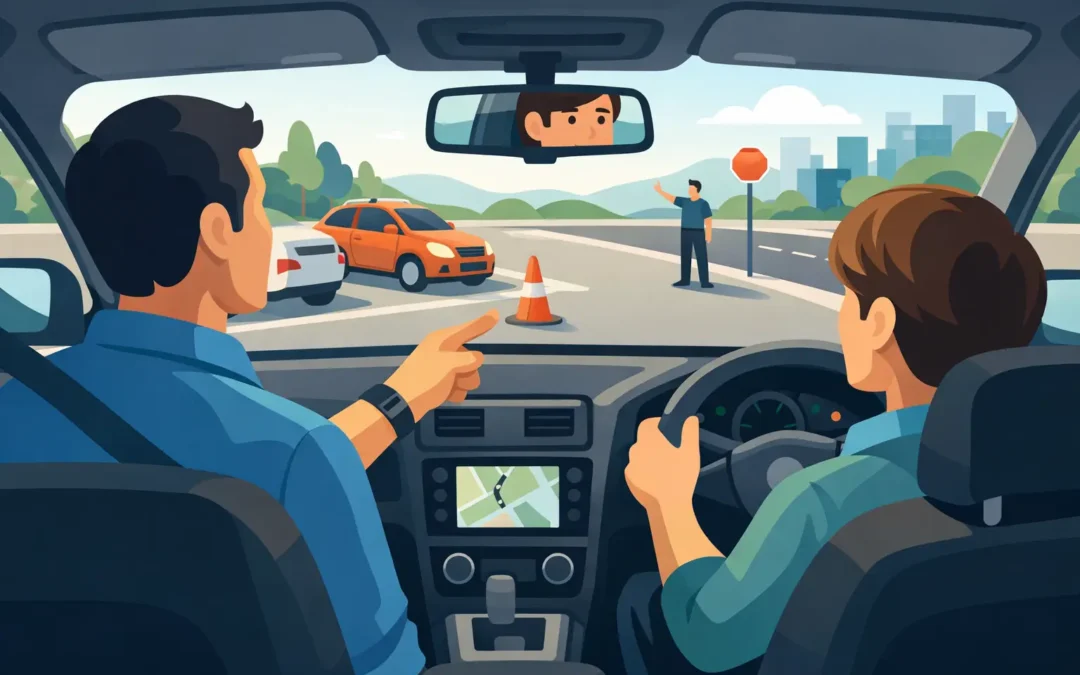
Getting a permit is exciting. Getting real time behind the wheel is where driving starts to feel serious. If you are asking how does behind the wheel training work, the short answer is this: a licensed instructor takes a permit holder into a training vehicle, teaches core driving skills step by step, and documents progress so the student is ready for safe independent driving and the California road test.
For teens and parents, the bigger question is usually what actually happens during lessons, how many are required, and how to choose the right training format. That is where the details matter.
How does behind the wheel training work in California?
In California, behind-the-wheel training is the in-car part of driver education. It is separate from the classroom or online course. Driver education teaches rules of the road, signs, laws, and safety concepts. Behind-the-wheel training puts those lessons into practice with a DMV-licensed instructor in the passenger seat.
For teens under 18, California requires six hours of professional behind-the-wheel instruction. That usually means three lessons of two hours each with a licensed driving school. Students also need supervised practice with a parent or another qualified adult outside of professional lessons. The state requirement is much larger than six total hours of driving. The six hours with an instructor are the formal training piece, but teens also need substantial practice time in everyday driving situations.
That distinction matters. Professional lessons build the foundation, but confidence usually comes from repetition over time.
What happens during a behind-the-wheel lesson?
A good lesson is structured, not random. The instructor is not just sitting there while the student drives around. Each session should have clear goals based on the student’s experience level.
The first lesson often starts with the basics. That includes adjusting mirrors and seat position, learning the vehicle controls, checking blind spots, smooth braking, steering control, and safe turns. For many teens, the first challenge is not traffic. It is staying calm, scanning properly, and understanding how much input the car actually needs.
As lessons progress, the instructor usually introduces more complex situations. That can include lane changes, unprotected left turns, residential streets, major roads, parking, backing up, intersections, speed control, and defensive driving habits. Later sessions often focus more on decision-making in live traffic and common road test maneuvers.
A quality program builds skills in stages. Students who are pushed too fast may feel overwhelmed. Students who stay too long on easy tasks may not be ready for real-world conditions. The best training finds the right pace for the individual student.
The instructor’s role during training
Behind-the-wheel instruction is about more than giving directions. A trained instructor watches for habits the student may not notice, corrects mistakes early, and helps build safe routines before bad patterns set in.
That includes coaching on observation, timing, space management, and hazard awareness. For example, a teen may know they need to check mirrors, but still miss when to check them or how often. Another student may understand right-of-way rules in theory but hesitate too long at intersections. These are common issues, and they are exactly why professional in-car training matters.
Most training vehicles also include dual controls for added safety. That gives families peace of mind, especially during early lessons.
How many lessons does a teen usually need?
California requires three two-hour lessons for teens under 18, but the practical answer depends on the student. Some teens meet the legal requirement and still need more support before they are truly road-test ready. Others progress quickly because they practice consistently between lessons.
The required six hours with an instructor should be treated as the minimum, not always the finish line. A student who practices regularly with a parent, drives in different conditions, and reviews instructor feedback often gets much more value from each lesson. On the other hand, long gaps between lessons can slow progress.
This is why many families choose bundled packages instead of booking one lesson at a time. It makes scheduling easier and creates a more consistent path from permit to license.
What parents should expect from the process
Parents are a major part of driver training, even when a professional school is involved. The instructor handles formal skill-building, but parents usually oversee most of the practice hours.
That means parents should expect feedback after lessons, along with areas to practice before the next session. One lesson might reveal a need for more work on turns and stopping distance. Another might show that the student is ready for busier streets but still needs help with parking. The more clearly those next steps are explained, the easier it is to make home practice productive.
For working parents, convenience matters too. Pickup and drop-off options, easy scheduling, and road test support can remove a lot of stress from the process. If a school also offers DMV transportation and use of the training vehicle for the test, that can simplify one of the most nerve-racking parts of the licensing journey.
What skills are covered in behind-the-wheel training?
Most programs cover the same core categories, but the order and pace can vary by student. Early instruction usually focuses on basic control of the vehicle and safe driving habits. From there, students move into more advanced traffic situations and test preparation.
Common skills include starting and stopping smoothly, turning, lane positioning, scanning intersections, checking mirrors, changing lanes, backing up, parking, understanding speed management, and responding to traffic signs and signals. Instructors also teach defensive habits such as identifying hazards early, maintaining safe following distance, and anticipating what other drivers may do.
Some students need extra work in one area more than another. Parking is a common example. So is left-turn judgment in heavier traffic. That does not mean the student is behind. It usually means the training is doing its job by identifying where more repetition is needed.
How does behind the wheel training work for road test prep?
Road test prep is not just about memorizing the DMV route. It is about making safe habits consistent under pressure.
As the test gets closer, lessons often shift toward polishing the basics. The instructor may focus on complete stops, mirror checks, shoulder checks, speed control, lane changes, and overall confidence. These are small details, but they are the details that often affect test results.
A road test support service can also make a difference. Using a familiar training vehicle reduces one variable on test day. Having transportation to the DMV saves time and planning. For many families, that convenience is not just nice to have. It makes the process much easier to manage.
How to tell if a program is worth it
Not all driving schools offer the same level of structure, instructor quality, or convenience. If you are comparing options, look beyond the minimum promise of six hours.
A strong program should use DMV-licensed instructors, explain lesson packages clearly, and make it easy to understand what happens next. It should also be built around teen drivers, not treat them like adult refresher students. Teens need patient instruction, a clear progression of skills, and feedback that helps both student and parent know what to do between lessons.
Local experience matters too. An established school that has worked with thousands of students in the same area will usually understand the common road conditions, test expectations, and scheduling needs of local families. That can make the training feel more efficient and more relevant.
For families in North Orange County, working with a provider that specializes in teen training and DMV test support can remove a lot of uncertainty. Teen Driving Academy, for example, is built around that exact path from permit to license.
The biggest mistake families make
The most common mistake is treating behind-the-wheel training like a box to check. A teen finishes the required hours, and everyone assumes they are ready.
Sometimes they are. Sometimes they are not.
Readiness depends on how much real practice happened between lessons, how comfortable the student is in different traffic conditions, and whether safe habits have become automatic. Nervous teens often need more repetition. Overconfident teens often need more correction. Both are normal.
The goal is not simply to complete the legal requirement. The goal is to build a driver who can make safe decisions when an instructor is no longer in the passenger seat.
Behind-the-wheel training works best when it is structured, consistent, and supported by regular practice. When families choose a licensed school, stay engaged, and give the process enough time, lessons become more than a requirement. They become the safest and most practical way to help a teen move toward driving independently with confidence.