
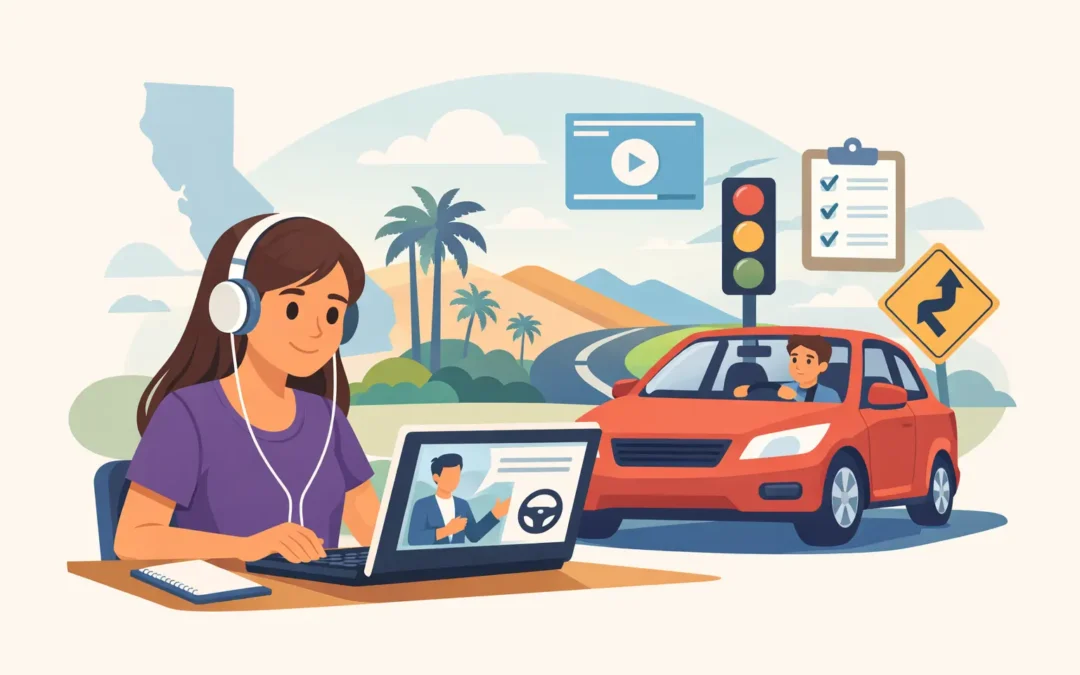
If your teen is eager to get a learner’s permit, timing matters. Between school, sports, work, and family schedules, teen driver education online gives California families a practical way to start the process without waiting for a classroom session to open up.
For most teens, the first step toward a permit is completing a state-approved driver education course. Doing that online makes the process simpler, but only if the course is legitimate, easy to follow, and designed for California requirements. Parents are not just looking for convenience. They also want clear instruction, real compliance, and a provider they can trust.
What teen driver education online actually covers
Teen driver education online is the classroom portion of driver training delivered through a web-based course. In California, this course teaches the rules of the road, traffic signs, right-of-way laws, safe driving habits, sharing the road, the risks of distracted driving, and the effects of alcohol or drugs on driving ability.
It is not the same thing as behind-the-wheel training. That distinction matters. Driver education helps a teen qualify to take the written permit test, while in-car lessons build the practical skills needed for real traffic situations and the driving test later on.
A solid online course should do more than check a box. It should present material in a way teens can actually absorb. Short, clear lessons usually work better than long, dense blocks of text. When the course is built for first-time drivers, students are more likely to stay focused and remember what they need when it is time for the DMV exam.
Why families choose teen driver education online
The biggest reason is flexibility. Teens can work on lessons after school, on weekends, or whenever they have time. Parents do not need to coordinate drop-offs for a classroom course, and that alone can remove a major barrier to getting started.
Online learning also lets students move at a comfortable pace. Some teens want to finish quickly. Others need more time to review rules, road signs, and traffic situations. A good course gives them that room without making the process confusing.
Cost and speed also matter. Many families want an option that is straightforward and affordable, especially when driver education is only one part of the full licensing process. Once you add permit preparation, behind-the-wheel lessons, and road test support, the total investment can add up. Starting with a simple online course often makes planning easier.
There is a trade-off, though. Not every teen learns best independently. Some students benefit from more structure and reminders. That is why course design matters so much. The easier the course is to navigate, the more likely a teen is to finish it without constant parent follow-up.
How to tell if an online course is the right fit
The best teen driver education online programs are clear about approval, completion steps, and what happens next. If those details are vague, families should be cautious.
First, make sure the course is approved for California teen drivers. A permit path only works if the education requirement is properly met. Second, look for a course that explains how the completion certificate is issued and how soon the student can move forward. Third, consider whether the provider also offers the next step, since many families prefer one school that can handle both education and training.
That last point is often overlooked. A teen may complete the online course quickly, but then the family still has to find a separate provider for behind-the-wheel lessons. In some cases, that is fine. In other cases, it creates delays, especially during busy seasons when lesson schedules fill up.
Teen driver education online and the California permit process
For California teens, online driver education is part of a larger sequence. The order matters because each step builds on the one before it.
A teen begins with driver education, then takes the completion certificate to the DMV when eligible for the written permit test. After passing the test and receiving a permit, the student can begin behind-the-wheel training with a licensed instructor. From there, the focus shifts from memorizing rules to applying them in traffic, residential streets, intersections, parking lots, and more advanced road conditions.
This is where families often realize that convenience is not just about the online course. It is about the entire process working smoothly from start to finish. A provider that offers both the classroom requirement and practical training can reduce delays and confusion.
What parents should look for beyond the course itself
Parents usually ask the right questions. Is the provider licensed? Are the instructors screened? Is the program built specifically for teens? Is enrollment easy? Those questions matter because this is not just another online class. It is preparation for a serious responsibility.
A trustworthy school should be direct about credentials and operations. Families should not have to guess whether the instructors are qualified or whether the business understands California teen licensing requirements. Experience also carries weight. When a school has worked with thousands of students over many years, it tends to have stronger systems, clearer communication, and a better sense of what teens and parents actually need.
Convenience should also be real, not just a marketing phrase. That can mean fast-start enrollment, simple scheduling, local lesson availability, package options, and support for DMV testing. For working parents, those details are often just as important as the course price.
The advantage of pairing online education with in-car training
Teen driver education online gets the process moving, but it is only one part of becoming a safe driver. The strongest results usually come when online learning is paired with professional behind-the-wheel instruction soon after the permit is issued.
That timing helps. Teens retain more when they can connect written rules to real driving situations. A student might read about scanning intersections, lane positioning, or yielding to pedestrians in the online course, but those concepts become much more meaningful once an instructor points them out on the road.
There is also a confidence factor. New drivers often feel nervous at first, and parents may feel just as uneasy sitting in the passenger seat. Lessons with a licensed instructor create a structured environment where teens can build skills step by step. It gives parents peace of mind and gives students a better foundation before they rely heavily on practice at home.
When bundled services make more sense
For some families, buying each part separately works. For many, a package is easier. If a teen still needs driver education, behind-the-wheel lessons, and road test preparation, bundling those services can simplify scheduling and make costs more predictable.
This is especially true for families trying to avoid last-minute DMV stress. Transportation to the DMV and use of a school vehicle for the road test can make a big difference, particularly if the family car is not ideal for testing or a parent cannot leave work during the day.
A bundled path is not always necessary. If a teen already completed driver education elsewhere or only needs a few lessons, a smaller option may be enough. But when a family wants a clear, start-to-finish plan, packages usually offer the least friction.
Choosing a local provider matters more than many families expect
A local school often understands scheduling patterns, traffic conditions, and DMV expectations in the areas its students use most. That practical familiarity can help teens prepare more effectively for real-world driving, not just a generic version of it.
For families in North Orange County and nearby communities, working with a provider focused on teen drivers can make the process easier to manage. Teen Driving Academy has built its programs around that need, with online education, behind-the-wheel lessons, and DMV test support designed to help families move from permit prep to license day with less hassle.
The key is choosing a school that treats convenience and credibility as equally important. Fast enrollment is helpful, but only if the training is legitimate, organized, and built for teen success.
Getting started early usually makes the entire licensing process less stressful. If your teen is ready to work toward a permit, the best next step is often the simplest one: start with an approved online course, then build from there with a plan that fits your schedule and keeps safety at the center.