
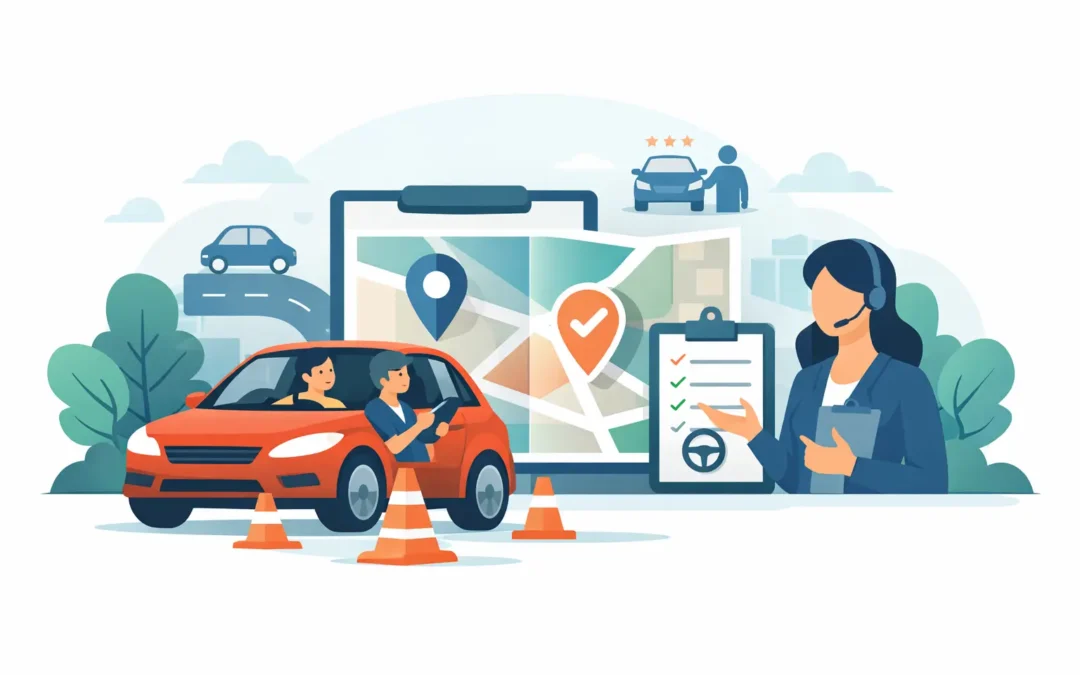
When a parent types best teen driving school near me, they are usually not looking for marketing language. They are looking for a safe instructor, a legitimate program, clear pricing, and a path that gets their teen from permit to license without wasted time. Teens want something simple and not intimidating. Parents want proof that the school is licensed, experienced, and organized. Both are reasonable.
In California, choosing a driving school is not just about finding the lowest lesson price. It is about finding a program that matches state requirements, teaches real road skills, and makes the process easier for busy families. A good school should reduce stress, not add more of it.
How to find the best teen driving school near me
The first thing to check is whether the school is DMV licensed. That is not a bonus feature. It is the baseline. If a school cannot clearly state that it is licensed to provide driver education or behind-the-wheel instruction in California, move on.
After that, look at specialization. Some schools work with all ages, but teens have a very specific set of needs. They are new to traffic patterns, freeway merging, lane control, parking, hazard awareness, and test anxiety. A teen-focused program usually has more structure and a more patient teaching approach. That matters more than flashy promises.
Local experience also counts. A school that regularly teaches students in your area will usually understand nearby roads, common DMV test routes, and the traffic challenges teens are most likely to face. In North Orange County, for example, that local familiarity can make lessons more practical and more relevant from day one.
What actually makes a driving school the best
The best school is not always the cheapest, and the most expensive option is not automatically better. What separates a strong driving school from an average one is consistency.
A reliable program should have screened instructors, clear lesson structure, easy scheduling, and straightforward package options. It should tell you what is included, how many hours of behind-the-wheel training are covered, and what happens after enrollment. If you have to chase basic information, that is a warning sign.
Experience matters too. A school that has trained thousands of students over many years has likely seen every type of nervous beginner, scheduling issue, and test-day problem. That kind of operational experience often leads to smoother service for families. It also builds trust, especially for parents sending a teen into a car with an instructor for the first time.
Another factor is how the school balances instruction with convenience. Some parents only need the legally required training. Others want a fuller package that combines online driver education, in-car lessons, and road test support. There is no single right choice for every family. The right fit depends on your teen’s confidence level, schedule, and how much guidance you want along the way.
Look beyond the lesson count
A package with more hours can be worth it, but only if the instruction is organized and useful. Three focused lessons with a strong instructor may do more than a larger package that feels rushed or inconsistent.
Ask yourself whether the school helps teens build skills in stages. Early lessons should cover basics like steering control, braking, scanning, and turns. Later lessons should move into lane changes, busier traffic, freeway driving when appropriate, parking, and road test preparation. If every lesson feels generic, the program may not be giving students enough progression.
Instructor quality matters more than branding
Parents often start by comparing websites and prices. That makes sense, but the instructor is the real product. A good teen driving instructor should be calm, direct, and able to correct mistakes without making the student shut down.
Some teens need extra reassurance. Others need firm feedback and more repetition. The best schools know that one teaching style does not fit every student. They hire and retain instructors who can adapt while still keeping safety first.
Questions to ask before you enroll
Before choosing the best teen driving school near me, ask practical questions. How soon can lessons start? Is online driver education available? Are instructors background-screened? Are cars clearly marked and equipped for training? What is included in each package? Can the school help with the DMV road test?
These are not minor details. They affect how quickly your teen can move through the process and how much coordinating parents have to do on their own.
The DMV test support question is especially important. For many families, transportation to the DMV and access to a properly insured training vehicle can remove a major source of stress. If a school offers test-day services, it can simplify one of the most nerve-racking parts of getting licensed.
You should also ask how scheduling works. Some schools make it easy to book and adjust lessons. Others may have limited availability or less flexibility during peak times. If your teen is balancing school, sports, and other commitments, convenience is not just nice to have. It helps the training stay on track.
Red flags families should not ignore
If pricing is vague, be cautious. If the school avoids giving clear package details, be cautious. If it is hard to confirm licensing, insurance, or instructor qualifications, that is more than a small issue.
Another red flag is a school that focuses too heavily on passing the test without talking much about real driving skill. Passing the DMV road test is the goal, but it is not the full job. Teens need to know how to make safe decisions after they are licensed and driving without an instructor in the passenger seat.
Pay attention to communication too. A dependable school should be responsive before you enroll, not only after payment is made. Families should not have to work hard to get basic answers.
What California teens and parents usually need most
Most families are looking for the same three things: compliance, safety, and convenience. They need a school that satisfies California requirements, provides real instruction from qualified professionals, and fits into a busy schedule.
That often means starting with online driver education for the learner’s permit, then moving into behind-the-wheel lessons with a licensed instructor. From there, the teen may need a structured lesson package, additional practice in specific skill areas, and support when it is time to take the DMV drive test.
A school that can handle most or all of that process tends to be the easiest option. It creates less confusion, fewer scheduling gaps, and a more consistent learning experience.
For local families, this is where a specialist can stand out. A school like Teen Driving Academy, which focuses on teens, offers DMV-licensed and pre-screened instructors, and serves North Orange County communities, fits what many parents are already searching for: credibility, convenience, and a clear next step.
Comparing value instead of just price
It is smart to compare costs, but compare total value rather than one number. A lower-priced lesson may seem attractive until you realize it does not include enough time behind the wheel, flexible scheduling, or any road test support.
On the other hand, a bundled package may save time and money if your teen needs online education, lessons, and DMV help anyway. For some families, a basic plan is enough. For others, the better value is a package that reduces repeat bookings and last-minute scrambling.
This is one of those situations where it depends. A naturally confident teen with lots of supervised practice at home may need less professional instruction than a teen who is highly anxious or has limited availability for family practice. The best school will have options that reflect those differences instead of pushing every student into the same package.
A smart choice should feel clear, not confusing
If you are trying to choose the best teen driving school near me, look for a program that answers your questions before you ask them twice. It should explain the process clearly, show what each service includes, and make enrollment feel simple.
For teens, the right school creates confidence. For parents, it creates peace of mind. That usually comes from a combination of licensed instruction, teen-specific training, local experience, and practical services that remove friction from the licensing process.
The right fit is rarely the school with the loudest claims. It is the one that is prepared, transparent, and built around helping teens become safe drivers from the very beginning. Start with the basics, compare the details that actually matter, and choose the school that makes the road ahead feel manageable.