
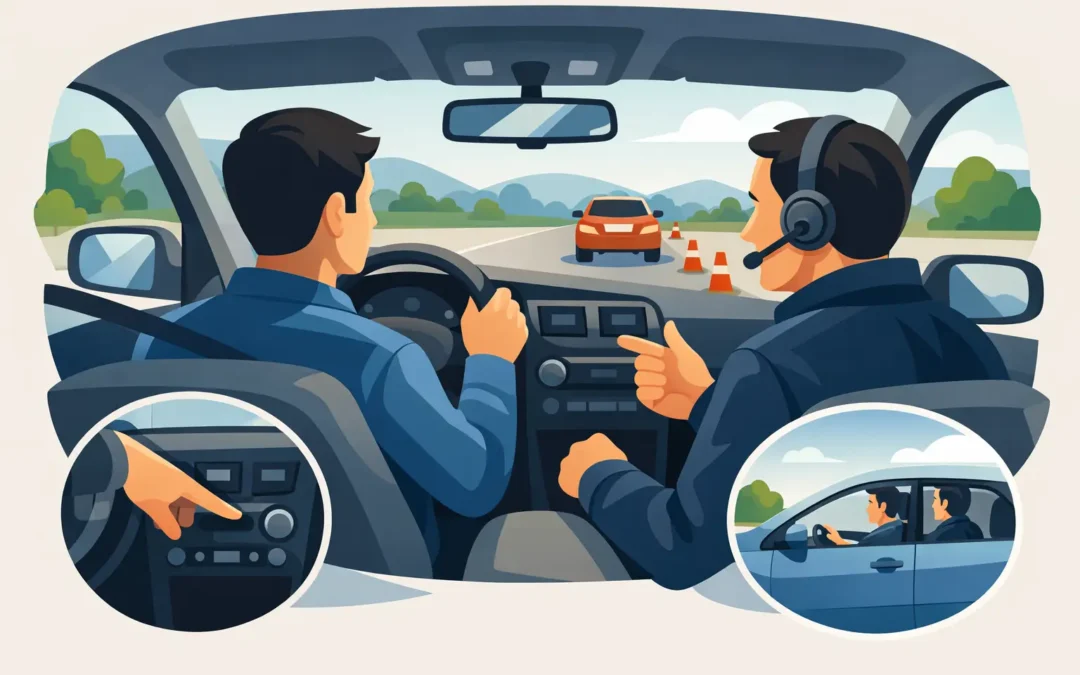
That first in-car lesson usually starts with a simple question from the instructor: have you ever been behind the wheel before? If you are wondering what is behind-the-wheel training like, the short answer is that it is structured, calm, and much more step-by-step than most teens expect. You are not thrown into heavy traffic on day one. A good lesson begins with the basics, builds confidence in stages, and gives both teens and parents a clear path forward.
For California teens, behind-the-wheel training is not just practice time. It is a required part of learning to drive safely and legally. It is also where a lot of nervousness fades. Once a student sees how the lesson is organized and how much guidance they receive, the process usually feels far more manageable.
What is behind-the-wheel training like on the first lesson?
The first lesson is usually about orientation, vehicle control, and getting comfortable. Before the car moves, the instructor will go over mirrors, seat position, dashboard basics, steering technique, braking, and how to use the signals. That may sound basic, but it matters. A teen who feels physically comfortable in the driver’s seat is in a much better position to make safe decisions.
Most first lessons start in lower-stress areas such as quiet residential streets or light-traffic roads. The goal is not to test the student. The goal is to teach. Instructors usually watch for how a student handles turns, lane position, speed control, stops, and scanning. They also explain what to improve as the lesson goes, so students are not left guessing.
For parents, this is often the biggest relief. Professional instruction is designed to reduce pressure, not add to it. Teens tend to respond well when directions are clear, consistent, and given in real time.
What teens actually practice during behind-the-wheel training
Behind-the-wheel training is usually broken into skills that build on each other. Early lessons focus on basic control. Later lessons bring in more traffic, more decision-making, and more test preparation.
A student will often begin by practicing smooth acceleration and braking, right and left turns, stopping at signs, maintaining lane position, and checking mirrors regularly. Once those basics become more natural, lessons may move into lane changes, unprotected turns, parking, backing up, and driving in moderate traffic.
As training progresses, instructors often introduce more complex situations such as busy intersections, multi-lane roads, and defensive driving habits. That includes keeping a safe following distance, watching for pedestrians, anticipating what other drivers may do, and recognizing hazards early.
The pace depends on the student. Some teens are ready for busier roads quickly. Others need more repetition in quieter areas first. That is normal. The point of training is not to rush. It is to develop safe habits that hold up under pressure.
Why professional instruction feels different from practicing with family
Practice with a parent is important, but it serves a different purpose than professional instruction. A licensed driving instructor follows a teaching process. They know when to introduce new skills, how to correct mistakes clearly, and how to keep the lesson productive without making the student feel overwhelmed.
There is also less emotional tension. Parents care deeply, which is exactly why car practice can get stressful. Small mistakes can feel bigger in the moment. An instructor brings experience, objectivity, and a calm routine that many students need.
That does not mean one replaces the other. In most cases, the best results come from both. Professional lessons create the foundation. Parent-supervised driving helps reinforce it between sessions. When those two parts work together, students usually improve faster and feel more prepared by the time the road test comes around.
What instructors are watching for
A lot of teens assume the instructor is focused only on obvious errors, like rolling through a stop or turning too wide. Those things matter, but instructors are also paying attention to judgment, awareness, and consistency.
For example, a teen may be able to make a turn correctly once, but the real question is whether they can do it correctly every time while also checking mirrors, signaling early, and scanning for other road users. Safe driving is a combination of physical control and mental awareness.
Instructors look for patterns. Is the student checking blind spots before lane changes? Are they braking early and smoothly? Do they notice speed limit changes? Are they watching far enough ahead? Those habits matter just as much as parking and turning because they affect how a student handles real-world driving after they get licensed.
The most common concerns teens have
Most teen drivers worry about making mistakes in front of the instructor. That is completely normal. The good news is that mistakes are expected. Behind-the-wheel training exists because new drivers need guided correction.
Some students are nervous about turns, lane changes, or driving with other cars nearby. Others are more anxious about parking or remembering all the steps at once. A strong instructor breaks those concerns into smaller pieces. Instead of saying “just drive,” they coach through each action until it becomes familiar.
Confidence usually does not arrive all at once. It builds lesson by lesson. One day a student is focused on smooth stops. A few lessons later, they are handling intersections and changing lanes with much less effort. That progression is exactly what training is supposed to create.
What parents can expect from the process
Parents usually want to know two things: is my teen safe, and are we making progress? Behind-the-wheel training should answer both.
A well-run program gives families a clear sense of what the student practiced, what needs more work, and what steps come next. That structure makes it easier to support practice at home. Instead of wondering what to work on, parents can reinforce the same skills the instructor introduced.
Convenience also matters. For busy families, scheduling lessons, understanding California requirements, and planning for the DMV can feel like a lot. That is why many families choose a school that offers organized packages, flexible scheduling, and road test support. Teen Driving Academy, for example, is built around making that process easier for local families who want a compliant and straightforward path from permit to license.
How behind-the-wheel training helps with the California road test
Road test preparation is part of the value, but training should not feel like memorizing a script. A good instructor prepares students for the test by teaching them how to drive safely in general. When those habits are consistent, the test becomes less intimidating.
Students usually practice the skills the DMV looks for most closely, including safe turns, complete stops, lane changes, backing, parking, speed control, and observation. They also learn the small details that can affect test performance, such as checking mirrors regularly, using signals at the right time, and avoiding rushed decisions.
Still, there is a trade-off. Passing the road test is important, but it is not the only goal. Some students become so focused on the exam that they forget the bigger point, which is learning to drive safely after the test is over. The strongest training programs keep both priorities in view.
What makes a good behind-the-wheel experience
The best experience is not the one that feels flashy. It is the one that feels organized, safe, and clear. Students should know what they are practicing and why. Parents should feel confident that the instructor is licensed, experienced, and used to working with teens.
Good training also meets students where they are. A beginner needs patience and a simple first step. A more advanced permit holder may need concentrated work on freeway driving, parking, or test readiness. There is no single lesson plan that fits every teen equally well.
That is why experience matters. A school that has worked with thousands of student drivers has usually seen the full range, from very nervous beginners to teens who need only a few final corrections before the DMV test. That kind of background often leads to smoother lessons and more efficient progress.
Is behind-the-wheel training stressful?
Sometimes, yes. Learning to drive comes with real responsibility, and some tension is part of the process. But it should be manageable stress, not chaos. Students should leave a lesson feeling challenged but clearer, not confused.
In many cases, the stress is highest before the first lesson. Once training starts, the process becomes more predictable. Teens see that they are not expected to know everything right away. Parents see that driving skill is being built in a structured way. That reassurance goes a long way.
If you are trying to decide when to begin, the best time is usually when the permit is in hand and the student is ready to start practicing with guidance. The first lesson does not require perfection. It just requires a starting point, and that is often all a new driver needs to begin building real confidence behind the wheel.