
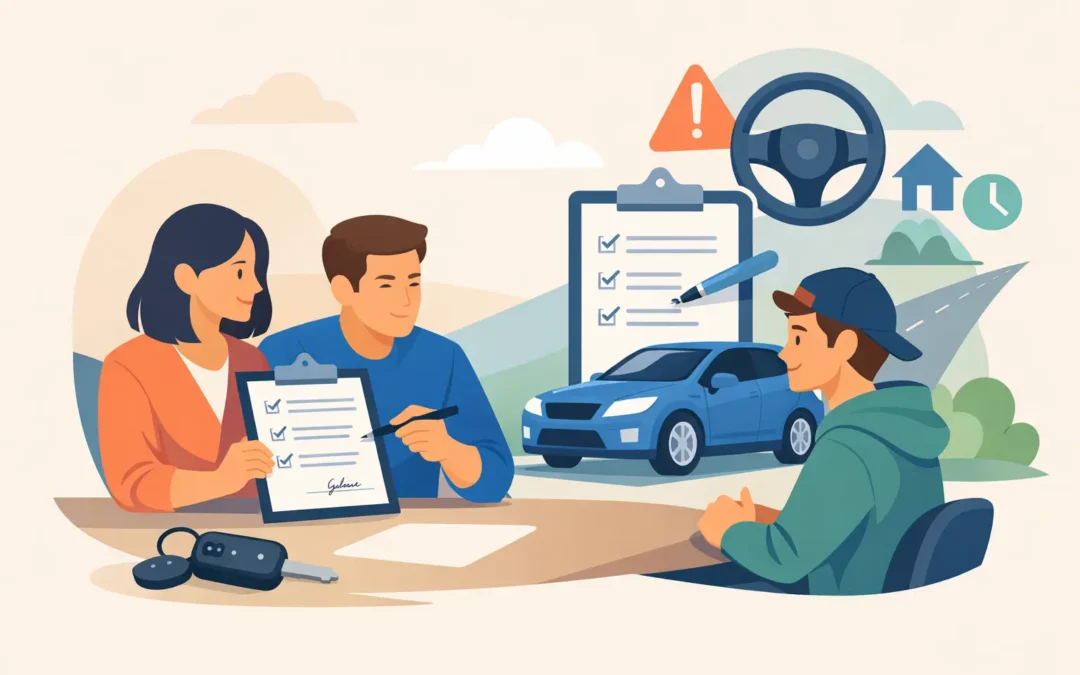
The first argument usually does not happen in traffic. It happens in the driveway, right before a teen asks, “Can I take the car tonight?” A parent teen driving contract template helps answer that question before emotions take over. It gives families a clear, written agreement about safety, privileges, and consequences so expectations are not negotiated every single time the keys come out.
For many families, that structure matters more than the document itself. A new driver is learning judgment, not just steering and braking. Parents are trying to protect their teen while still giving them enough independence to grow. A written agreement creates a middle ground that feels fair, practical, and easier to enforce.
What a parent teen driving contract template should do
A good contract is not meant to sound harsh or legal. It should be simple enough for a teen to understand and specific enough for a parent to use. If it is too vague, it becomes easy to ignore. If it is too strict, it often gets abandoned after the first disagreement.
The best version does three things well. First, it defines the safety rules that are not optional. Second, it explains how driving privileges are earned and kept. Third, it outlines what happens if the agreement is broken.
That last part matters. Teens usually respond better when consequences are known in advance. Parents also benefit because they do not have to come up with a punishment in the heat of the moment.
Why families use a parent teen driving contract template
Driving gives teens freedom fast, and that is exactly why many parents feel uneasy. A learner’s permit stage is supervised, but once a teen starts driving more independently, the risks change. Passengers, nighttime driving, phones, fatigue, and overconfidence all become bigger factors.
A contract helps slow the process down. It turns “Be careful” into measurable expectations. That might include no phone use while driving, no extra passengers for a set period, or no driving after a certain hour. These rules are not about control for its own sake. They are about reducing common crash risks while a teen builds experience.
There is also a practical benefit. When rules are written down, parents can stay consistent between households, between weekdays and weekends, and between one situation and the next. That consistency reduces confusion and cuts down on arguments.
What to include in your contract
Every family is different, but most parent teen driving contract template versions should cover the same core areas.
Basic safety rules
Start with the non-negotiables. Seat belts for every passenger. No texting, calling, or using apps while driving. No driving under the influence of alcohol, drugs, or any substance that affects judgment. No riding with an impaired driver. Obey speed limits and traffic laws at all times.
These sound obvious, but writing them down still matters. New drivers are managing a lot at once, and clear repetition reinforces what safe driving actually looks like.
Passenger limits
Passengers can be a major distraction for teens, especially in the first months of driving. Many families set a rule of no friends in the car for a period of time, or only one passenger unless a parent approves otherwise. That may feel restrictive to a teen, but it often makes sense early on.
If your teen has school or family obligations that require transporting siblings, spell that out. Exceptions are fine when they are clear.
Night driving and weather conditions
A contract should address when and where your teen may drive. Some parents allow only daytime driving at first. Others permit short local trips before allowing freeway driving, long drives, or unfamiliar areas.
This is one of the biggest it depends sections. A teen who has completed professional behind-the-wheel lessons and shown strong judgment may be ready for more responsibility sooner. A teen who is still anxious, inconsistent, or easily distracted may need a slower rollout.
Vehicle care and responsibility
Driving is not only about behavior on the road. It also includes caring for the vehicle. Your agreement can require your teen to keep enough gas in the car, report warning lights immediately, keep the vehicle reasonably clean, and never ignore maintenance issues.
You can also include who pays for gas, parking, tolls, tickets, or damage. That part should be very clear. Money disputes tend to become family disputes if nothing is decided in advance.
Check-ins and route communication
Parents usually want to know where a teen is going, who they are with, and when they will be home. Put that into the contract. A simple rule such as “text before leaving, after arriving, and if plans change” can reduce a lot of stress.
The goal is not surveillance for its own sake. It is accountability. New drivers should get used to communicating like responsible drivers.
Consequences for breaking the agreement
This section should be direct and proportional. A first minor issue might mean losing driving privileges for a few days. Repeated issues may mean longer restrictions. Serious violations, such as phone use while driving, lying about location, reckless driving, or transporting unauthorized passengers, should carry stronger consequences.
Try to separate carelessness from inexperience. Missing a turn is different from racing through a yellow light. The contract should leave room for coaching while still addressing unsafe choices.
How to make the contract work in real life
A contract only helps if both sides take it seriously. That starts with how you introduce it. Do not present it as a punishment for becoming a driver. Present it as part of becoming one.
Sit down together and review each section. Let your teen ask questions. In some areas, it makes sense to invite input. For example, your teen may reasonably ask for extended driving hours after several months of safe driving. When teens have some voice in the agreement, they are more likely to follow it.
At the same time, parents should not negotiate away the safety basics. Rules about seat belts, phone use, substance use, and honest communication should stay firm.
It also helps to review the contract after a set period. Thirty days, ninety days, and six months are common checkpoints. As skills improve, some restrictions may loosen. That gives teens a clear path to earning more freedom through good decisions.
Common mistakes to avoid
One mistake is making the contract too long. If it reads like a legal packet, most teens will tune out. Keep it straightforward and readable.
Another mistake is setting rules that are impossible to enforce. If a parent says, “Never drive with friends,” but regularly makes exceptions without discussion, the agreement loses credibility. Make rules you can actually monitor and maintain.
A third mistake is using the contract only after a problem happens. It works best when introduced early, before conflict starts. Think of it as prevention, not cleanup.
Finally, avoid treating all mistakes the same. A teen who forgets to text after arriving may need a reminder. A teen who uses a phone while driving needs a stronger response. Good contracts leave room for judgment.
Pairing the contract with real driver training
A contract sets expectations, but it does not replace instruction. Teens still need supervised practice in different conditions, feedback on decision-making, and training that builds confidence without rushing the process.
That is where professional instruction can make a real difference. Families often find that rules are easier to enforce when the teen has already heard the same safety standards from a licensed instructor. It also gives parents a more objective picture of whether their teen is ready for freeway driving, night driving, or the road test.
For California families, especially busy parents balancing school schedules, work, and DMV appointments, combining a written driving agreement with structured lessons can make the path much smoother. Teen Driving Academy has worked with teen drivers since 1990, and that kind of experience matters when families want a process that feels organized, legitimate, and manageable.
A simple parent teen driving contract template outline
If you want to create your own agreement, keep the structure simple. Include the names of the parent and teen, the vehicle or vehicles covered, the effective date, the rules, the privileges, the consequences, and signatures from both sides. You can also add a short statement explaining that driving is a privilege earned through safe and responsible behavior.
The wording does not need to be fancy. What matters is that each person understands it. If a sentence can be interpreted in two ways, rewrite it.
Here is the standard you should aim for: clear enough to follow on a normal day, and clear enough to use on a stressful day. That is the real test.
When to update your contract
Your first contract should not be your final one. Update it when your teen moves from permit practice to licensed driving, when school or work schedules change, when a new vehicle is added, or when your teen shows they are ready for more responsibility.
You may also need to tighten the agreement after a close call or traffic violation. That does not mean the contract failed. It means the contract is doing its job by giving you a framework to respond quickly.
Safe driving is built over time. A written agreement will not eliminate every risk, and it will not stop every disagreement. But it can make expectations clearer, reduce emotional decision-making, and help a new driver understand that freedom on the road comes with real responsibility. Start with a simple plan, keep it consistent, and let your teen earn the next step with every safe mile.