
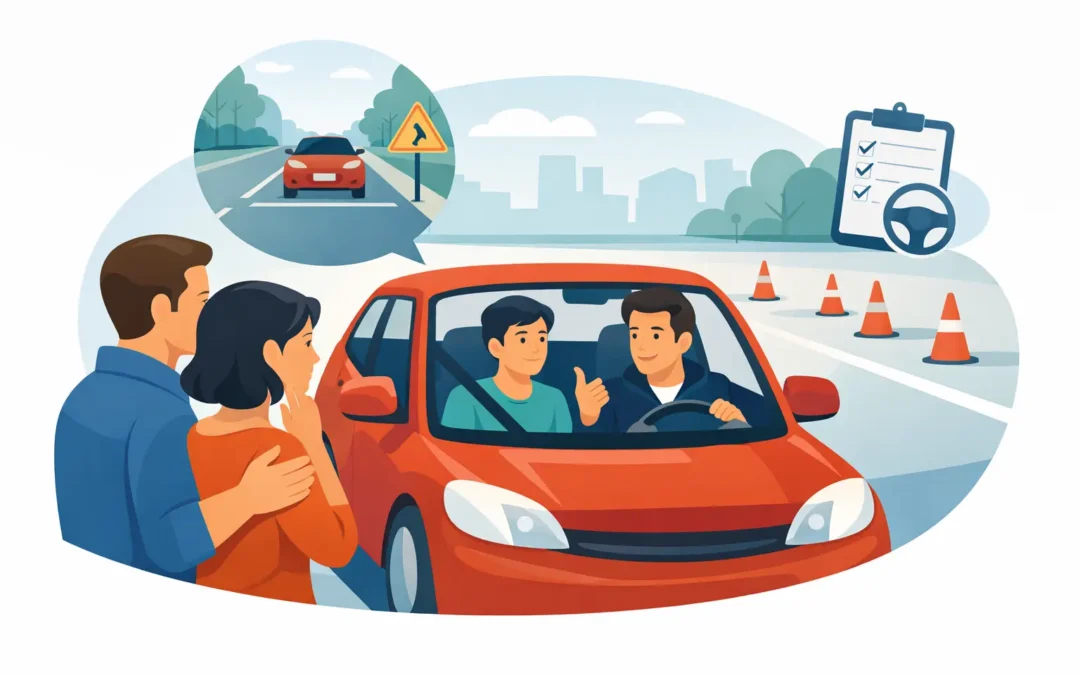
Handing your teen the keys for the first time can feel exciting and nerve-racking in the same moment. A solid parents guide to teen driving lessons should do more than explain the rules. It should help you make smart decisions about timing, training, safety, and how to keep the process manageable for your family.
For most parents, the biggest questions are practical ones. When should lessons start? How much practice is enough? Should you teach everything yourself or bring in a professional instructor? In California, those choices matter because the licensing process is structured, and the way your teen learns early habits often shapes how they drive later.
What parents should know before teen driving lessons start
Teen driving lessons usually go better when families treat them as a process, not a one-time milestone. Your teen may be eager to start right away, but confidence without structure can create bad habits. On the other hand, waiting too long between permit, lessons, and supervised practice can slow progress and make your teen more anxious behind the wheel.
In California, teens need to complete driver education and meet permit and training requirements before moving on to a license. That sounds straightforward, but many parents still end up piecing together the process one step at a time. A better approach is to map out the full path early, from online education to behind-the-wheel instruction to road test preparation.
If your teen is brand new to driving, start with clear expectations. Explain that driving is not just about passing a test. It is about building judgment, staying calm under pressure, and learning how to handle real traffic situations safely. That mindset changes how teens approach lessons.
Parents guide to teen driving lessons in California
The California process rewards preparation. Teens need a learner’s permit before they can begin legal supervised driving practice, and they also need the required professional behind-the-wheel training. Parents often assume they can cover most of the instruction at home, but there is a real advantage to structured lessons with a DMV-licensed instructor.
A professional instructor teaches the fundamentals in the right order. That includes mirror use, lane positioning, turns, braking control, scanning ahead, residential driving, major streets, and eventually more advanced skills such as lane changes, parking, and freeway awareness when appropriate. Just as important, instructors are trained to correct mistakes early before those mistakes become habits.
For parents, this can take a lot of pressure off the household. Teaching your own teen to drive can be stressful, especially when you are trying to stay calm, give directions clearly, and monitor traffic at the same time. Many families do best with a mix of professional lessons and parent-supervised practice. The lessons provide structure, and home practice reinforces what was taught.
That balance matters. If you rely only on family practice, your teen may miss the consistency and progression that comes with formal training. If you rely only on paid lessons, your teen may not get enough repetition between sessions. The strongest results usually come from combining both.
How to choose the right lesson schedule
Timing can make a big difference in how quickly your teen improves. Some students benefit from lessons spaced closely together so skills stay fresh. Others do better with time between sessions to practice and settle in. There is no single schedule that fits every family.
If your teen is nervous, it often helps to start sooner after getting the permit rather than waiting months. Long delays can make the first lesson feel bigger than it needs to be. Early training gives teens a professional foundation and helps parents know what to practice at home.
If your teen is confident but inexperienced, avoid moving too fast just because they seem comfortable. Calm driving in an empty neighborhood is very different from handling busy intersections, school traffic, or left turns with pressure from other drivers. Good programs build skills step by step.
Parents should also think about convenience. A school that offers online driver education, scheduled behind-the-wheel lessons, and road test support can reduce a lot of back-and-forth planning. For working parents, that convenience is not a small detail. It can be the reason the process stays on track.
What to look for in a driving school
Not all driving schools are equally focused on teen drivers. That matters because teens need a different teaching style than adults. They are still learning judgment, not just mechanics.
Look for a school with DMV-licensed instructors, a clear lesson structure, and experience working specifically with permit holders and first-time drivers. Pre-screened instructors are also important. Parents should feel confident about who is getting in the car with their teen.
It also helps to choose a school that explains packages clearly. If pricing, lesson length, or services are vague, families can end up frustrated later. Straightforward options make it easier to compare what your teen actually needs now versus what may be useful closer to the road test.
For example, some families only need the required instruction. Others want a more complete package that includes extra training time, test-day transportation, or use of the school vehicle for the DMV test. Those services can make a real difference, especially for teens who are more likely to feel nervous in an unfamiliar car or under test pressure.
In North Orange County and nearby communities, many parents prefer schools with a long local track record because they know the area, the traffic patterns, and the common test-day challenges teens face.
How parents can help without making lessons harder
Your role matters even after professional lessons begin. The goal is not to become your teen’s only instructor. It is to become a steady practice partner.
Start by keeping car conversations focused and calm. Too many directions at once can overwhelm a new driver. Short, specific coaching works better than constant commentary. Instead of saying everything you notice, focus on the one correction that matters most in that moment.
Consistency helps too. Practice in familiar, lower-pressure areas before moving into more complex conditions. Residential streets should come before busy commercial roads. Daytime driving should come before night driving. Dry conditions should come before rain, if possible. Progression builds confidence without creating false confidence.
It is also smart to watch for emotional patterns. Some teens shut down after one mistake. Others brush off mistakes too quickly. Both responses need guidance. A good parent approach is calm accountability. Acknowledge improvement, correct errors directly, and avoid turning every drive into an argument.
Common mistakes families make
One common mistake is treating permit practice like a box to check. Logged hours matter, but quality matters more. If your teen spends most practice time repeating the same easy route, they may reach test day without enough experience in varied traffic situations.
Another mistake is waiting until the last minute to think about the road test. Test preparation should begin well before the appointment is booked. Teens need time to practice defensive habits, clean vehicle control, parking, turns, speed management, and responding to instructions without freezing.
Parents also sometimes underestimate how much the practice vehicle matters. If the family car is large, hard to maneuver, or packed with distractions, it may not be the best training environment for an early driver. In some cases, using a training vehicle for lessons and even for the DMV test can help the teen feel more comfortable and prepared.
Finally, avoid comparing your teen to siblings or friends. Some students need more repetitions, more coaching, or more time to feel steady behind the wheel. That does not mean they are weaker drivers. It usually means they are still building experience.
A practical parents guide to teen driving lessons and test prep
By the time your teen is getting close to the road test, your job shifts from starting the process to tightening it up. This is when details matter. Make sure your teen is practicing the kinds of skills the examiner will actually watch for, including full stops, scanning, lane control, backing, parking, and smooth turns.
This is also the stage where many families feel the most scheduling stress. Between school, work, and DMV appointments, it is easy for momentum to slip. That is why bundled services can be so helpful. When one provider handles education, lessons, and DMV support, the path becomes simpler and easier to manage.
Teen Driving Academy has built its approach around that kind of convenience, with structured training designed specifically for teen drivers and permit holders. For parents, that can mean less confusion, fewer delays, and more confidence that the requirements are being handled correctly.
A teen does not become a safe driver in one lesson, one weekend, or one test appointment. They get there through repetition, feedback, and the right support at the right time. If you choose a professional training path, stay involved at home, and keep the process steady instead of rushed, your teen has a much better chance of building skills that last well beyond license day.
The best next step is usually the simplest one – get the process started early, keep it structured, and give your teen the kind of training that makes both of you feel more confident every time they get behind the wheel.