
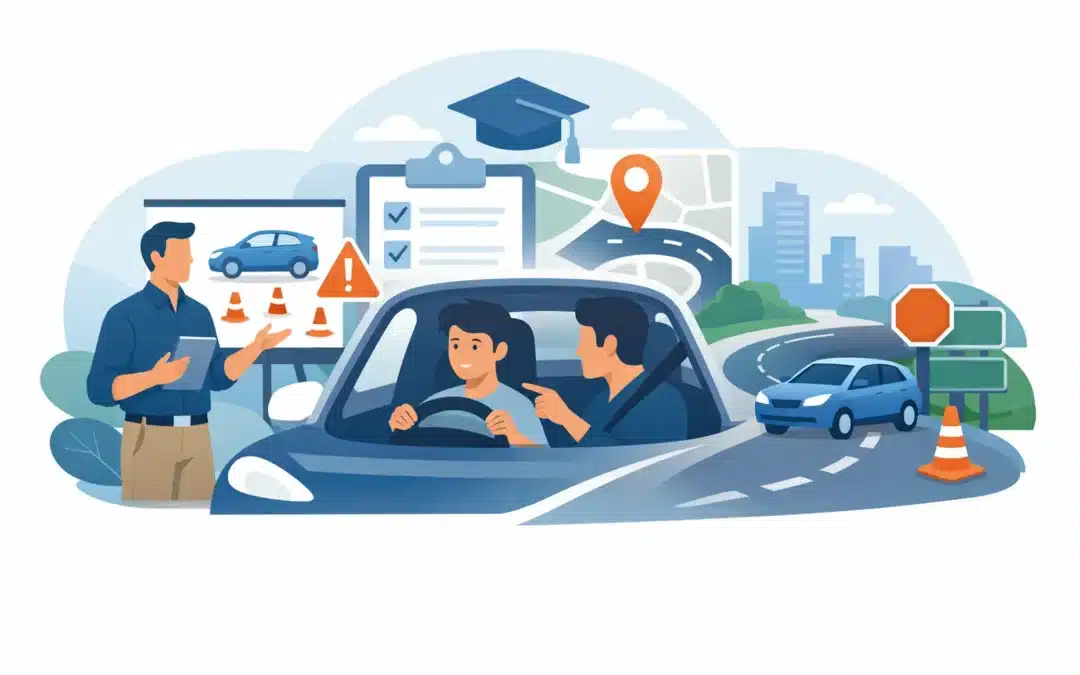
A learner’s permit is an exciting milestone, but it is not a sign that a teen is ready to handle every traffic situation alone. A quality new driver training program gives students a clear path from classroom knowledge to safe, confident decisions behind the wheel. For parents, it also replaces guesswork with a structured plan that meets California requirements and fits a busy schedule.
The right program does more than help a student pass a test. It teaches the habits that matter after the license is issued: checking mirrors before every move, managing speed, reading traffic early, handling distractions, and staying calm when another driver makes a mistake.
Start With California Driver Education Requirements
For most California teens, driver education comes before the learner’s permit. Students who are at least 15 1/2 years old typically need to complete an approved 30-hour driver education course before applying for a permit at the DMV. An online course can be a practical option for families because students can work through lessons on their own schedule while still completing the required material.
A useful course should cover California traffic laws, road signs, right-of-way rules, alcohol and drug awareness, distracted driving, freeway driving, and defensive driving habits. It should also explain what happens at each stage of the licensing process, including the written knowledge test, permit rules, supervised practice, professional lessons, and the DMV road test.
Parents should look for a course that is easy to begin and easy to track. A fast start is helpful, but the course must still give teens enough time to understand the material rather than simply click through it. Students learn best when lessons use plain language and realistic driving examples.
Behind-the-Wheel Training Is Where Habits Form
Reading about safe driving and doing it in traffic are very different experiences. Behind-the-wheel instruction gives new drivers a controlled place to practice with a trained professional who can correct problems before they become habits.
California generally requires teens under 18 to complete at least six hours of professional behind-the-wheel training. This is commonly delivered as three two-hour lessons. However, the legal minimum is not always the same as the amount of instruction a student needs. Some teens gain confidence quickly; others need extra practice with turns, lane changes, parking, freeway entrances, or busy intersections.
A strong instructor does not simply tell a student where to turn. They teach the reason behind each decision. For example, a student should learn to scan far ahead before braking, identify a safe gap before entering traffic, and position the vehicle correctly before making a turn. These small skills add up to smoother, safer driving.
What teens should practice in the car
Early lessons often focus on vehicle controls, steering, braking, intersections, residential streets, and basic lane position. As students improve, lessons should move into more demanding situations such as multi-lane roads, changing lanes, traffic lights, parking lots, freeway driving, and defensive responses to unexpected hazards.
The order matters. A nervous first-time driver should not be pushed into a difficult freeway situation before they can consistently control speed and observe their surroundings on surface streets. At the same time, waiting too long to introduce more complex driving can leave a student unprepared for real-world conditions. The best training progresses at the student’s pace while still building toward the skills needed for independent driving.
Choose DMV-Licensed, Teen-Focused Instruction
A parent or family friend may have years of driving experience, but experience alone does not make someone an effective instructor. Teens benefit from DMV-licensed, pre-screened driving instructors who understand how to teach beginners, communicate calmly, and evaluate progress honestly.
Professional instruction also creates consistency. Students hear the same safe-driving standards in each lesson, rather than receiving conflicting advice from different adults. This is especially valuable for common trouble spots, including complete stops, safe following distance, proper mirror checks, right turns on red, and lane changes.
Ask how the school structures its lessons and whether instruction is designed specifically for teen permit holders. A program should explain what students will practice, how progress is measured, and what families can do between lessons. Clear communication helps parents know whether their teen is ready to move forward or would benefit from additional time behind the wheel.
Parent Practice Still Makes the Difference
Professional lessons are required, but home practice is where teens build repetition and comfort. California requires permit holders under 18 to complete 50 hours of supervised driving practice, including 10 hours at night. They must also hold the instruction permit for at least six months before taking the road test for a provisional license.
Those hours should not all look the same. Repeating the same quiet neighborhood route may help a teen feel comfortable, but it will not prepare them for every environment. Over time, supervised practice should include residential streets, busier roads, different times of day, parking, rain when conditions are safe, and night driving.
Parents do not need to turn every drive into a lecture. One or two clear goals are usually enough. A practice drive might focus on smooth stops and speed control. The next one might focus on scanning intersections and making complete observations before turning. Specific feedback is easier for a new driver to use than a stream of corrections.
A New Driver Training Program Should Prepare for the DMV Test
The DMV road test is not a separate skill set. It is a check of the same habits a teen should use every time they drive. Still, test-day preparation can reduce anxiety and prevent avoidable mistakes.
Before scheduling a test, students should be comfortable with the areas the examiner may assess: safe turns, controlled stops, lane changes, backing up, parking, speed management, right-of-way decisions, and awareness of other road users. They should also know how to make their observations visible through appropriate mirror checks and head movement, rather than assuming the examiner can tell what they noticed.
A practice road test can be valuable when a student has the basic skills but feels uncertain about the testing format. It helps identify small issues, such as stopping too far from the limit line, turning too wide, or forgetting a final blind-spot check before pulling away from the curb.
Families should also plan the logistics early. A teen needs the required DMV documents, a properly insured vehicle that meets test standards, and a licensed adult to bring them to the appointment. For working parents or families without a suitable vehicle, DMV test support can remove a major source of stress. Services that provide transportation to the DMV and use of a school vehicle for the road test can make test day more manageable.
Packages Can Make Training Easier to Plan
A bundled package can be a practical choice when a student needs online driver education, the required professional lessons, and additional road-test preparation. The value is not only in combining services. It is in having a complete sequence that keeps the student moving forward without last-minute scheduling problems.
That said, the best package depends on the student. A teen who has just started may need driver education and the required six hours of instruction. A permit holder who has practiced regularly with a parent may only need focused lessons before the DMV test. Another student may benefit from extra sessions because they are still developing confidence in traffic.
Teen Driving Academy has served California families since 1990 and understands that no two new drivers progress at exactly the same speed. The goal is not to rush a teen through lessons. It is to provide a clear, dependable path toward safer driving and a successful license test.
Look Beyond the Lowest Price
Price matters, but it should not be the only factor when choosing training. A lower-cost option may seem appealing until families discover limited lesson availability, unclear scheduling, instructors who are not a good fit, or no support when it is time to prepare for the DMV.
Compare what is actually included: approved driver education, professional lesson hours, instructor credentials, scheduling options, service area, progress communication, and road-test support. Families in North Orange County and nearby communities may also benefit from choosing a local school that understands the roads and DMV routines students will encounter.
The right training program gives teens more than a certificate or a completed checklist. It gives them the practice, judgment, and support to take responsibility seriously every time they sit in the driver’s seat. Start with a program that explains each step clearly, then give your teen the time and guided practice needed to grow into a safe driver.