
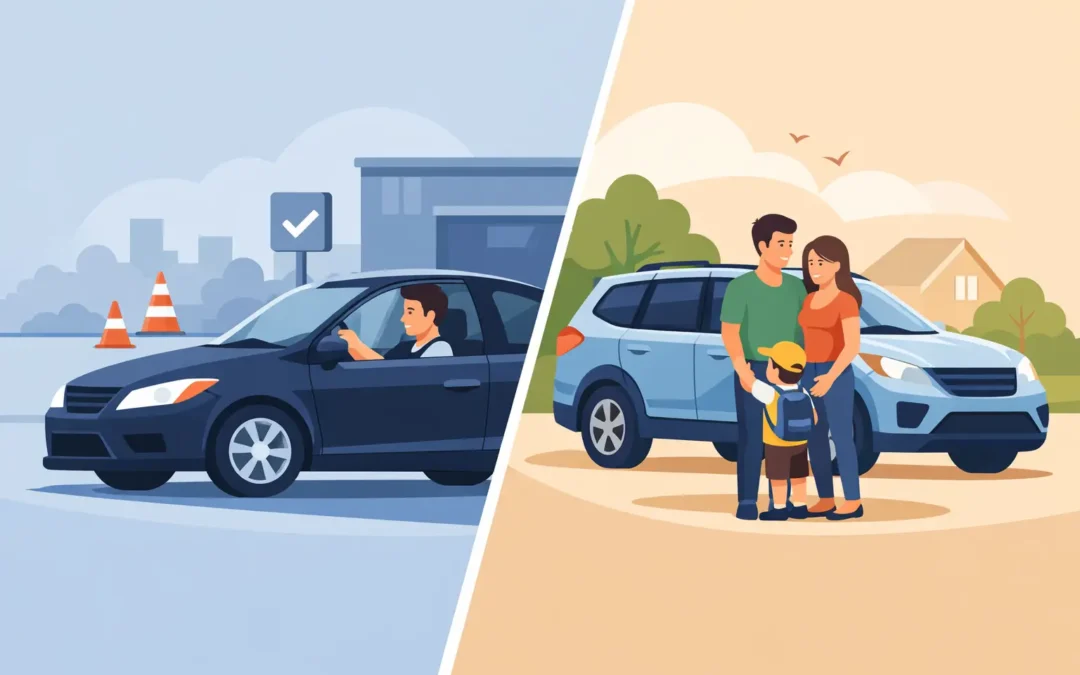
A lot of road tests are decided before the examiner even gets in the car. If the brake lights are out, the registration is missing, or the student is already nervous about an unfamiliar setup, the day starts badly. That is why the dmv test car rental vs family car decision matters more than most families expect.
For some teens, using the family car is the easiest and least expensive choice. For others, a DMV test vehicle from a driving school can remove a surprising amount of stress. The better option depends on how prepared the car is, how comfortable the student feels behind the wheel, and how much pressure the family wants to manage on test day.
DMV test car rental vs family car: what really changes?
At a glance, both options do the same job. They get the student to the DMV for the behind-the-wheel test. But the test-day experience can feel very different.
A family car is familiar. The student may already know the brakes, mirrors, turn signal feel, blind spots, and steering response. That comfort can help, especially for a first-time driver who gets anxious under pressure. If the teen has done most practice in that vehicle, it may be the easiest place to perform naturally.
A rental test car, usually provided through a licensed driving school, is different. The value is not just the vehicle itself. It is the preparation behind it. The car is typically maintained for instruction, checked for DMV readiness, and paired with support such as transport to the DMV and a final warm-up lesson. For busy parents, that convenience matters. For nervous teens, the structured support can matter even more.
When a family car is the better choice
If your teen has practiced consistently in one vehicle and that car is fully test-ready, the family car may be the smartest option. Familiarity helps with simple but important skills like smooth braking, backing up straight, judging turning radius, and using mirrors without hesitation.
Cost is another reason many families choose their own car. If you already have insurance, valid registration, and a vehicle in good working order, there may be no extra expense beyond getting to the DMV. That makes sense for families who are organized, available on test day, and confident the car will pass the DMV safety check.
This option also works well when the parent has the schedule flexibility to handle transportation, paperwork, and last-minute issues. If the appointment is local and the teen has been practicing regularly in the same car they will test in, there is a strong argument for keeping things simple.
Still, simple only works if the details are covered. A family car can become a problem fast if there is a cracked light lens, worn tires, an expired insurance card, or a brake issue the family has not noticed. The DMV examiner will not overlook basic safety requirements because the student is ready.
Common family car problems on test day
The most frustrating part of using a family car is that small issues can cancel a well-prepared test. Sometimes it is a missing document. Sometimes it is a mechanical issue that never mattered during daily errands but suddenly matters at the DMV.
Teens and parents often focus on studying maneuvers and forget vehicle compliance. Working brake lights, turn signals, horn, mirrors, doors, seat belts, and current paperwork all need attention. If the student arrives ready but the car does not, the appointment can be lost.
There is also the emotional side. Some parents are calm and supportive on test day. Others, understandably, are stressed. That stress can transfer to the teen before the test even begins.
When a DMV test car rental makes more sense
A test car rental is often the better choice when the family wants predictability. If your household car is older, shared by multiple drivers, hard to schedule, or simply not ideal for a road test, renting a properly prepared vehicle can reduce risk.
This can be especially helpful for teens who have taken professional driving lessons in a school vehicle. If they already know that car’s controls and dimensions, the rental may feel just as familiar as the family car, sometimes more so. That is often true when a student has learned parking, lane changes, and residential driving with an instructor over several lessons.
The other major advantage is convenience. Many driving schools offer DMV test support that includes transportation to the DMV, use of the school car, and guidance right before the exam. For working parents, that means less time away from work and fewer last-minute logistics. For teens, it creates a steadier routine on a high-pressure day.
A school vehicle can also provide peace of mind. Families do not have to wonder whether the car meets DMV requirements or whether a hidden issue will show up at the worst moment. That confidence alone can help a student stay focused on driving well.
Cost vs value in the dmv test car rental vs family car choice
If you compare only the dollar amount, the family car usually looks cheaper. But cost is not the full picture.
A failed or canceled test can create extra expenses of its own. There may be another DMV wait, more time off work, another lesson, and more stress for everyone involved. In that context, paying for a test-ready vehicle and support service can be a practical decision, not just a convenience purchase.
The real question is not, “Which option costs less today?” It is, “Which option gives this student the best chance to test calmly and avoid preventable problems?”
For some families, the answer will still be the family car. For others, especially households juggling work schedules and multiple commitments, the rental option delivers better value because it reduces uncertainty.
Comfort matters more than families think
A road test is partly about skill and partly about composure. Teens do better when the vehicle feels predictable. That does not always mean the family car.
If a teen has practiced mostly in a driving school sedan with dual controls, then switches to a larger SUV on test day, the change can affect confidence. Braking may feel different. Visibility may change. Turning and parking may require different judgment. Those are not huge issues for experienced drivers, but for a new driver under evaluation, they matter.
On the other hand, if the student has logged most of their supervised practice in the family car, switching into a rental right before the DMV can create its own adjustment problem. Even if the rental is fully suitable, unfamiliar controls can add tension.
That is why the best vehicle is often the one the student has used most consistently during the final phase of preparation, as long as it is DMV compliant.
Questions parents should ask before choosing
Before deciding, it helps to be honest about three things. First, is the family car fully ready for a DMV inspection today, not eventually? Second, has the teen practiced enough in that exact vehicle to feel natural and steady? Third, will test-day logistics create extra stress for the parent or student?
If the answer to any of those questions is shaky, a DMV test vehicle may be the safer choice.
For families in North Orange County and nearby communities, this comes up often because schedules are tight and DMV appointments are hard to waste. A service that includes test transportation and a prepared vehicle can remove a lot of moving parts. That is one reason many parents choose a school-based option instead of trying to coordinate everything themselves.
The best choice depends on the student’s situation
There is no one-size-fits-all answer to dmv test car rental vs family car. The family car works well when it is reliable, compliant, and familiar. A rental test car works well when families want convenience, professional support, and fewer chances for test-day surprises.
If your teen is calm in the family vehicle and you know the car is ready, using your own car may be the right move. If you want a more controlled process with less guesswork, renting a test-ready vehicle through a licensed driving school can be the better investment.
The goal is not just getting to the DMV. The goal is giving your teen the best possible setup to stay focused, drive safely, and show what they have already learned. Choose the option that makes test day feel more manageable, because confidence usually starts long before the engine turns on.