
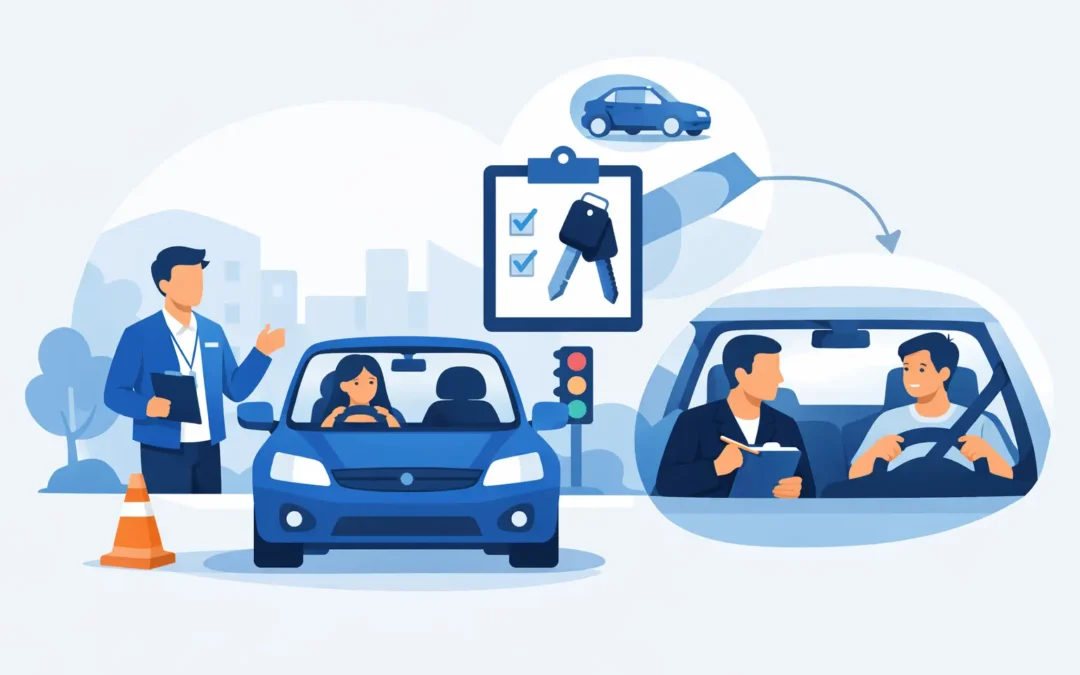
A lot of families ask the same question right before the road test: do driving schools provide test cars, or do you need to bring your own? The short answer is that many do, but not all schools include this service, and the details matter. In California, the right answer depends on the school, the package you choose, the condition of the vehicle, and whether the student is truly ready for the test.
For teens and parents, this is not a small detail. If your car has a warning light on, a cracked windshield, worn tires, or paperwork issues, the DMV can refuse to start the test. That is why many families prefer a driving school vehicle. It removes a lot of the last-minute stress and gives the student a chance to test in a car they already know.
Do driving schools provide test cars in California?
Yes, many driving schools in California provide test cars for the DMV road test, but it is usually a separate service or part of a higher-level package. Some schools only offer lessons. Others offer a full DMV test service that may include transportation to the DMV, use of the school car for the exam, and a warm-up lesson before the appointment.
That distinction matters. A school may advertise road test support, but that does not always mean the car is included automatically. In some cases, the service covers drop-off and pickup only. In others, it includes the vehicle but only for current students. The safest move is to ask exactly what is included before booking.
For teen drivers, especially first-time test takers, using a training vehicle can be a practical choice. The mirrors are adjusted for instruction, the car is maintained for student driving, and the student has likely practiced parking, turns, lane changes, and braking in that same vehicle. Familiarity helps reduce nerves.
Why families choose a driving school test car
The biggest reason is convenience. Parents are already juggling school schedules, work, DMV appointments, and lesson timing. If the driving school can handle transportation and provide a test-ready vehicle, that removes one more point of failure on test day.
The second reason is confidence. A teen who has trained in one specific vehicle often performs better in that same car. They know how sensitive the brakes feel, how wide the turning radius is, and where the blind spots are. Even small differences between cars can throw off a nervous new driver.
There is also the compliance factor. The DMV expects the test vehicle to meet basic safety and legal standards. That includes valid registration, proof of insurance, working brake lights and turn signals, a functioning horn, and tires in safe condition. If a family car has any issue at all, even one that seems minor, the test may be canceled or delayed. A reputable school that offers DMV test services is usually very careful about keeping its vehicles ready.
What is usually included with a test car service?
This depends on the school, but most road test vehicle services include more than just handing over the keys. Many schools structure the service around the entire appointment. That can include pickup from home or school, transportation to the DMV, use of the school car during the test, and the instructor waiting during the exam.
Some schools also include a short practice session right before the test. That can be especially helpful for teens who need a quick review of parking, lane control, speed management, and California test habits such as full stops and careful backing. A brief warm-up often helps students settle in and focus.
In some areas, schools offer premium packages that combine multiple behind-the-wheel lessons with DMV test support. For families who want a more organized path, that can be simpler than trying to schedule each piece separately.
When a driving school may not provide a test car
Not every school offers this service, and there are a few common reasons. Some schools focus only on state-required training hours and do not handle DMV logistics. Others may limit test car access to students who completed a certain number of lessons with them. That policy is reasonable because the school is putting its vehicle on the line and wants to know the student can operate it safely.
Availability can also be a factor. During busy periods, especially summer and school breaks, test-day appointments fill up quickly. A school may provide test cars in general but have no vehicle openings for your chosen DMV date. That is one reason to schedule early.
A student’s readiness matters too. If an instructor believes the teen is not yet safe to test, the school may decline to provide the car until more practice is completed. That can be disappointing, but it is usually the right call. Failing a road test is frustrating. Testing before the student is ready usually creates more stress, not less.
Questions to ask before you book
If you are comparing schools, ask direct questions and get clear answers. Does the service include the actual test car? Is DMV transportation included? Is there a pre-test lesson on the same day? Can the student use the same vehicle they practiced in? Are there extra fees if the DMV appointment runs late?
You should also ask who is eligible. Some schools only provide test cars for enrolled students. Others may allow outside students but require an evaluation lesson first. That evaluation protects the school and gives the student a realistic sense of readiness.
Price matters, but the cheapest option is not always the best value. If one school charges less but does not include transportation, a warm-up lesson, or a familiar vehicle, the savings may disappear fast. Look at the full service, not just the base number.
Why a familiar car can improve test performance
A road test is partly about skill and partly about staying calm under pressure. Teens often make simple mistakes because they are adjusting to an unfamiliar car at the same time they are trying to impress the examiner. They brake too hard, turn too wide, or misjudge how much pressure the accelerator needs.
Practicing and testing in the same car reduces those surprises. The student already knows how the steering feels and how the vehicle responds in traffic. That lets them focus on the road, signs, mirrors, and examiner instructions instead of learning a new car on the spot.
This is one reason driving schools that specialize in teen drivers often see strong demand for DMV test support. The service is not only about transportation. It is about creating a smoother, more predictable test-day experience.
What parents should watch for
Parents should look for a licensed driving school with screened instructors and clear policies. If a company offers test cars, it should be transparent about pricing, scheduling, cancellations, and what happens if the student does not pass. You want a service that is organized, not vague.
It is also smart to ask how the school prepares students before test day. Good preparation is not just about parallel parking or left turns. It includes mirror checks, signaling early, maintaining safe speed, scanning intersections, and handling normal DMV test routes without panic.
For families in North Orange County, convenience can make a real difference. A local school that knows the area, works regularly with nearby DMV offices, and serves teen drivers every day will usually provide a more efficient experience than a general provider with limited local focus. Teen Driving Academy, for example, offers DMV test services designed to reduce stress for both students and parents.
Is using a driving school car worth it?
For many families, yes. If you already have a reliable, test-ready car and your teen is comfortable using it, bringing your own vehicle can work perfectly well. But if your schedule is tight, your car may not meet DMV standards, or your teen feels more confident in the training car, a school-provided test vehicle is often worth the cost.
The real value is peace of mind. You know the vehicle is appropriate for the exam, the student has support getting to the DMV, and there is less chance of a preventable problem disrupting the appointment. That matters even more when DMV slots are hard to get.
The best choice comes down to readiness, budget, and convenience. If you are booking lessons anyway, ask whether road test support can be added as part of a package. That is often the simplest path.
A good driving school does more than teach the rules of the road. It helps families remove obstacles, build confidence, and get teens to test day feeling prepared instead of rushed.