
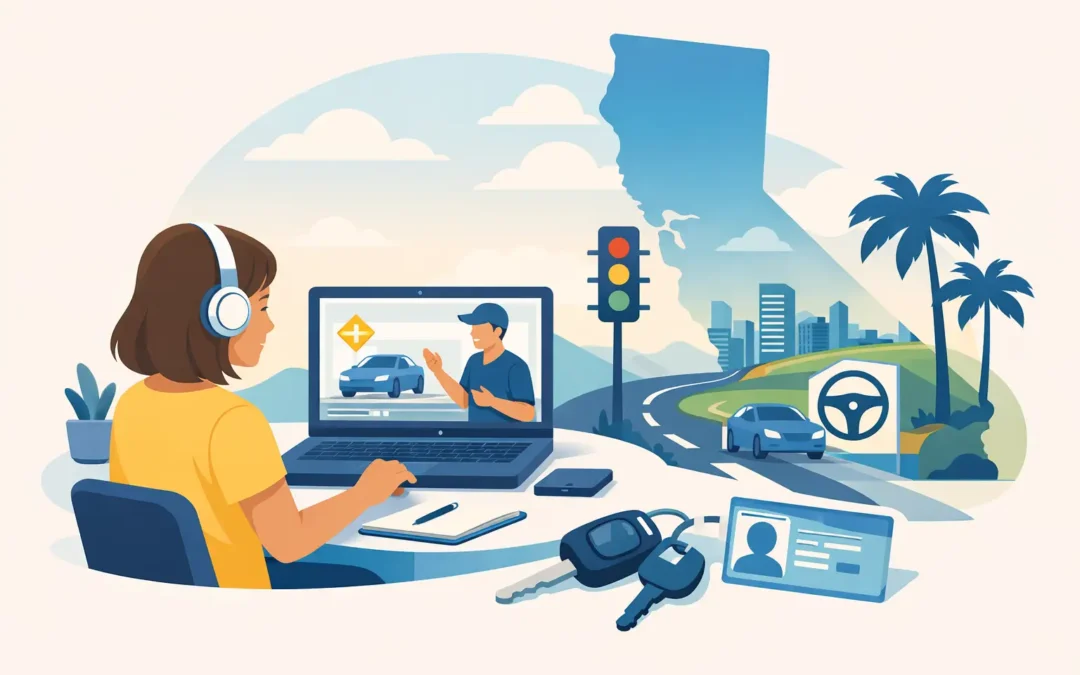
A teen may be ready to start the permit process, but a family schedule rarely slows down to make room for a classroom course. The good news is that the answer to “can teens take drivers ed online” is yes in California, as long as the course is provided by a DMV-licensed driver education school. Online driver education gives teens a flexible way to complete the required classroom portion before applying for a learner’s permit.
That flexibility does not mean the process is less serious. A California teen still needs to learn traffic laws, safe-driving habits, signs, sharing the road, and the consequences of risky decisions behind the wheel. They also still need professional behind-the-wheel training and supervised practice after receiving a permit. Online education handles one essential step. It does not replace the real-world instruction that helps a new driver build judgment and confidence.
Can Teens Take Drivers Ed Online Before Getting a Permit?
Yes. California allows teens to complete driver education through an approved online program. For most teens under 18, completing driver education is required before applying for a provisional instruction permit. The course must come from a provider licensed by the California DMV, not simply any website offering driving information.
A compliant California driver education course includes at least 25 hours of instruction. It covers the same core subjects taught in a traditional classroom, including rules of the road, traffic signs and signals, defensive driving, distracted driving, alcohol and drug awareness, and California licensing laws. When the teen finishes the course, the school provides the certificate needed for the permit application process.
For busy families, online learning can be a practical fit. Teens can work through lessons from home, complete sections around school or activities, and move at a reasonable pace without waiting for a scheduled classroom session. Parents can also see that the required education is being completed before the next DMV appointment.
The key is choosing a legitimate program. Before enrolling, confirm that the school is DMV licensed in California, explains what is included, and provides proof of completion. A low price is not helpful if the course does not meet state requirements or creates delays when it is time to apply for a permit.
What Online Driver Education Does and Does Not Cover
Online driver education is the academic part of learning to drive. It gives teens the knowledge they need to prepare for the written permit test and understand what safe driving requires before they begin practicing on public roads.
A strong course should make the material understandable, not just present screens for a student to click through. New drivers need to recognize why following-distance rules matter, how to approach intersections, when pedestrians have the right-of-way, and why a phone can turn a routine drive into a dangerous one. These lessons matter long after the written test is over.
However, an online course cannot teach a teen how a vehicle feels in motion. It cannot correct steering habits, coach smooth braking, or help a student scan for hazards while merging into traffic. That is where behind-the-wheel instruction begins.
Think of online driver education as the foundation. It helps a teen understand the rules before they take the wheel. Professional in-car lessons and parent-supervised practice then turn those rules into safe driving habits.
California’s Next Steps After Online Drivers Ed
Once a teen completes an approved driver education course, they can prepare to apply for a provisional instruction permit. In the standard California path, a teen must be at least 15 years and six months old to apply. They will need to meet DMV documentation requirements, pass a vision test, and pass the knowledge test. Requirements can change, so families should always verify current DMV instructions before booking an appointment.
After receiving the permit, the teen can begin driving with a qualified adult. Before taking the driving test, California teens must complete professional behind-the-wheel training with a licensed instructor. The state requires at least six hours of instruction, typically delivered in three two-hour lessons.
They must also complete at least 50 hours of supervised practice with a parent, guardian, or other qualified adult. At least 10 of those hours must be at night. The teen must hold the permit for at least six months and be at least 16 years old before taking the behind-the-wheel DMV test.
These requirements can feel like a long checklist, but each step has a purpose. The permit period gives new drivers time to gain experience gradually, from quiet residential streets to busier roads, freeway entrances, parking lots, and nighttime conditions. A teen who rushes through the process may be legally eligible to test but still feel unprepared when traffic gets complicated.
How Parents Can Tell Whether an Online Course Is a Good Fit
Online driver education works best when a teen is willing to complete coursework independently and a parent stays involved enough to keep the process on track. A student who routinely puts off online assignments may benefit from a clear schedule: a few lessons each week, a target completion date, and a DMV permit appointment planned after the certificate is expected.
Look for a program that clearly states it is licensed for California driver education and explains how the completion certificate is issued. The course should be easy to access and organized in manageable sections. It should also teach California-specific material rather than relying on generic driving content that may not match what teens see on the DMV knowledge test.
Families should also plan ahead for the step that follows. In-car lesson availability can vary, especially during school breaks and other high-demand periods. Booking professional lessons early can prevent a teen from finishing online education, receiving a permit, and then waiting too long to start building actual driving experience.
For families in North Orange County and nearby communities, a local school can make this transition easier because driver education, behind-the-wheel lessons, and road-test preparation can be coordinated through one teen-focused provider. Teen Driving Academy has served California families since 1990 with DMV-licensed, pre-screened instructors and structured training options for permit holders.
Why Behind-the-Wheel Lessons Still Matter
Parents often have years of driving experience and play an essential role in practice time. Still, professional instruction offers something different: a trained instructor can identify early habits that a teen or parent may not notice. That might include braking too late, turning too wide, looking too briefly at mirrors, or missing developing hazards at intersections.
Professional lessons also give teens a neutral setting to learn. Many parents and teens find that driving practice can become stressful when directions are misunderstood or nerves are high. An instructor can introduce skills in a planned sequence, starting with vehicle controls and basic turns before progressing to lane changes, higher-speed roads, parking, and defensive driving techniques.
The best result comes from using both types of practice. Professional lessons establish proper technique, while supervised driving with a parent gives the teen repetition in different places, weather conditions, and times of day. Neither one should be treated as a shortcut around the other.
Common Questions Families Ask About Online Drivers Ed
Can a teen finish online drivers ed in one day?
California requires at least 25 hours of driver education, so a legitimate course is not designed to be completed in a single day. Some online programs let students work at their own pace, but teens should allow enough time to complete the material carefully and meet the course requirements.
Is online drivers ed easier than classroom drivers ed?
The required subject matter is similar. Online education may feel easier to manage because teens can study from home and work in shorter sessions. The right choice depends on the student. A self-motivated teen may prefer online learning, while a teen who needs more structure may do better with a set routine and parent check-ins.
Can a teen drive after finishing the online course?
Not yet. Completing driver education is one step toward getting a permit. The teen must still apply at the DMV, pass the required tests, receive the instruction permit, and drive only with a qualified supervising adult until they meet the requirements for a provisional license.
Does online drivers ed prepare teens for the DMV written test?
A California-focused course should cover the knowledge needed for the permit test, but teens should still review the current California Driver’s Handbook and take time to study areas they find difficult. Passing the test matters, but understanding the material matters more once the teen starts driving.
Starting online driver education early can remove one major obstacle from the permit process. Choose a DMV-licensed course, give the teen time to learn the material, and line up behind-the-wheel training when the permit is in hand. That approach keeps the path forward clear while giving a new driver the preparation they need to drive responsibly.