
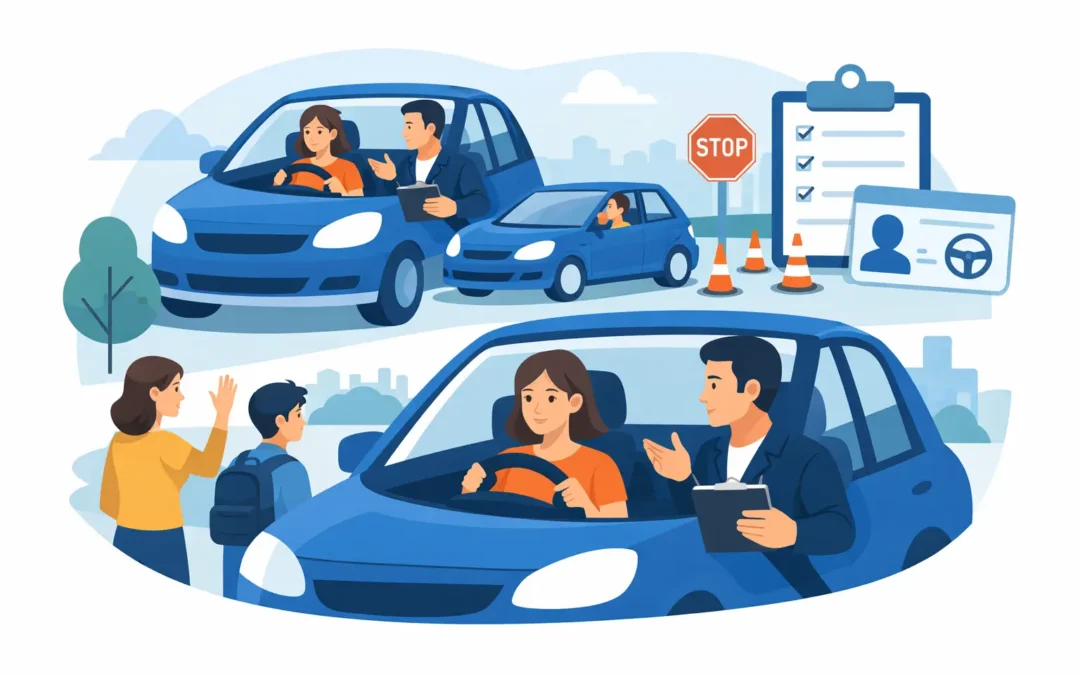
A DMV road test appointment can turn into a stressful morning fast. A teen may be ready to drive, but the family still needs a properly insured vehicle, a licensed adult to get them to the DMV, and enough time to handle check-in without rushing. A driving test transportation service takes care of those practical details so the student can focus on the skills that matter most.
For many California families, this is not simply a ride to the DMV. It is a planned test-day service that includes transportation, use of a driving school vehicle for the road test, and support from an instructor who understands how the appointment process works. It can be especially helpful for working parents, families with only one vehicle, and permit holders who have practiced primarily in a training car.
What a Driving Test Transportation Service Includes
A driving test transportation service is designed to remove common obstacles between a prepared permit holder and their DMV appointment. The instructor typically picks up the student, drives them to the DMV, and provides the school vehicle for the road test. After the test, the student is transported back to the agreed location.
The vehicle itself is a major part of the service. Before a California DMV examiner begins a road test, the vehicle must meet basic safety and legal requirements. That means current registration and insurance, working lights and signals, properly functioning brakes, safe tires, and no warning issues that could prevent the test from starting.
Using a school vehicle helps reduce the risk of a last-minute problem with a family car. A burned-out brake light, cracked windshield, low tire pressure, expired paperwork, or a malfunctioning turn signal can lead to a canceled appointment. Those issues are frustrating on any day, but they are especially difficult when DMV appointments are limited.
Why Families Choose DMV Test Transportation
Parents often assume the road test is simple: bring the teen, bring the car, and wait for the result. In practice, test day requires coordination. The permit holder needs their required documents, a qualifying vehicle, an appointment, and a licensed driver to accompany them to the DMV. If a parent has work, another child’s schedule, or an unexpected conflict, the plan can fall apart.
DMV test transportation gives families a dependable option. It is useful when the family vehicle is unavailable, when the teen is more comfortable in the vehicle used for lessons, or when the parent would rather have a professional instructor handle the logistics.
There is also a confidence benefit. First-time drivers often perform better when test day feels familiar. If they have completed behind-the-wheel lessons in the same type of vehicle, they already know the location of the controls, the brake response, the mirror setup, and the visibility around the car. That familiarity does not replace preparation, but it can remove one unnecessary source of anxiety.
The Best Time to Book Test-Day Service
Book transportation as soon as the DMV road test appointment is confirmed. Do not wait until the week of the test, especially during busy seasons when appointments and instructor schedules fill quickly.
Students should also consider where they are in their training. A transportation service works best when the teen has completed enough professional practice to drive safely and independently during the exam. It is not a substitute for required instruction, permit practice, or a final review of California driving rules.
For many students, the smartest approach is to schedule a road test preparation lesson shortly before the appointment. This gives the instructor time to review lane changes, right and left turns, stop signs, speed control, scanning, backing, parking, and the areas where the student needs more consistency. A final lesson can also help determine whether the student is truly ready or would benefit from postponing the test and practicing more.
What Students Should Bring to the DMV
Transportation and a test-ready vehicle simplify the day, but the student is still responsible for arriving with the required paperwork. Requirements can change, so families should always verify current California DMV rules before the appointment.
In most cases, the permit holder should bring their valid instruction permit and any appointment confirmation or documents requested by the DMV. If the student is under 18, they must also meet California’s licensing requirements for supervised practice and completed driver training before taking the road test.
Students should arrive rested, dressed comfortably, and ready to listen carefully. The examiner is evaluating safe driving habits, not perfection. A small mistake may not end the test, but repeated safety errors, poor observation, unsafe speed, failure to yield, or an intervention by the examiner can result in an unsuccessful test.
How to Prepare for the Road Test
The road test starts before the vehicle moves. Examiners may ask the student to identify controls such as turn signals, headlights, windshield wipers, hazard lights, defroster, parking brake, or emergency flashers. Students should know these controls without searching for them.
Once driving begins, the goal is to demonstrate calm, predictable decision-making. That means checking mirrors regularly, scanning intersections, signaling early, making complete stops, maintaining a safe following distance, and staying aware of pedestrians, cyclists, and changing traffic conditions.
Common trouble spots include rolling through stop signs, turning too wide, braking too late, changing lanes without a full visual check, and driving either too slowly or too quickly for conditions. Students should practice these skills in real traffic with a qualified instructor or licensed adult, not just review them the night before.
A professional lesson is particularly valuable for teens who feel comfortable driving with family but become nervous around an examiner. An instructor can identify habits that parents may not notice, such as inconsistent mirror checks, hesitation at unprotected turns, or failure to maintain lane position.
Questions to Ask Before Choosing a Service
Not every driving school offers the same level of DMV test support. Before booking, ask whether transportation includes use of the school vehicle for the road test, how far in advance reservations are required, and whether a pre-test lesson is available.
Families should also confirm that the school is DMV-licensed and that instructors are properly screened and qualified. Clear pricing matters as well. A reputable school should explain what is included, whether pickup is available in the student’s area, and what happens if the DMV changes or cancels the appointment.
For students in North Orange County and nearby communities, Teen Driving Academy provides structured training and DMV test services built around the needs of teen permit holders. The value is straightforward: professional instruction, a familiar training vehicle, and a plan that helps families avoid unnecessary test-day complications.
Is Test Transportation Worth It?
It depends on the family’s situation. If a parent has a flexible schedule, a reliable vehicle that meets DMV requirements, and the teen is comfortable driving it, bringing the student to the test may work well. There is no need to add a service simply because it is available.
But transportation can be worth the cost when it prevents a missed workday, avoids relying on an unprepared vehicle, or gives the student a calmer experience in a familiar car. For families juggling school, jobs, appointments, and multiple children, convenience is often a practical investment rather than an extra.
The road test is one important step, not the finish line. Give your teen enough practice, choose support that fits your family’s schedule, and let test day be about safe driving rather than last-minute logistics.