
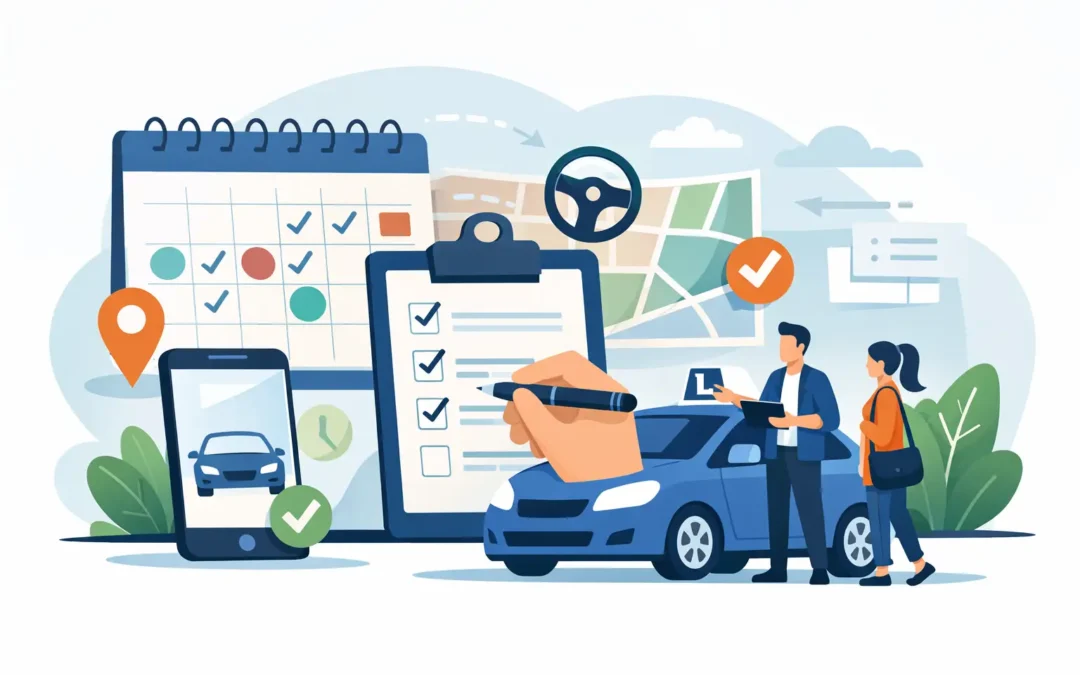
A teen earns a permit, everyone is excited, and then the calendar gets in the way. School, sports, work schedules, practice drives, and DMV deadlines can turn a simple plan into months of waiting. Knowing how to schedule driving lessons early helps California teens keep momentum and gives parents a clearer path from permit to road test.
The best schedule is not necessarily the fastest-looking one. It is the one that gives a new driver enough time to build skills between lessons, complete California requirements, and arrive at the DMV feeling prepared rather than rushed.
Start scheduling as soon as the permit is issued
For most teen drivers, behind-the-wheel instruction begins after the learner’s permit has been issued. Do not wait until the permit has been sitting in a wallet for several months. Lesson availability can tighten during summer, school breaks, and the weeks before a teen’s desired DMV test date.
Booking the first lesson soon after receiving a permit creates a useful starting point. The instructor can assess the student’s comfort level, introduce the training vehicle, and establish which skills need the most attention. For a first-time driver, that may include basic steering, braking, turns, lane position, and scanning for hazards. More confident permit holders may be ready to work on intersections, busy traffic, freeway driving, or parking sooner.
California teen drivers under 18 must complete six hours of professional behind-the-wheel training with a DMV-licensed instructor. Those hours are typically completed in three two-hour lessons. They must also hold a permit for at least six months and complete 50 hours of supervised practice, including 10 hours at night, before applying for a provisional license. Because the six-month clock cannot be compressed, it makes sense to begin professional lessons early and spread practice throughout that period.
Choose a lesson pace that builds real confidence
A common question is whether to schedule lessons close together or space them out. The answer depends on the teen’s starting skill level, family availability, and how often the student can practice with a parent or guardian.
For many new drivers, scheduling one lesson every two to four weeks works well. Each lesson introduces or strengthens key skills, and supervised practice between appointments gives the student time to repeat them. A teen who practices only with an instructor may need lessons more frequently, while a student who drives regularly with a qualified adult may benefit from more time between professional sessions.
Avoid placing all three required lessons in one short period unless there is a specific reason to do so. Completing the requirement quickly may be convenient, but it does not automatically create a road-test-ready driver. Driving improves through repetition in different conditions: quiet residential streets, school-zone traffic, larger intersections, evening driving, rain when it is safe to practice, and unfamiliar routes.
On the other hand, do not leave long gaps without practice. A student who takes a lesson in September and does not drive again until November may spend part of the next lesson relearning basic control. A simple routine is more effective: professional instruction, several practice drives, then the next lesson.
Build practice around the instructor’s feedback
After each lesson, ask the instructor what should be practiced before the next appointment. That turns family practice into a focused plan rather than a series of random drives.
If the instructor recommends smoother stops and turns, practice in a low-pressure neighborhood. If lane changes need work, choose a route with moderate traffic and clear opportunities to check mirrors, signal, and look over the shoulder. If the teen is approaching road-test readiness, practice full drives with fewer reminders from the supervising adult.
Parents do not need to teach every technique perfectly. Their role is to provide safe, consistent seat time and reinforce the habits the instructor has introduced. A professional instructor can correct errors, explain California driving rules, and prepare the teen for the skills evaluated during the DMV test.
Schedule around school and family commitments realistically
The most convenient appointment time is not always the best learning time. A teen who is exhausted after a full school day, a late practice, and homework may have trouble concentrating during a lesson. If possible, schedule when the student can be alert, fed, and ready to focus.
After-school lessons can be useful because they expose students to real traffic near schools and commuter routes. Weekend appointments may be easier for working parents, although availability can fill quickly. Daytime lessons during school breaks can give students more flexibility and may make it easier to complete training before a planned DMV test.
When comparing schedules, consider pickup and drop-off details. Confirm the service area, appointment length, cancellation policy, and whether the driving school picks up students from home, school, or another approved location. Families in North Orange County communities such as Anaheim, Fullerton, Brea, Yorba Linda, and Placentia often choose local instruction partly because pickup logistics matter as much as lesson quality.
It also helps to book more than one lesson at a time. Reserving the first two or three appointments gives the family a framework and reduces the risk of finding no openings later. If a teen progresses faster or needs additional support, the schedule can be adjusted.
Pick the right point to schedule the DMV road test
Do not schedule the road test solely because the six-month permit period is ending. Schedule it when the teen can drive safely and consistently with limited coaching. The test appointment should follow preparation, not force preparation into an unrealistic deadline.
A strong time to reserve the DMV test is after the final required professional lesson, once the instructor has discussed readiness and the family has confirmed that the practice-hour requirement will be complete. DMV appointments may be limited, so booking ahead is often practical. Just leave enough time for another lesson or a road-test preparation session if the student needs it.
Before selecting a test date, make sure the teen can reliably handle the skills that commonly cause trouble: complete stops, proper right-of-way decisions, safe lane changes, speed control, backing, parking, turns, and observation at intersections. The student should also be comfortable driving in an unfamiliar area. A road test is not the best place to try a skill for the first time.
Some families also choose a DMV test service that provides transportation to the DMV and use of a training vehicle for the road test. This can reduce stress for parents managing work schedules and gives the teen the benefit of testing in a vehicle they already know. Teen Driving Academy offers this type of support for eligible students who want a more organized test-day plan.
Keep a simple calendar and checklist
A driving schedule does not need to be complicated, but it should be visible. Put lessons, parent-supervised drives, permit milestones, and the potential road-test window on one shared calendar. This helps parents see whether practice is happening often enough and prevents a last-minute rush to document required hours.
Keep the permit, lesson records, and practice log in one reliable place. Before each lesson, make sure the teen has the required permit with them and arrives on time. If a schedule change is unavoidable, notify the school as early as possible so the appointment can be moved without unnecessary fees or lost training time.
For teens who are nervous, consistency matters more than intensity. A calm two-hour lesson followed by short, regular practice drives can do far more than waiting for a single marathon weekend. For confident teens, professional feedback still matters because it can catch habits that a parent may not notice.
When extra lessons are the smart choice
The state minimum is a requirement, not a promise that every student will be ready after exactly six hours. Some teens need extra help with parking, freeway entry, traffic judgment, or confidence in heavier traffic. That is normal, and extra instruction is often less costly than taking a road test before the student is ready and needing to repeat the process.
Additional lessons can be especially useful when a teen has had a long break from driving, recently moved from another state, is anxious behind the wheel, or has limited opportunities to practice at home. The goal is not to rush through a package. The goal is to develop safe habits that remain after the license is issued.
A well-planned lesson schedule gives teens room to learn and gives parents fewer surprises. Start early, keep practice regular, listen to instructor feedback, and reserve the DMV test only when the driving is ready to support it. That approach makes each appointment count and helps turn a permit into confident, responsible driving.