
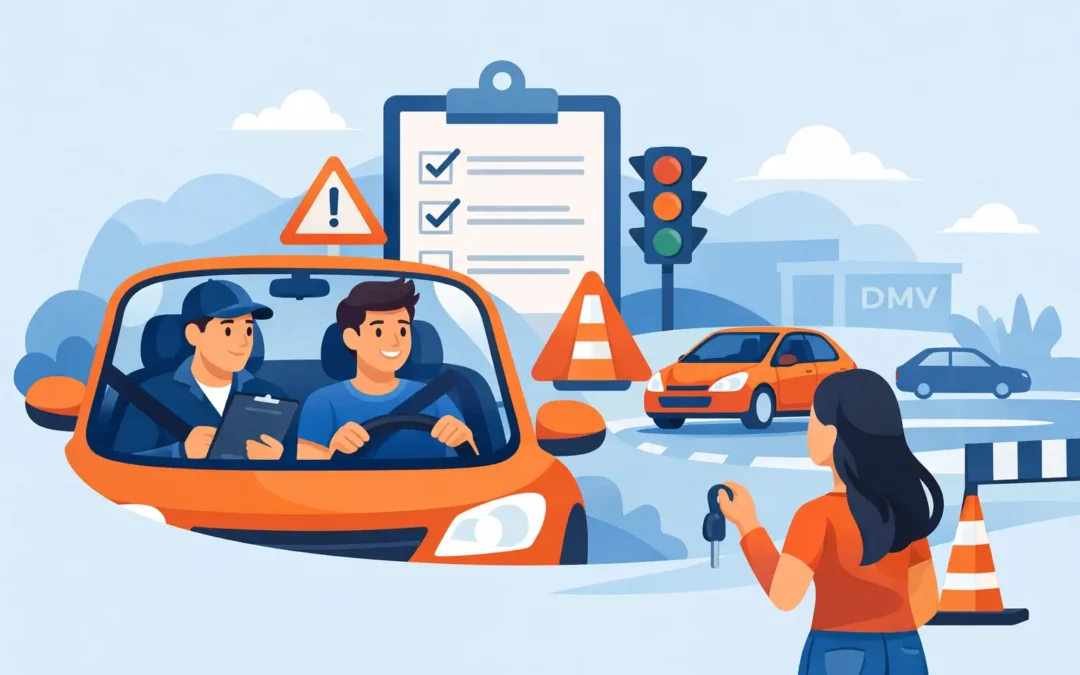
A road test appointment can feel like the last big hurdle between a teen and a California driver’s license. This guide to DMV test transportation explains how test-day transportation works, what to bring, and why using a familiar, properly equipped training vehicle can remove a major source of stress for both teens and parents.
For many families, getting to the DMV is not the hard part. Coordinating a weekday appointment, making sure the car meets DMV requirements, and ensuring the teen arrives calm and ready can be the real challenge. DMV test transportation is designed to handle those details so the student can focus on safe driving.
What DMV Test Transportation Usually Includes
DMV test transportation is a service offered by some driving schools for students who are ready to take their behind-the-wheel driving test. Depending on the package and service area, an instructor picks up the student, transports them to the DMV, and provides the school vehicle for the road test.
The instructor may also allow time for a short warm-up drive before the appointment. That drive is not about cramming or trying to learn new skills at the last minute. It is a chance to settle in, review basic controls, and get comfortable behind the wheel before checking in.
For teens in North Orange County and nearby communities, this can be especially helpful when a parent cannot leave work for a DMV appointment or when the family vehicle is not appropriate for the test. A professional service keeps the plan simple: pickup, preparation, test vehicle, and transportation afterward.
Why the Test Vehicle Matters
California DMV examiners expect the vehicle used for a road test to be safe, legal, and ready to operate. A problem with the car can delay or cancel an appointment before the teen even begins driving.
A training vehicle is typically maintained for student driving and equipped with the required safety features. It should have current registration and insurance, working brake lights and turn signals, functional windshield wipers, proper tires, mirrors, seat belts, and a horn. The examiner will also need access to the vehicle’s safety controls during the test.
Using a school vehicle does not guarantee a passing score. The student still needs to demonstrate control, observation, safe speed choices, lane positioning, turns, stops, backing, and appropriate responses to traffic conditions. It does remove uncertainty about whether the family car will pass the vehicle safety check.
There is also a familiarity advantage. If a teen has completed lessons in the same type of training vehicle, they already know the placement of the mirrors, signals, windshield wipers, parking brake, and other controls. That familiarity can make the first few minutes of the test feel more manageable.
Who Benefits Most From DMV Test Transportation?
This service is useful for any permit holder, but it is often a practical fit for certain situations. Teens may benefit if they do not have reliable access to a vehicle, if the family car has mechanical concerns, or if their regular vehicle is large, difficult to maneuver, or unfamiliar.
Parents often choose transportation support because DMV appointments usually happen during school or work hours. Rather than arranging multiple rides, checking the car, and waiting through the appointment, a parent can schedule a trained instructor to handle the driving-school portion of the day.
It can also be a good option after a student has taken several behind-the-wheel lessons and completed a final test-prep lesson. A familiar instructor can help keep the pre-test routine organized, although the instructor does not accompany the student during the official DMV driving test.
How to Prepare Before You Book
Before arranging DMV test transportation, confirm that the student is eligible to take the driving test. In California, requirements can vary based on age, permit history, and completion of driver education and behind-the-wheel training. Review the DMV appointment confirmation and make sure the student has completed the required steps before test day.
Ask the driving school what is included. Details matter. Confirm the pickup area, pickup time, whether a warm-up lesson is included, which DMV office is being served, how long the service covers, and what happens if the DMV appointment runs late. Also ask about rescheduling rules. DMV appointment changes, illness, and missed pickup times can affect a transportation reservation.
A school may require students to complete a certain number of lessons or pass an internal readiness assessment before using its test vehicle. That policy protects the student, the instructor, and other road users. If a teen is still struggling with basic observation, lane changes, or turns, another lesson is often a better investment than rushing into the test.
Your DMV Test-Day Checklist
Pack documents the night before. A missing form or expired permit can create more trouble than any parallel-parking mistake. Bring the items listed in the DMV appointment instructions and any paperwork required for a minor driver.
For most students, the practical checklist includes:
- A valid California instruction permit
- DMV appointment confirmation
- Required parent or guardian signatures, if applicable
- Corrective lenses or glasses if the permit requires them
- Any DMV forms or certificates requested for the appointment
- Comfortable shoes that allow secure pedal control
Avoid arriving hungry, rushing from school without a break, or wearing shoes that make it hard to feel the pedals. The goal is not to make the day feel overly serious. It is to remove avoidable distractions.
The Night Before
Confirm the appointment time, DMV location, pickup address, and phone number for the driving school. Put the permit and paperwork in one folder or envelope. Set out glasses, shoes, and a light jacket if needed.
Teens should also get adequate sleep. A road test requires attention to mirrors, signs, pedestrians, speed changes, and instructions from the examiner. Being tired can make a normally capable driver hesitate or overlook something simple.
At Pickup
Be ready before the scheduled pickup time. Transportation schedules often account for traffic, DMV check-in lines, and a brief practice drive. A late pickup can shorten the warm-up time or create unnecessary pressure before the appointment.
Use the ride to ask any final operational questions about the vehicle, such as windshield wipers, defroster controls, headlights, and parking brake. Do not use this time to debate every possible test scenario. By test day, the driving habits should already be in place.
What Happens at the DMV
After arrival, the student checks in with the DMV and follows staff instructions. The examiner will verify identity and paperwork, then inspect the vehicle’s basic safety equipment. The student may be asked to show hand signals, turn signals, brake lights, horn, windshield wipers, or defroster controls.
During the driving portion, the examiner gives directions but generally does not provide coaching. A teen should listen carefully, drive legally and safely, and ask for clarification if an instruction cannot be heard. It is better to calmly ask than to guess.
Students should not assume every small error means they failed. Examiners evaluate the overall drive, but critical safety mistakes can end the test. The best approach is to recover from minor errors, stay aware of the roadway, and keep driving safely until the examiner says the test is complete.
Common Transportation Mistakes to Avoid
The biggest mistake is treating transportation as a substitute for preparation. A well-maintained school car and a calm ride to the DMV are valuable, but they cannot replace practice. Students should be comfortable with residential streets, busier roads, controlled intersections, lane changes, right and left turns, parking, backing, and scanning for hazards.
Another common mistake is relying on a parent to bring documents separately. Keep all required paperwork with the student from the beginning of the day. If the family plans to meet at the DMV, confirm the plan early rather than trying to coordinate it while the student is checking in.
Finally, do not book the service without reviewing cancellation and rescheduling policies. DMV appointments can change, and the school may have a limited number of test-day time slots. Clear communication gives the family the best chance of keeping the process on track.
Choosing a Driving School for Test-Day Support
Look for a DMV-licensed school with instructors who regularly work with teen drivers. Ask whether the school has experience with the specific DMV office where the student is testing and whether its vehicles are used regularly for lessons and road tests.
The right provider should explain the service clearly, including cost, pickup coverage, vehicle use, and expectations for student readiness. Teen Driving Academy has helped California students prepare for the licensing process since 1990, with structured behind-the-wheel training and DMV test support designed to make a demanding day easier to manage.
A road test is one appointment, but the habits behind it last much longer. Choose transportation that reduces the logistical pressure, then let consistent practice and safe decision-making do the work when the examiner opens the passenger door.