
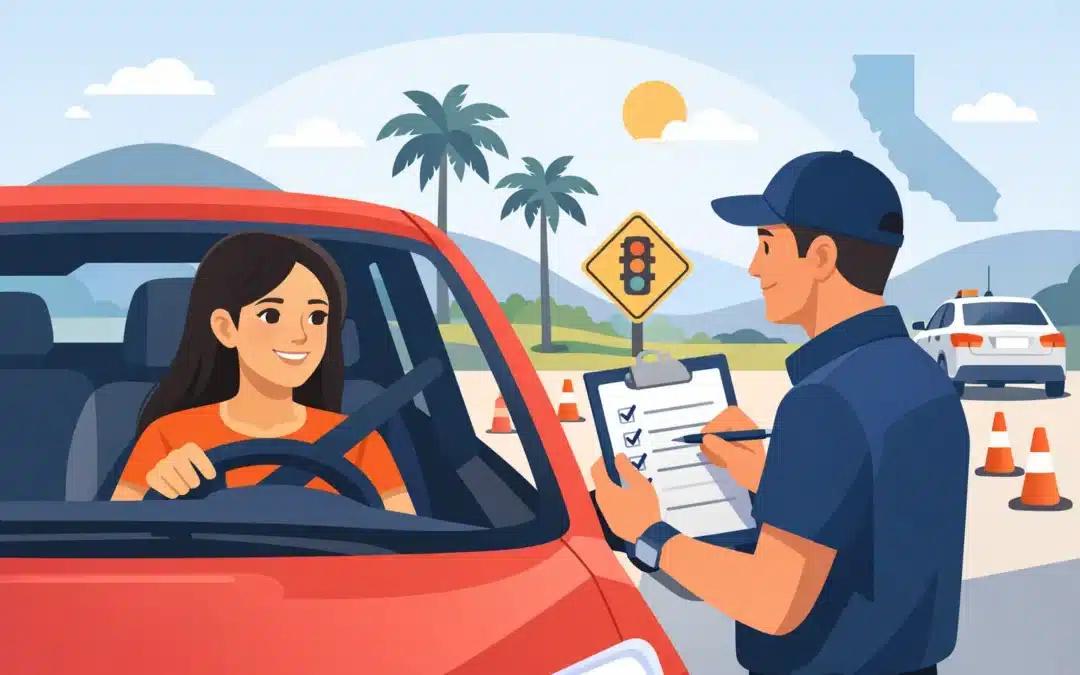
A road test can be over in 20 minutes, but the result reflects weeks of habits. The best road test checklist does more than remind you to bring your permit. It helps you practice the small safety decisions a DMV examiner is watching for: complete stops, proper scanning, controlled turns, and calm judgment around other road users.
For California teens, preparation should focus on safe, repeatable driving rather than trying to memorize a secret route. Every DMV office and examiner is different, but the standards are consistent. You need to show that you can control the vehicle, follow traffic laws, and respond safely when conditions change.
Best Road Test Checklist: Before You Leave Home
Test-day problems often start before the car moves. Put your required documents together the night before, then confirm your appointment time and DMV location. Bring your learner’s permit, proof of completed driver education and training if required for your situation, and any paperwork the DMV has instructed you to provide. If you are under 18, make sure a qualified licensed driver accompanies you.
Your test vehicle must also be legal and safe to drive. The DMV may cancel or delay a test if the car has an equipment issue, expired registration, or an insurance problem. Check that the registration and proof of insurance are current and available in the vehicle.
Use this quick vehicle check before heading out:
- Tires are properly inflated and do not show obvious damage.
- Headlights, brake lights, turn signals, and hazard lights work.
- Windshield wipers work and the windshield is clear enough for safe visibility.
- Mirrors are clean and adjusted for the driver.
- Doors close securely, seat belts work, and the passenger seat is usable for the examiner.
- The fuel level is sufficient for the drive to the DMV and the test.
Do not arrive in a car with a warning light you have ignored or a cracked windshield that limits visibility. A small mechanical issue may feel unrelated to your driving ability, but the examiner must confirm that the vehicle is safe for a road test.
Know the Car Before the Examiner Gets In
Many new drivers are comfortable driving one familiar route but have not practiced operating every control in the car. Before your appointment, sit in the driver’s seat and locate the headlights, defroster, windshield wipers, turn signals, hazard lights, parking brake, and horn. Know how to release the parking brake and how to adjust the mirrors without taking your attention away from the road for too long.
The examiner may ask you to identify or demonstrate certain controls before the drive begins. Answer calmly. If you need a moment to look, take it. Guessing is less useful than showing that you can safely find and use the control.
Practice the Skills the Road Test Actually Measures
The goal is not perfect driving with no corrections. The goal is safe driving with good observation, legal choices, and steady vehicle control. Practice in the type of neighborhoods and streets commonly used near your DMV office, including residential roads, intersections, traffic lights, lane changes, and parking areas.
Stops, Intersections, and Right-of-Way
Come to a full stop behind the limit line, crosswalk, or corner. A rolling stop is one of the easiest mistakes to make when nerves are high. Pause long enough to confirm the intersection is clear, then proceed only when it is your turn.
At four-way stops, do not rush to be polite. Follow right-of-way rules and make a clear, predictable decision. Yield to pedestrians, cyclists, and traffic that has the right-of-way. When turning left, wait for a safe gap instead of trying to squeeze through one.
At uncontrolled intersections, reduce speed and scan carefully. Residential streets can have parked cars, children, pets, delivery vehicles, and drivers backing out of driveways. The examiner wants to see that you expect hazards rather than react late.
Turns, Lane Changes, and Speed Control
Build a consistent routine for every turn: check mirrors, signal early, check for cyclists or pedestrians, slow smoothly, and turn into the correct lane. Avoid swinging wide into another lane or cutting across a corner too sharply.
For lane changes, use your signal, check mirrors, look over your shoulder for the blind spot, and move only when there is a safe opening. Do not depend on mirrors alone. A visible shoulder check is one of the clearest ways to show the examiner that you are checking the full traffic picture.
Match your speed to the posted limit and road conditions. Driving too fast is risky, but driving far below the speed of traffic without a reason can also create problems. In school zones, neighborhoods, rain, heavy traffic, or areas with limited visibility, slow down as needed. Safe driving is not about holding one number on the speedometer. It is about choosing a speed that gives you time and space to respond.
Backing and Parking
Practice backing in a straight line, using proper observation and slow steering. Look behind you through the rear window when backing, while using mirrors as support. Do not rely only on a backup camera. Cameras can help, but they do not replace looking where the vehicle is going.
California road tests may include a parking exercise, often involving pulling up alongside a curb and backing in a straight line. Practice stopping close enough to the curb without touching it. If your local route includes a hill, review uphill and downhill parking rules, including when to turn your wheels toward or away from the curb.
Test-Day Habits That Make a Difference
Give yourself extra time. Arriving early lets you settle in, adjust the seat and mirrors, and use the restroom before checking in. Rushing into the DMV parking lot is a poor start to a test that measures judgment.
Wear comfortable shoes that give you reliable control of the pedals. Avoid heavy boots, loose sandals, or anything that makes it harder to feel the brake and accelerator. Keep your phone put away before the vehicle begins moving.
During the test, listen to the examiner’s directions all the way through. If you genuinely do not hear or understand an instruction, ask for clarification before acting. Do not make sudden turns because you think you heard a street name. Missing a turn is usually less serious than making an unsafe maneuver to catch it.
If you make a minor mistake, keep driving safely. A slightly awkward parking adjustment or a late-but-safe turn signal does not automatically mean the test is over. Many students lose focus after one error and make a second, more serious one. Take a breath, reset your attention, and continue using the same safe routines you practiced.
A Parent’s Role in Road Test Preparation
Parents can make practice more productive by being specific. Instead of saying, “Be more careful,” point out the action that needs work: “At the next stop sign, stop before the crosswalk and look left, right, then left again.” Clear feedback gives teens a skill they can repeat on the next block.
It also helps to schedule shorter, focused drives. One practice session can emphasize smooth stops and intersections; another can focus on lane changes and blind-spot checks. Long drives have value, but targeted repetition is often what turns a weak habit into a dependable one.
If your teen is still uncertain about traffic judgment, turns, or DMV test procedures, professional behind-the-wheel lessons can provide an objective assessment before test day. Teen Driving Academy helps local permit holders practice with DMV-licensed instructors and can also reduce logistics stress with DMV test support services, including transportation and use of a school vehicle when eligible.
The Night-Before Road Test Check
The night before, confirm the appointment, documents, vehicle, and route to the DMV. Then stop cramming. A rested driver notices more, reacts more smoothly, and makes better decisions than one who stayed up late replaying every possible mistake.
Your road test is not a performance designed to impress an examiner. It is a chance to demonstrate the safe habits that protect you, your passengers, and everyone sharing the road. Practice those habits until they feel ordinary, and test day becomes one more careful drive.