
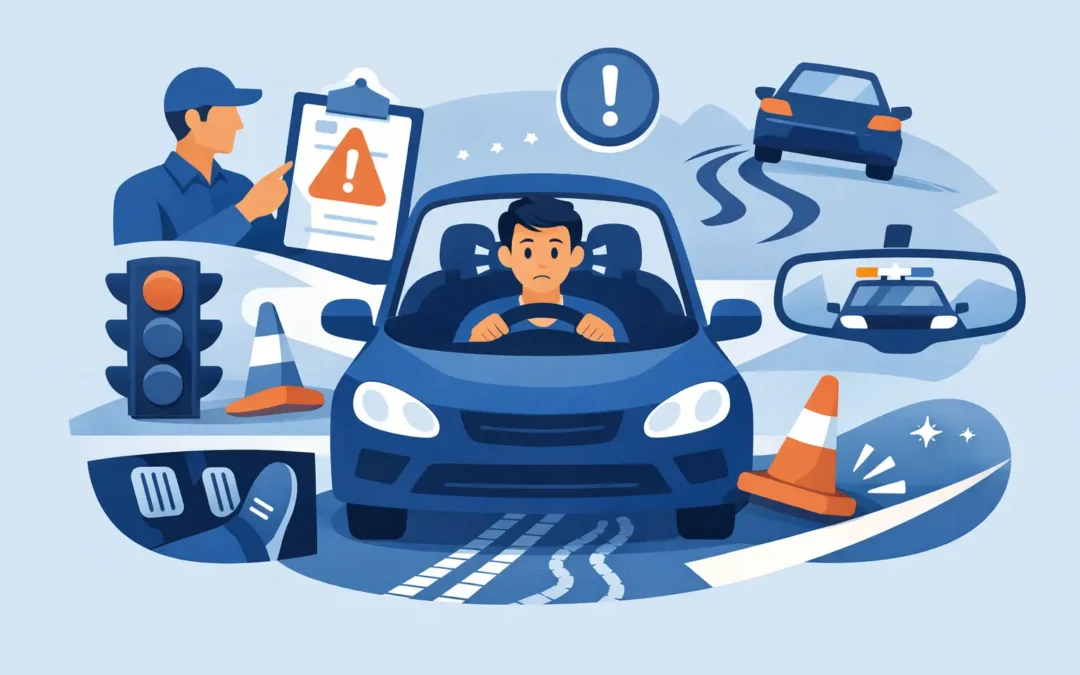
The road test usually doesn’t go badly because of one huge mistake. More often, teens lose points for small habits that add up fast. If you want to avoid the most common road test mistakes, the goal is simple: show the examiner that you can drive safely, stay aware, and make steady decisions under normal traffic conditions.
That matters for teens and parents alike. A failed test can mean another DMV appointment, more time off work, more stress, and more waiting. The good news is that most road test errors are predictable, which means they can be corrected with focused practice before test day.
Why common road test mistakes happen
Most test-day errors come from nerves, not lack of intelligence. A teen who can drive well during practice may still rush a stop, miss a mirror check, or drift too wide on a turn when an examiner is sitting beside them.
The other issue is inconsistency. Many new drivers know the rules but do not follow them the same way every time. On a road test, that matters. Examiners are looking for safe habits, not occasional good choices.
Common road test mistakes that lead to point loss
Rolling through stop signs
This is one of the biggest problems on DMV tests. A complete stop means the vehicle fully stops moving behind the limit line, crosswalk, or corner. Slowing down is not enough.
Many teens roll because they are trying to keep traffic moving or because they check for cars before the vehicle has fully stopped. The better habit is stop first, then scan left, right, and left again before moving.
Forgetting to check mirrors and blind spots
Examiners pay close attention to head movement. If you change lanes, pull away from the curb, merge, or back up without checking properly, it can cost you.
This is where practice needs to be deliberate. Looking with your eyes only is often too subtle for a road test. Use clear, natural head checks so the examiner can see that you are scanning your surroundings.
Driving too fast or too slowly
Speed control is not just about avoiding a ticket. If you drive over the limit, especially near schools, parked cars, or busy intersections, it signals poor judgment. But driving too slowly can also create problems if traffic and road conditions support a normal speed.
It depends on the situation. A residential street with limited visibility may call for extra caution. A wider road with light traffic may require you to keep up more confidently. The key is choosing a safe, reasonable speed based on conditions, not just guessing.
Poor lane positioning
New drivers often drift within the lane or drive too close to parked cars. Others swing too wide on right turns or cut left turns too short. These are common road test mistakes because they show weak vehicle control.
Good lane position comes from looking ahead, not down at the hood. Keep the car centered, maintain a steady path, and finish turns into the correct lane unless signs or markings direct otherwise.
Incomplete stops for right turns on red
In California, a right turn on red is allowed in many situations, but only after a full stop and only when it is safe. Teens sometimes treat these turns like yields, especially when they are focused on finding a gap in traffic.
The examiner wants to see patience here. Stop completely, check for pedestrians, watch cross traffic, and turn only when the path is clear. If visibility is limited, edge forward carefully after stopping.
Not scanning for pedestrians and cyclists
A teen can do everything right with speed and signaling, then lose points by missing a pedestrian near a crosswalk or a cyclist approaching from behind. In many California neighborhoods, this matters a lot.
You should be scanning sidewalks, corners, driveways, and bike lanes regularly. Before turns, especially right turns, look again. Pedestrians and cyclists can appear quickly, and examiners notice whether you are actively watching for them.
Signaling too late or not at all
Signals are one of the easiest habits to fix, yet many drivers still miss them under pressure. A late signal gives other drivers less time to react. No signal at all suggests you are not communicating your intentions.
Build the habit early. Signal before lane changes, turns, and pulling in or out of the curb. The exact distance may vary by situation, but earlier is usually better as long as it does not confuse other traffic.
Following too closely
On a test, tailgating makes you look rushed and unsafe. Teens often do this accidentally because they are focused on the car ahead instead of the full traffic picture.
Leave enough space to react smoothly if traffic slows. A safe following distance also helps you brake gradually, which makes your driving look more controlled and confident.
Braking too hard or too late
Rough stops usually point to late recognition. If you scan farther ahead, you can spot stale green lights, slowing traffic, and turning vehicles sooner.
This does not mean braking too early for everything. It means planning ahead. Smooth braking shows control, awareness, and judgment, which are exactly what the examiner is evaluating.
Letting nerves control the drive
Test anxiety is real, especially for first-time drivers. Nervous drivers may grip the wheel too tightly, forget simple routines, or rush decisions because silence in the car feels uncomfortable.
The fix is preparation, not perfection. Practice the same basic routines until they feel automatic. If you make a minor mistake during the test, do not assume you failed. Stay calm and keep driving safely.
How to practice the right way before test day
The best preparation is not random driving. It is focused repetition of the exact skills that appear on the test. That includes residential driving, lane changes, intersections, turns, backing, curb pull-outs, and parking near a curb.
It also helps to practice in the area around the DMV if possible. Not to memorize a route, but to get comfortable with the traffic speed, lane markings, school zones, and typical intersection setups. Familiar surroundings can lower stress and improve decision-making.
Parents should pay attention to habits, not just major errors. A teen who never fully stops, forgets blind spots once in a while, or signals late may seem fine during everyday practice, but those details matter on a road test.
Professional instruction can make a difference here because it brings structure. An experienced instructor can spot recurring mistakes quickly, correct them before they become ingrained, and help teens practice in a way that matches DMV expectations.
What examiners are really looking for
Many teens think the road test is designed to trick them. It isn’t. The examiner is looking for a driver who is safe, observant, and consistent.
That means you do not need to drive in a flashy or overly cautious way. You need to demonstrate control of the vehicle, awareness of traffic conditions, and good judgment at normal driving moments. Smooth decisions usually score better than hesitant ones, but rushed decisions rarely do.
If you are a parent, this is the standard worth focusing on during practice. Not whether your teen looks experienced, but whether they reliably make safe choices in ordinary situations.
A better way to reduce test-day stress
One reason families appreciate structured road test preparation is that it removes guesswork. When teens practice with clear feedback, use a vehicle they know, and arrive at the DMV feeling organized, confidence improves.
For many families in North Orange County, that convenience matters almost as much as instruction. Services like DMV transportation and use of a training vehicle can reduce last-minute stress, especially if the family car is not ideal for the test or a parent’s schedule is tight. Teen Driving Academy has built its training around that kind of practical support because the easier the process feels, the better students tend to perform.
A road test is not about being perfect. It is about proving that your habits are safe enough for real-world driving. Practice the small things until they become automatic, and test day starts to feel a lot more manageable.