
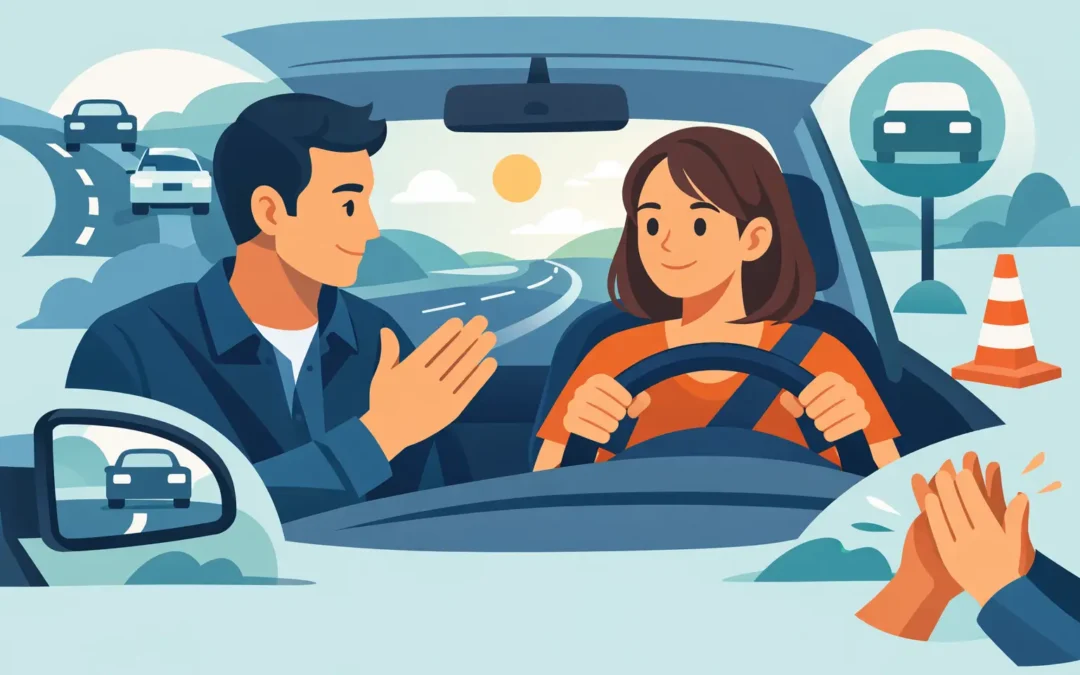
A teen can make a smooth right turn in an empty parking lot and still freeze when traffic stacks up behind them. That gap is normal. Learning how to build teen driving confidence is not about pushing a new driver into difficult situations before they are ready. It is about giving them enough safe, repeated practice that each skill starts to feel familiar.
For California families, confidence should grow alongside the required driver training process. A learner’s permit, professional behind-the-wheel lessons, supervised family practice, and road test preparation each serve a different purpose. When those pieces are organized well, teens are more likely to become calm, observant, responsible drivers rather than simply drivers who can pass a test.
Start With Skills, Not Traffic
Confidence built on luck does not last. A teen who has only driven on quiet streets may feel capable until they meet a busy intersection, a confusing lane change, or an impatient driver. The better approach is to build one skill at a time and raise the difficulty gradually.
Begin in low-pressure settings where a teen can focus on vehicle control. They should become comfortable with seat and mirror adjustments, smooth braking, steering, turn signals, scanning, and checking blind spots. Once those actions require less conscious effort, they have more attention available for traffic decisions.
Practice should move forward in stages. Quiet neighborhood streets come before multi-lane roads. Daytime driving comes before nighttime driving. Familiar routes come before unfamiliar areas. This progression is not about avoiding challenge. It gives teens a chance to meet challenge with the right foundation already in place.
A useful question after every drive is: “What felt easier today than last time?” That question helps teens recognize progress, even when they still have mistakes to correct.
Create a Consistent Practice Plan
Long, stressful driving sessions are rarely the fastest way to improve. Short, regular practice drives are often more effective because they give a teen time to absorb feedback and return with a clear goal.
Set aside practice time two or three times a week when possible. Each drive should have a purpose, such as maintaining a safe following distance, making controlled left turns, entering a main road, parking, or navigating a specific route. Avoid trying to coach every driving skill in one trip.
Keep a simple record of what was practiced, what went well, and what needs another session. This is particularly helpful for parents coordinating practice around school, work, sports, and family schedules. It also makes the required supervised driving hours feel manageable instead of rushed near the licensing deadline.
For teens under 18, California requires supervised practice in addition to professional instruction, including nighttime driving experience. Families should plan for those conditions gradually. A first nighttime drive may be best on familiar, well-lit streets rather than during heavy rain or on a crowded freeway.
Use Calm, Specific Coaching
The adult in the passenger seat has a major effect on a teen’s confidence. Sharp comments, last-second directions, or constant corrections can make a new driver tense. On the other hand, saying nothing when a safety issue repeats does not help either.
The most useful coaching is calm and specific. Instead of saying, “You’re driving too fast,” try, “The speed limit changes ahead. Ease off the accelerator now so you have time to adjust.” Instead of, “Watch out,” say, “Check the crosswalk before you turn right.” Specific language tells the teen what action to take.
Give directions early enough for the teen to process them. New drivers need more time than experienced drivers to identify a turn, check mirrors, signal, and position the vehicle. If a turn is missed, continue safely and reroute. Missing a turn is far less serious than making a sudden maneuver to catch it.
It also helps to limit feedback during the drive to immediate safety needs. Discuss smaller corrections after parking. A teen who hears five critiques at once may remember none of them. Choose one or two priorities for the next practice session.
Build Teen Driving Confidence in Real Conditions
A road test route cannot prepare a teen for every situation they will face after licensing. Confidence becomes practical when teens learn to manage changing conditions without becoming overwhelmed.
As skills improve, introduce a wider range of driving environments. This can include busier intersections, school zones, shopping center parking lots, multi-lane roads, freeway entrances and exits, rain, dusk, and night driving. There is no need to force every condition into the first few weeks of practice. The right timing depends on the teen’s current control, awareness, and comfort level.
Some teens are ready for freeway driving sooner than others. Before attempting it, they should reliably check mirrors and blind spots, maintain speed, judge following distance, and make lane changes without drifting or panicking. Start with a quieter stretch during daylight hours, then build toward more complex traffic.
Parking deserves focused practice as well. Many teens avoid it because it feels public and embarrassing when they need multiple attempts. Choose an open lot first, use reference points, and practice stopping, reversing, and straightening the vehicle. The goal is not a perfect first attempt. The goal is knowing how to correct safely.
Teach Decision-Making, Not Just Maneuvers
A confident driver does not assume other people will do the right thing. They look ahead, leave space, and keep options open. That mindset should be part of every supervised drive.
Encourage teens to scan well beyond the car directly in front of them. They should notice brake lights ahead, pedestrians near corners, cars waiting to pull out, cyclists, and changing traffic signals. Ask occasional questions while parked or after the drive: “What could that driver do next?” or “Where was your safest space if traffic slowed suddenly?”
This type of conversation teaches hazard recognition without turning the drive into a quiz. It also reinforces that defensive driving is not fearful driving. It is prepared driving.
Phones are another confidence issue because distraction can make a teen feel in control right up until attention is needed most. Before the car moves, set the phone to Do Not Disturb, place it out of reach, program navigation, and handle music choices. A teen should never need to manage a screen while navigating traffic.
Add Professional Lessons at the Right Time
Family practice is essential, but a DMV-licensed instructor brings a different kind of support. Instructors are trained to identify skill gaps, teach safe habits in a structured sequence, and provide feedback without the emotional pressure that can sometimes occur between parents and teens.
Professional behind-the-wheel lessons are especially helpful when a teen is nervous, has stopped practicing after a difficult experience, or needs help with lane changes, freeway driving, parking, or road test expectations. They can also help parents understand what to reinforce during home practice.
Teen Driving Academy has worked with California teen drivers since 1990 and provides structured behind-the-wheel training for permit holders in North Orange County and nearby communities. For families balancing busy schedules, a planned lesson package can create momentum and make it easier to keep practice moving forward.
The goal is not to replace parent practice. It is to combine professional instruction with regular supervised driving so the teen hears consistent safety habits and gets enough repetition to trust their own skills.
Prepare for the Road Test Without Making It the Only Goal
The California driving test matters, but treating every practice drive like an exam can increase anxiety. A teen should know the basics the examiner will evaluate: safe vehicle control, observation, appropriate speed, turns, stops, lane changes, and response to traffic conditions. More importantly, they should understand why those habits protect people.
Before the test, complete a realistic practice drive with simple directions and minimal coaching. This shows whether the teen can make decisions independently. If they make an error, use it as information. A missed mirror check or a rushed stop is a skill to revisit, not proof that they are not ready.
Families should also remove avoidable test-day stress. Confirm the appointment details, required documents, vehicle condition, and insurance requirements in advance. Some teens benefit from DMV test services that provide transportation and a training vehicle, especially when the family vehicle is unavailable or unfamiliar to the student.
A confident teen driver is not one who believes nothing can go wrong. They are the driver who knows what to do when traffic changes, a turn is missed, or a mistake needs correcting. Give that confidence time, structure, and calm practice. It will serve them long after the license is in hand.