
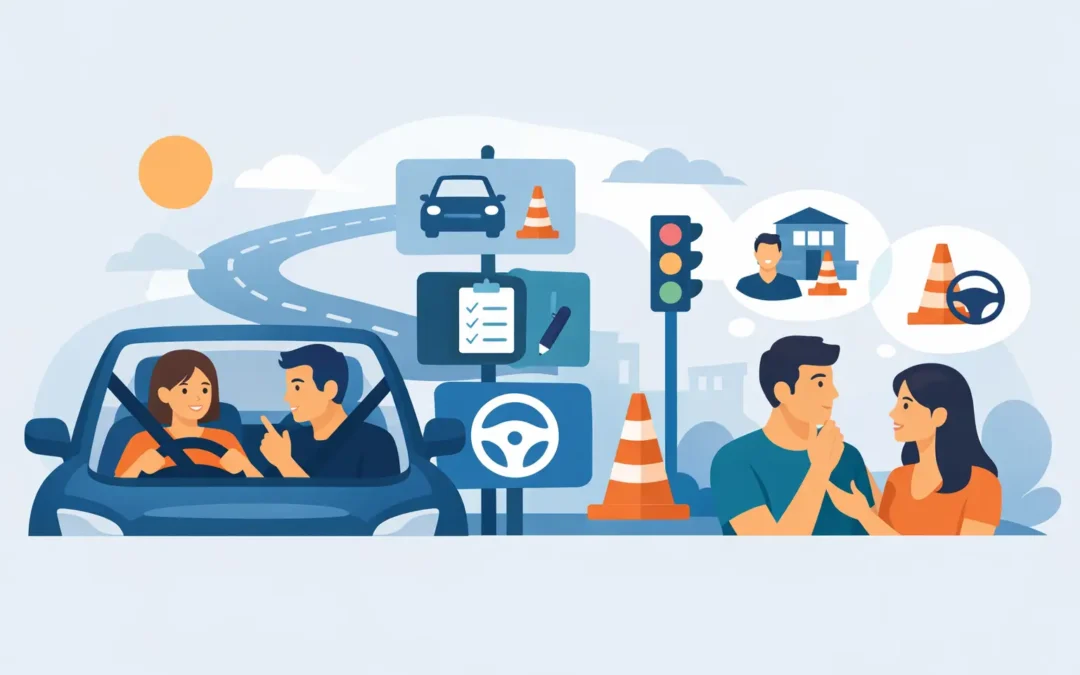
A low price can look great until your teen is stuck waiting weeks for a lesson, practicing in an unreliable car, or getting vague instruction that does not build confidence. Choosing the right teen driving school is not just about checking a box for California requirements. It is about finding a program that helps teens learn safely, stay on track, and get to the license test with less stress for the whole family.
For most families, the best choice comes down to three things: legitimacy, convenience, and a training approach built specifically for new drivers. Teens need clear instruction and steady practice. Parents need to know the school is licensed, organized, and easy to work with. When both sides get what they need, the path from permit to license becomes much smoother.
What a teen driving school should actually provide
A quality teen driving school does more than offer a few driving lessons. It should support the full process that California teens go through, starting with driver education and continuing through behind-the-wheel training and road test preparation.
That means the school should be set up for first-time drivers, not just occasional refresher lessons. Teens often need step-by-step coaching on basics such as mirror use, lane position, turns, residential driving, speed control, parking, and hazard awareness. A strong program builds these skills in a logical order so students are not overwhelmed early on.
Parents should also expect clarity. If pricing is hard to find, package details are confusing, or nobody can explain what happens after enrollment, that usually creates more frustration later. A school that works with teens every day should be able to explain the process simply and clearly.
Why specialization matters for teen drivers
Not every driving school is focused on teens. Some schools work with adults, international drivers, seniors, and teens all under one general model. That does not automatically make them a poor choice, but teen instruction is different.
A teenager with a new permit usually needs more structure, more repetition, and more encouragement than an adult learner. They may understand the rules in theory but still struggle with speed judgment, scanning intersections, or staying calm in traffic. An instructor who works with teen students regularly will usually be better at correcting those habits early.
That specialization also matters for parents. Families are often balancing school schedules, sports, part-time jobs, and work hours. A teen-focused school is more likely to offer package options and scheduling that match how families actually move through the licensing process.
Teen driving school requirements in California
California has specific requirements for minors, and a good school should make those easy to understand. Teens generally need to complete driver education before getting a learner’s permit, then complete the required behind-the-wheel training before becoming eligible for a license.
This is where details matter. Some families assume any online course or any lesson package will do, then find out too late that they need something more specific. A reliable school should clearly explain what the student is completing, what documents are provided, and what the next step is after each stage.
It also helps when the school understands how to move students forward quickly. If a teen is ready to start driver education now, waiting around for paperwork or unclear instructions only slows things down. Fast-start enrollment and a straightforward process can make a real difference.
How to evaluate instructors
The instructor is the part of the service your teen will remember most, and it is where quality shows up fast. A licensed, screened, professional instructor can turn a nervous beginner into a more capable driver. A poor fit can make lessons stressful and unproductive.
Look for a school that emphasizes DMV licensing and instructor screening. Those are not small details. They speak directly to safety, professionalism, and accountability. For parents, this is often one of the biggest trust factors.
Beyond credentials, teaching style matters. Teens learn best when instruction is calm, direct, and specific. They need correction without panic and guidance without confusion. The best instructors know when to push a student forward and when to slow down and reinforce the basics.
Package options can save time and reduce stress
Many families start by pricing out one lesson at a time. That can seem flexible, but it is not always the easiest route. Lesson packages are often a better fit because they create a clearer plan and help teens build momentum.
A package can simplify scheduling, budgeting, and progress tracking. Instead of deciding what to do after every lesson, parents can choose a structured option that matches the teen’s current stage. For example, a student with a fresh permit may need a different package than a student who already has practice at home and is nearly test-ready.
There is also a convenience factor. If the school offers online education, in-car training, and road test support in one place, families spend less time coordinating multiple providers. That matters when everyone is already managing school calendars and workdays.
The value of DMV test support
Road test day is stressful even for confident students. For many families, this is where a school can remove a major headache. DMV test services, including transportation to the DMV and use of the school’s vehicle for the test, are not just extras. They can be one of the most useful parts of the entire experience.
The biggest advantage is familiarity. If a teen tests in a car they have already practiced in, that can reduce anxiety and help them focus. It also helps parents avoid questions about whether their own vehicle is test-ready, properly documented, and available at the right time.
There is a practical side too. Working parents may not be able to take a large chunk of the day off to manage the appointment, transportation, and last-minute prep. Test support can turn a complicated errand into a much simpler appointment.
What local experience adds
A school that knows your area has an advantage. Local instructors understand the roads, traffic patterns, and testing conditions that students are likely to face. That can make lessons more relevant and road test preparation more targeted.
For teens in North Orange County and nearby communities, local experience can help instructors prepare students for the kinds of routes and real-world traffic situations they will actually encounter. That includes residential neighborhoods, busy commercial streets, school zones, lane changes in heavier traffic, and the pressure of making good decisions quickly.
A long local track record also gives families more confidence. Schools that have trained large numbers of students over many years tend to have stronger systems, clearer communication, and more predictable service. Teen Driving Academy, for example, has served local families since 1990 and built its reputation around teen-focused instruction and convenience.
Signs a school may not be the right fit
Some warning signs are easy to miss at first. If the school is vague about pricing, hard to reach, or unclear about what is included, expect problems later. If there is no emphasis on licensing, screening, or California compliance, that should raise concerns.
Another issue is a one-size-fits-all approach. Teens do not all start from the same place. Some are highly nervous. Some are overconfident. Some need extra support with parking, lane control, or traffic judgment. A school should have enough structure to guide students, but enough flexibility to adjust to the individual.
Speed alone is not always a good sign either. Families want fast enrollment and efficient scheduling, but real skill-building takes practice. The goal is not just to finish requirements quickly. It is to help the teen become safer and more prepared.
How parents can make the final decision
Start by comparing schools on the factors that affect daily life, not just the advertised price. Ask whether the instructors are licensed and screened, whether the school specializes in teen drivers, how easy it is to schedule lessons, and whether the business offers support beyond the minimum requirements.
Then think about your teen’s needs honestly. A nervous first-time driver may benefit from a more structured package and instructors experienced with anxious beginners. A teen who already has strong practice at home may be focused more on polishing test skills and meeting final requirements. The best option depends on where the student is starting.
If the school makes the process clear, offers practical scheduling, and gives you confidence in the people teaching your teen, that is usually the right direction. Driver training should lower stress, not add to it.
A good teen driving school helps families do more than reach the DMV test date. It gives teens a safer start behind the wheel and gives parents one less thing to worry about while they get there.