
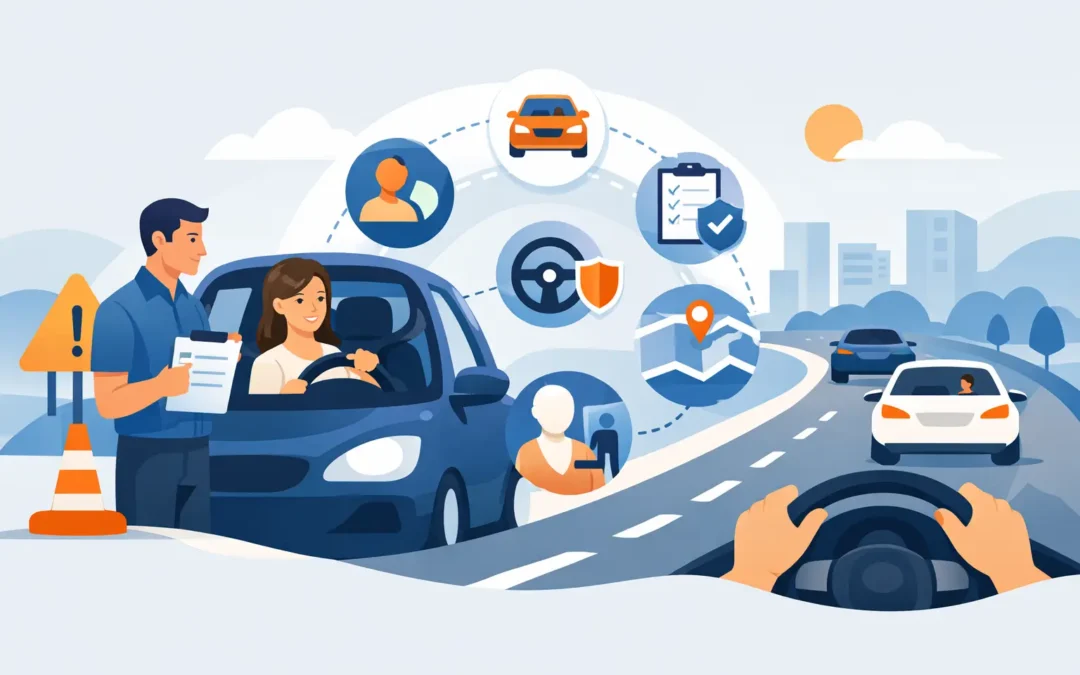
A learner’s permit is a beginning, not a sign that a teen is ready to drive alone. A structured teen driving program gives new drivers and their parents a clear plan for building real skill between the permit test and the DMV road test. Instead of trying to fit practice into busy schedules without knowing what to cover next, families can follow a progression designed around California licensing requirements, safe habits, and practical road-test preparation.
For parents, structure also means fewer unanswered questions. You know when professional lessons should happen, what your teen should practice at home, and how to tell whether they are improving. For teens, it replaces the pressure of figuring everything out at once with manageable steps.
What a Structured Teen Driving Program Should Include
A good program does more than schedule a few drives. It connects driver education, professional behind-the-wheel instruction, parent-supervised practice, and DMV test preparation in an order that makes sense for a first-time driver.
The first stage is driver education. California teens need to understand traffic laws, signs, right-of-way rules, defensive-driving basics, and the consequences of distracted or impaired driving before they begin practicing on public roads. An online course can be especially helpful for busy families because a teen can complete lessons at a steady pace from home while preparing for the knowledge test.
Once a teen has a permit, behind-the-wheel lessons provide the controlled, professional start that many families need. A DMV-licensed instructor can introduce vehicle controls, proper mirror use, scanning, lane position, braking, turns, and parking without the stress that can come from learning everything with a parent in the passenger seat.
A complete program should also set clear practice goals for home driving. California requires permit holders under 18 to complete supervised practice, including nighttime driving, in addition to professional instruction. Those hours matter, but simply adding up time behind the wheel is not enough. Practice should cover different roads, traffic conditions, speeds, and situations.
Finally, the program should prepare the student for the road test without treating it as the only goal. Road-test readiness comes from repeatable safe habits, not memorizing one DMV route.
Why the Order of Lessons Matters
New drivers have a lot to process at once. They must watch traffic, control the vehicle, read signs, judge speed and distance, make decisions, and remain calm. When lessons jump too quickly into busy intersections, freeway traffic, or difficult parking maneuvers, teens can become overwhelmed. When they stay on quiet streets for too long, they may feel confident without being prepared for real-world driving.
A structured approach builds skills in layers. Early drives focus on the basics: smooth acceleration and braking, steering control, turns, stopping at intersections, and recognizing hazards. As those actions become more natural, instruction can move to lane changes, multilane roads, complex intersections, parking lots, and higher-speed routes.
Freeway driving is a good example of why progression matters. A teen first needs confidence with mirrors, speed control, following distance, and lane position. Then they can work on entering traffic, matching speed, changing lanes safely, and exiting with enough space. Skipping the foundation can make freeway practice feel frightening. Waiting until the final week before a road test can leave a student unprepared.
The right pace depends on the teen. Some students quickly become comfortable operating the car but need more help anticipating other drivers. Others are cautious and responsible but need repeated practice making decisions with confidence. Professional instruction should adapt to those differences while still moving the student forward.
Professional Lessons and Parent Practice Have Different Jobs
Parents do not need to be professional instructors to help their teen become a safe driver. Their role is essential because supervised practice creates familiarity and gives teens the repetition they need. The most effective programs treat professional lessons and home practice as partners, not substitutes.
An instructor brings objective feedback, a training vehicle, and experience teaching the skills that California teens need to demonstrate. They can identify habits a parent may not notice, such as inconsistent mirror checks, rolling stops, late braking, or turning too wide. They can also introduce challenging situations calmly and give specific corrections before a mistake becomes a habit.
Parents provide regular exposure to daily driving. A drive to school, sports practice, work, or the grocery store can become useful practice when it has a purpose. After a professional lesson on lane changes, for example, a parent can help the teen practice that skill on a familiar route. After a lesson on parking, a quiet shopping-center lot offers time for repetition.
The goal is not to coach every second of the drive. Too many instructions at once can distract a new driver. Before leaving, agree on one or two skills to focus on. After parking, talk about what went well and one area to practice next time. Calm, specific feedback is more useful than criticism after every mistake.
A Clear Practice Plan Builds Better Habits
A teen’s supervised driving log should reflect a variety of real driving experiences. Repeating the same short route may help with basic vehicle control, but it does not prepare a driver for changing conditions. As skills grow, practice should include residential streets, business areas, heavier traffic, different times of day, and nighttime conditions.
A balanced plan can include these four areas:
- Low-speed control, including backing, parking, turns, and safe braking.
- Traffic awareness, including intersections, pedestrians, bicyclists, and proper right-of-way decisions.
- Roadway skills, including lane changes, following distance, speed management, and merging.
- Independent decision-making, where the teen explains what they see and what they plan to do before acting.
Not every drive needs to be long. A focused 25-minute practice session can be more productive than an unfocused hour. Consistency matters. Teens who drive regularly across several months have more time to turn safe actions into habits than teens who wait and try to cram practice into the final few weeks.
Weather and traffic also create useful learning opportunities, but only when the teen is ready. A light rain can teach the importance of slower speeds and greater following distance. Evening practice can improve visibility awareness. Heavy traffic may be appropriate after a teen has demonstrated solid control on less demanding roads. Safety should guide the plan, not the calendar alone.
How Structure Reduces Road-Test Stress
Many teens worry about the DMV road test because it feels like one high-stakes moment. The best way to reduce that pressure is to make the test a familiar demonstration of skills they have practiced many times.
Before scheduling a road test, a student should be able to drive with steady control and limited prompting. That includes checking mirrors, scanning intersections, signaling early, making complete stops, maintaining appropriate speed, changing lanes safely, and parking with awareness of surrounding traffic. A teen does not need to drive perfectly. They do need to show safe judgment consistently.
A road-test preparation lesson can be valuable near the end of training because it identifies remaining weak spots. Maybe the student needs more work on right turns at red lights, backing in a straight line, or checking blind spots before moving over. Finding those details early gives the family time to practice them instead of hoping they disappear on test day.
Convenience can matter, too. For families in North Orange County, coordinating a DMV appointment, transportation, and access to a reliable vehicle can add unnecessary stress. Services that provide DMV test transportation and use of a school vehicle can simplify the day, particularly for parents balancing work and other responsibilities.
Choosing the Right Program for Your Teen
Look for a school that specializes in teen training, uses DMV-licensed instructors, and explains its packages clearly. Families should understand what is included, how lessons are scheduled, and where the school serves before enrolling. A lower-priced option is not always the better value if it leaves a teen without enough instruction, practice guidance, or support before the DMV test.
It also helps to choose a program that respects the individual student. Some teens need a confidence-building start. Others are ready to progress quickly after they have the basics down. The right training plan offers structure without forcing every student into the same pace.
Teen Driving Academy has helped California families since 1990 with online driver education, behind-the-wheel lessons, and DMV test support designed for the actual needs of first-time drivers. The next helpful step is simple: start early, build practice into the family schedule, and let each lesson prepare your teen for the one after it.