
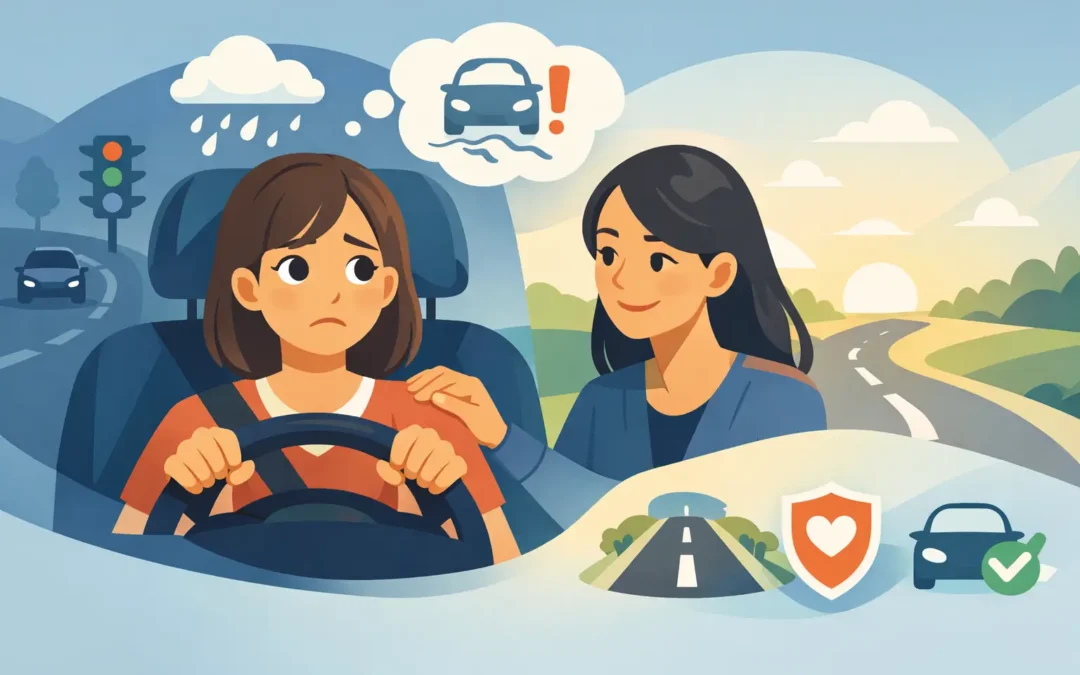
The first time a teen pulls out of a parking lot and into real traffic, anxiety can show up fast. Hands tighten on the wheel, turns feel rushed, and every car nearby seems too close. If you are looking for teen driving anxiety help, the good news is that this is common, manageable, and usually improved with the right kind of practice.
Driving anxiety does not always mean a teen is not ready. More often, it means the learning process needs to be more structured. For parents, that can be frustrating because you want progress. For teens, it can feel embarrassing because other people make driving look easy. The truth is that safe driving confidence is built in stages, not all at once.
What teen driving anxiety usually looks like
Some teens say they are nervous. Others avoid driving altogether, ask to postpone lessons, or become overly upset after a small mistake. Anxiety can show up physically too – sweaty hands, shallow breathing, tense shoulders, or trouble focusing on directions.
It can also look like overcorrection. A teen may brake too hard, freeze at intersections, hesitate too long on left turns, or stare only at the car ahead instead of scanning the road. These are not character flaws. They are signs that the brain is overloaded and trying to manage too much information at once.
That matters because anxious driving can create a cycle. The teen feels stressed, makes a mistake, feels worse, and starts to expect the next drive to go badly too. Breaking that cycle takes calm repetition and realistic expectations.
Why some teens feel more anxious behind the wheel
A few factors tend to raise stress quickly. One is lack of familiarity. A teen who has barely sat in the driver’s seat may feel overwhelmed by mirrors, speed control, lane position, signs, and other traffic all at once. Another is pressure. If a parent sounds tense or a teen feels judged, anxiety often increases.
Personality plays a role too. Cautious teens are often safer in the long run, but they may take longer to feel comfortable. A teen who already deals with school stress or test anxiety may also feel that same pressure while driving. Previous close calls, even as a passenger, can make the road feel less predictable.
Sometimes the issue is not fear of driving itself. It is fear of making a mistake in front of a parent, instructor, or DMV examiner. That distinction matters because the solution is different. The goal is not to force confidence. It is to reduce the pressure and make progress feel achievable.
Teen driving anxiety help starts with smaller wins
The fastest way to make anxiety worse is to jump too far too soon. A teen who is uneasy in a quiet neighborhood does not need freeway driving on day two. Confidence grows when the next step feels challenging but manageable.
Start in low-pressure environments. Empty parking lots are useful for basic steering, braking, and parking, but they are only the beginning. After that, quiet residential streets are often the best next move. Then add simple right turns, wider roads, light traffic, busier intersections, and eventually more complex situations like lane changes and freeway merging.
Each practice session should have a narrow goal. One day might focus on smooth stops. Another might be lane position or unprotected left turns. When a teen knows exactly what they are practicing, the drive feels less chaotic. Short sessions also help. Forty focused minutes is usually more productive than two stressful hours.
How parents can reduce pressure in the car
Parents have a huge influence on how a teen feels behind the wheel. Even when your advice is correct, the delivery matters. Sharp corrections, constant commentary, or visible panic can make a nervous teen feel less capable.
Try giving directions early and clearly. Instead of a last-second, turn there, say, at the next light, we will make a right turn. Keep your voice steady. If a mistake happens, address it simply and move on. A teen who hears every error replayed in detail may start driving defensively in the wrong way – tense, hesitant, and afraid to act.
It also helps to separate safety feedback from frustration. If you are too stressed to coach calmly that day, it is better to stop and try again later. A bad practice session can do more harm than a shorter, calmer one.
When professional instruction makes a difference
Many families find that teen driving anxiety improves faster with a trained instructor. That is not because parents are doing everything wrong. It is because professional instructors bring structure, neutral feedback, and experience working with nervous beginners.
A DMV-licensed, screened instructor knows how to introduce skills in the right order and how to correct mistakes without increasing panic. For some teens, that neutral environment is a major relief. They are more willing to ask questions, less worried about disappointing anyone, and better able to focus on the road.
Professional lessons can also help parents. Instead of carrying the full burden of teaching, parents can reinforce skills between lessons. That tends to create a calmer rhythm at home and a more consistent learning process overall.
For families in North Orange County and nearby communities, choosing a school that specializes in teen drivers can make the path feel more straightforward. The right program should be clear about training steps, pricing, and what happens next, so both teens and parents know what to expect.
Practical ways to build confidence between lessons
Good teen driving anxiety help is not just about time in the car. It is also about what happens before and after each drive. A teen who arrives rushed, tired, or embarrassed is already starting at a disadvantage.
Before practice, keep the routine simple. Make sure the teen knows the route or goal for the day. Encourage a few slow breaths before starting the car. That sounds small, but physical tension affects decision-making.
After practice, keep the review balanced. Ask what felt better today than last time. Then talk about one or two skills to improve next time. If every discussion centers on mistakes, anxiety sticks around longer. If every mistake is ignored, improvement slows. The middle ground works best.
Consistency matters more than intensity. Three steady practice sessions a week usually beat one high-stress marathon on the weekend. Repetition helps the brain turn unfamiliar tasks into routine ones.
Preparing anxious teens for the DMV test
The DMV road test adds another layer of stress because it feels final. For anxious teens, the fear is often bigger than the actual test. They imagine one small error ruining everything.
The best approach is realistic preparation. Practice the kinds of skills the test actually checks – observation, signaling, lane control, smooth stopping, proper turns, backing, and parking. A teen does not need to drive perfectly. They need to drive safely, follow directions, and show consistent judgment.
A mock test can help, but only if it is handled calmly. Treat it like rehearsal, not a trap. If the teen struggles in one area, that simply shows what needs more repetition. It does not mean they are doomed to fail.
This is also where convenience matters more than people think. When families can combine lessons, road test preparation, and even transportation to the DMV with use of a training vehicle, the process feels less chaotic. Lower logistical stress often helps lower driving stress too.
When anxiety may need extra attention
Most teen driving anxiety improves with patient instruction and repeated exposure. Still, there are times to slow down and look closer. If a teen has intense panic symptoms, refuses to drive after many attempts, or becomes so distressed that learning stalls completely, it may be worth talking with a healthcare professional.
That does not automatically mean they should stop learning forever. It just means the support plan may need to be broader. Some teens benefit from addressing general anxiety first, then returning to driver training with better coping tools.
There is also no prize for rushing. In California, families often feel pressure to move quickly from permit to license. But readiness matters more than speed. A few extra weeks of guided practice is far better than pushing a teen into situations they cannot manage safely yet.
What progress really looks like
Progress is usually quieter than parents expect. It may look like fewer reminders to check mirrors. It may be a smoother stop sign approach, a calmer left turn, or less dread before a lesson. Those small wins matter because they show the teen is building control.
Confidence in driving is not the absence of nerves. It is the ability to stay focused, make decisions, and recover from minor mistakes without falling apart. That kind of confidence is learned.
If your teen is anxious, do not treat it as a dead end. Treat it as a signal to slow the process down, make the steps clearer, and get the right support around them. With calm instruction, consistent practice, and a structure built for beginners, most teens can move from fear to real independence one drive at a time.
A nervous start does not predict the kind of driver your teen will become. Often, the teens who begin cautiously turn into the most attentive drivers once they have the training and time they need.