
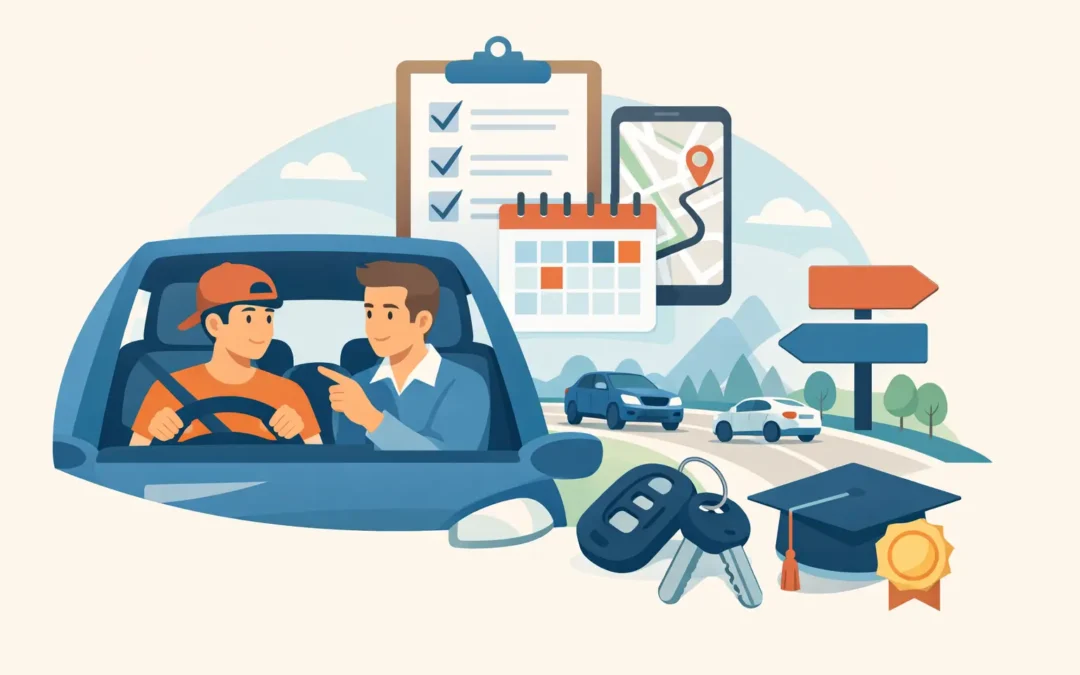
A driver’s license is a major step toward independence, but the path can feel complicated for both teens and parents. The right teen license training packages turn a long checklist into a clear plan: complete driver’s education, prepare for the permit test, build real driving skill, and arrive at the DMV ready for the road test.
For California families, a package should do more than combine services. It should provide qualified instruction, a realistic schedule, clear pricing, and support that fits the student’s current stage. A teen just starting driver’s education has different needs from a permit holder who needs focused road-test practice.
What Teen License Training Packages Should Include
A useful package begins with the services a teen actually needs. For students under 18, that generally means completing California driver’s education before applying for a learner’s permit, followed by the required behind-the-wheel instruction and supervised practice before the driving test. Families should always check current California DMV requirements, since rules and documentation can change.
Online driver’s education is often the most convenient first step. A self-paced course lets students study traffic laws, road signs, defensive driving habits, and California licensing rules around school, work, and activities. The best programs make it easy to track progress and complete the course without guessing what comes next.
Behind-the-wheel lessons are where knowledge becomes judgment. An instructor should help a new driver learn the basics, including smooth braking, steering control, lane changes, intersections, residential streets, and parking. As the student improves, lessons should move into more complex situations such as busy traffic, left turns, freeway driving when appropriate, and decision-making around cyclists and pedestrians.
A complete package may also include DMV test services. This can be a major convenience for working parents or families with limited access to a suitable test vehicle. Transportation to the DMV and use of the school vehicle for the road test can reduce last-minute stress, provided the student has completed the needed preparation and meets DMV eligibility requirements.
Choose a Package Based on the Teen’s Starting Point
There is no single package that fits every student. The right choice depends on where the teen is in the licensing process, their confidence level, and how much family practice is available.
Starting From the Beginning
For a teen who has not earned a learner’s permit, a package with online driver’s education and a plan for future in-car lessons is often the clearest option. Driver’s education provides the foundation for the permit test, while knowing the next steps in advance helps parents budget time and avoid scrambling to book lessons later.
This route works well for students who prefer to move through the process in order. It also gives families time to schedule DMV appointments and plan supervised practice once the permit is issued.
Permit Holders Who Need Required Lessons
A teen with a permit may need a package centered on professional behind-the-wheel training. California has minimum professional training requirements for minors, but meeting the minimum is not always the same as feeling ready to drive independently.
A structured bundle of lessons gives the instructor time to assess progress from one session to the next. Instead of treating each drive as a separate appointment, the training can build logically from basic control to traffic awareness, parking, and road-test maneuvers. This is especially helpful for teens who have not had many opportunities to practice with a parent.
Students Preparing for the DMV Road Test
For a teen who is close to the driving test, road-test preparation and DMV support may be the better fit. A final lesson can identify habits that need attention, such as incomplete stops, late turns, inconsistent mirror checks, rushed lane changes, or weak parking technique.
The trade-off is simple: a road-test package is efficient for a student with solid skills, but it cannot replace the practice needed by a beginner. If a teen is still uneasy in traffic or struggles to maintain control of the vehicle, more lessons and supervised driving time are usually the wiser investment.
What Parents Should Compare Before Enrolling
Price matters, but it should not be the only comparison point. A lower-cost option can become expensive if it does not include the services the student will need later. Before choosing a package, look at what is included, how lessons are scheduled, and whether there are clear policies for cancellations, service areas, and DMV test support.
Instructor qualifications deserve close attention. Teen drivers benefit from instructors who are DMV-licensed, screened, patient, and experienced in teaching first-time drivers. A good instructor does not simply tell a student what to do. They explain why a decision is safer, correct errors calmly, and adjust the lesson to the teen’s skill level.
Lesson length also affects value. A short lesson may be enough for a targeted skill review, while longer sessions can give a student more time to settle in, practice multiple environments, and receive feedback without feeling rushed. Ask how the school structures lessons and whether pickup and drop-off options are available in your area.
Families should also consider the school’s history and local familiarity. A driving school that regularly serves North Orange County communities understands the traffic patterns, common training routes, and logistics that affect local students. Teen Driving Academy has helped California teens since 1990, with a focus on driver education, in-car training, and practical DMV test support.
Packages Work Best With Practice at Home
Professional instruction and parent-supervised practice have different roles. Lessons teach correct technique and give teens feedback from a trained professional. Practice at home gives them repetition, confidence, and exposure to the everyday driving conditions they will face after licensing.
California teen drivers must complete supervised practice requirements before taking the road test, including nighttime driving. Rather than saving this practice for the final weeks, families should spread it out over time. A teen who drives in different conditions is better prepared than one who only practices the same quiet route.
Aim for variety. Practice neighborhood streets, larger roads, parking lots, parking spaces, controlled intersections, and routes with moderate traffic. When the teen is ready, add night driving and more demanding conditions gradually. The goal is not to make every drive difficult. The goal is to help the student make safe choices without relying on prompts.
Parents can make practice more productive by choosing one or two skills to focus on during each drive. Too much correction at once can overwhelm a new driver. If a professional instructor has identified a specific concern, such as braking too late or missing traffic checks, reinforce that skill calmly during home practice.
Avoid Choosing by Price Alone
The cheapest package may be right for a confident permit holder who only needs a few professional lessons. It may not be right for a teen who is nervous, inexperienced, or unable to get regular family practice. In those cases, a larger lesson package can provide better preparation and reduce the chance of needing to repeat training after a disappointing road-test result.
Likewise, premium DMV test support is valuable when transportation, scheduling, or vehicle access is a challenge. If a parent can reliably bring the student to the DMV in a properly insured vehicle and the teen has plenty of test practice, that service may be less essential. The best choice is the one that removes a real obstacle for your family.
Make the Next Step Clear
Before enrolling, identify the student’s current stage: needs driver’s education, has a permit and needs lessons, or is preparing for the road test. Then choose a package that covers the next required steps without paying for services the student does not need.
A well-chosen training plan gives teens more than a path to pass a test. It gives them time to develop calm habits, sound judgment, and confidence behind the wheel. Start with the level of support your teen needs now, schedule practice consistently, and let each lesson move them closer to driving safely on their own.