
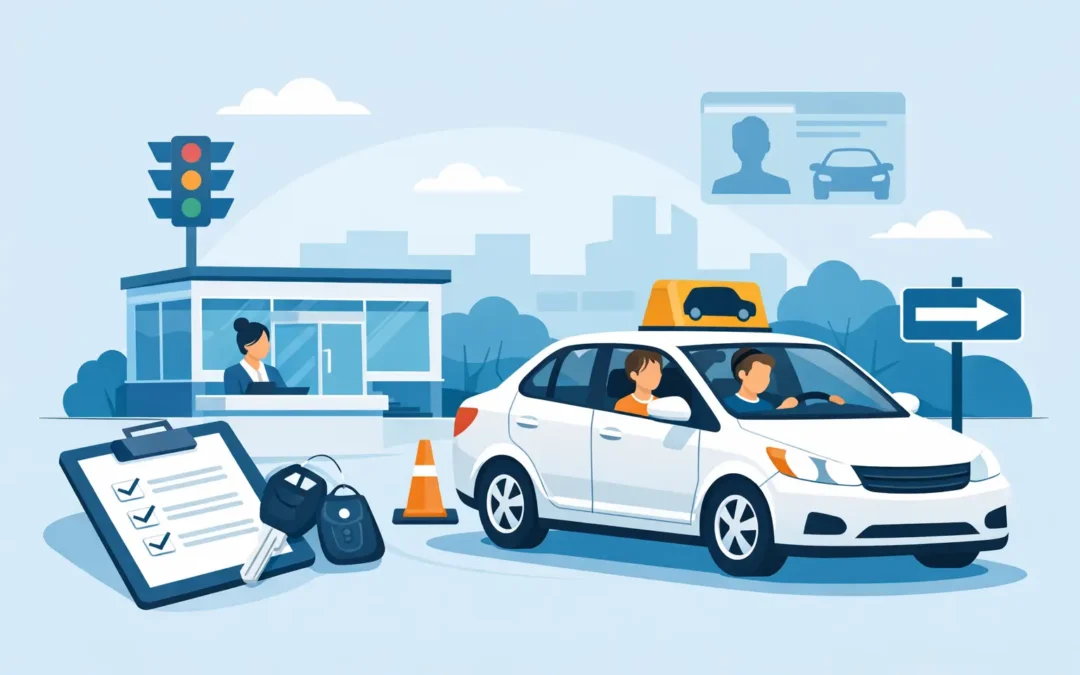
Showing up at the DMV with a nervous teen, a test appointment, and no suitable car is a stressful way to start a drive test. A lot of families ask the same question: does DMV allow school car for test use in California? The short answer is yes, in many cases a driving school car can be used for the behind-the-wheel test, but the vehicle and the driver must meet DMV rules on the day of the appointment.
That answer matters because using a school vehicle can make the test day much easier. For many teens, the training car is the one they already know. It is the car they practiced parking in, learned turns in, and used while building confidence with a licensed instructor. For parents, it can remove a big logistics problem, especially if the family car is unavailable, too large, has warning lights on, or simply is not the best car for a first road test.
Does DMV allow school car for test appointments?
Yes, the California DMV generally allows a driving school vehicle for a road test if it is properly registered, insured, safe, and legally eligible for the test. The examiner is not focused on whether the car belongs to a family or a school. What matters is whether the car meets DMV requirements and whether the person bringing the applicant is allowed to do so.
That said, not every school car is automatically approved just because it is a training vehicle. The car still has to pass the basic DMV safety check at the start of the appointment. If there is a cracked windshield affecting visibility, a brake light out, bald tires, or a dashboard warning issue that makes the vehicle unsafe, the test can be canceled on the spot.
This is why families often prefer a school that regularly provides DMV test support. A school that offers test-day service usually understands the process, keeps its vehicles maintained, and knows what can cause a last-minute rejection.
Why many teens use a driving school car
The main advantage is familiarity. Test-day nerves are real, and even a capable teen driver can get rattled in an unfamiliar vehicle. If a student trained in a compact driving school car with a passenger-side brake and then switches to a large SUV for the test, that change can affect turns, backing, parking, and overall confidence.
There is also a practical side. Some families do not have a vehicle available during DMV business hours. Others have a car that is technically legal to drive but not ideal for a test because of size, visibility, or maintenance concerns. In those situations, a school car can be the simplest path.
For parents, the convenience is hard to ignore. Transportation to the DMV, a compliant vehicle, and an instructor who knows what the examiner will check can reduce a lot of day-of stress.
What the DMV checks before the test
Before the drive test begins, the examiner usually does a quick vehicle safety review. This is not a full inspection, but it is enough to stop the test if the car does not meet basic standards.
The examiner may ask the applicant to show the hand signals and demonstrate that the brake lights, turn signals, horn, windshield wipers, and parking brake work correctly. The vehicle should have working doors, safe tires, and clear windows. The examiner will also expect current registration and proof of insurance.
If the vehicle has a major safety issue, the test can be marked as a refusal or rescheduled depending on the situation. That can mean a long wait for another appointment, which is exactly what most families want to avoid.
The car must be road-test ready
A school car used for a DMV test should be in clean, legal, and safe operating condition. That sounds basic, but it matters. Even small problems can create delays. A missing front or rear plate, a non-working signal, or a windshield crack in the driver’s view can be enough to cause trouble.
For that reason, schools that offer DMV test services usually prepare the vehicle in advance rather than treating the road test like a regular lesson.
Insurance and registration still matter
One common misunderstanding is that a marked driving school vehicle gets a pass on paperwork. It does not. The DMV still expects valid registration and proof of insurance. If those documents are missing, the car may not be accepted for the test.
A professional driving school should already have this handled, but families should still confirm ahead of time instead of assuming everything is automatic.
Who can bring the teen to the DMV?
For minors, California has rules about who can accompany the applicant. In many cases, a licensed driving instructor can bring a teen to the DMV in a school car for the test, especially when the school is providing an official test service. This is one reason families use a professional school rather than trying to arrange the details on their own.
Still, it is smart to confirm the current DMV requirements before the appointment. Rules can vary depending on age, permit status, and whether the student is testing as a minor or adult. The safest approach is to work with a licensed driving school that routinely handles DMV appointments and knows the local process.
When a school car may not be allowed
This is where the answer becomes more specific. The DMV can allow a school car for the test, but that does not mean every situation will be approved.
If the vehicle has safety defects, expired paperwork, or warning issues that make it unsafe, it may be rejected. If the student arrives without the required permit, appointment confirmation, or other necessary documents, the test may not go forward even if the car is fine. And if the school is not properly licensed or is not offering a legitimate service, families take on unnecessary risk.
Another factor is vehicle type. The DMV has restrictions on certain vehicles for drive tests. If a car does not meet testing standards, has unusual equipment, or falls into a category not accepted for a standard Class C test, that can be a problem. Most standard driving school sedans are fine, but it is still worth confirming.
How to avoid a canceled test day
The best way to avoid surprises is simple: verify everything before the appointment. If you are using a family vehicle, check the lights, signals, tires, registration, and insurance ahead of time. If you are using a school car, ask exactly what is included in the DMV test service and whether the school provides the vehicle, transport, and instructor support.
It also helps to schedule a lesson close to the test date. That gives the student a final warm-up in the same car they will likely use at the DMV. A short pre-test drive can settle nerves and help the instructor catch any last-minute issues with lane changes, stops, or scanning habits.
For families in North Orange County and nearby communities, this kind of service can be especially useful because DMV appointments often fall in the middle of the workday. Having a trained instructor handle transport and provide a ready-to-test vehicle saves time and reduces stress for both parents and teens.
Should you use a school car or your own?
It depends on the student and the vehicle options available. If your teen is comfortable in the family car, and the car is in excellent condition, using your own vehicle can work perfectly well. It may also feel more natural if that is the car your teen expects to drive after getting licensed.
But if your teen learned primarily in a driving school vehicle, there is a strong case for sticking with what is familiar. Confidence counts on test day. So does convenience. A school car can also be the better choice when the family vehicle is oversized, difficult to park, or not reliably available.
The trade-off is cost. School car DMV test services are usually a paid add-on or part of a higher-tier package. For many families, though, that extra cost is worth it because it lowers the odds of a canceled appointment and gives the student a more comfortable testing experience.
Questions to ask before booking a DMV test service
If you are considering a driving school vehicle for the road test, ask a few direct questions. Will the school provide transportation to the DMV? Is the vehicle insured and registered for test-day use? Will the student have a lesson or warm-up before the exam? What happens if the DMV appointment is delayed or rescheduled?
Clear answers matter. A professional school should be able to explain the service in plain terms, including pricing, timing, and what the student needs to bring.
The practical answer for California families
So, does DMV allow school car for test use? Yes, usually, as long as the driving school vehicle meets California DMV requirements and the appointment is handled correctly. For many teens, it is not just allowed. It is the smoother option.
If your goal is to keep test day simple, safe, and predictable, using a properly prepared school car can be a smart move. The right support can take one more worry off your list and let your teen focus on the part that matters most – driving calmly and showing what they already know.