
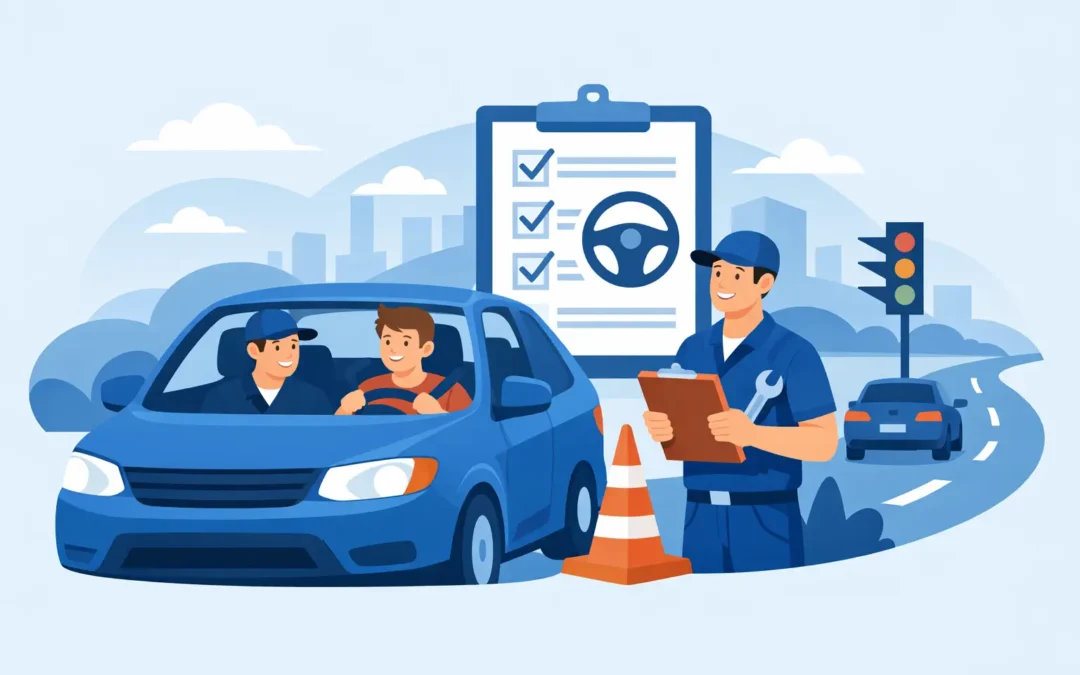
The day of a DMV drive test often feels simple on paper and stressful in real life. A road test vehicle service can take one of the biggest pressure points off a teen and parent – getting to the DMV in a test-ready car with the right support, paperwork, and preparation already handled.
For many families, that matters more than it first appears. The driving test is not just about whether a student can steer, brake, and change lanes. It is also about showing up on time, in a legal and properly equipped vehicle, with a licensed adult, valid documents, and enough confidence to perform well under pressure. When any one of those pieces goes wrong, the test day can fall apart fast.
What a road test vehicle service actually includes
A road test vehicle service is usually built around convenience and compliance. In most cases, it includes transportation to the DMV, use of a properly insured and maintained vehicle for the drive test, and support from a licensed driving instructor or qualified representative who understands the testing process.
That sounds straightforward, but the value is in the details. The car used for a DMV test must meet basic requirements. The lights, turn signals, brake lights, horn, mirrors, seat belts, and tires must be in good working condition. The vehicle also needs current registration and insurance. If a family plans to use their own car, a surprise issue like a cracked windshield, warning light, or faulty brake light can create a last-minute problem.
With a dedicated service, that risk is reduced. The vehicle is prepared for this purpose, and the student can focus on driving instead of wondering whether the examiner will reject the car before the test even begins.
Why families choose road test vehicle service
For teens, the biggest benefit is usually confidence. Testing in a familiar training car can feel easier than switching into a larger SUV, an older family sedan, or a vehicle with touchy brakes and poor visibility. A training car is often the same type of vehicle the student has already used during lessons, so the controls, mirror setup, turning radius, and braking response are less likely to feel unfamiliar.
For parents, the benefit is often time and stress reduction. Work schedules, school schedules, DMV appointment times, and vehicle availability do not always line up neatly. A road test vehicle service can solve several problems at once by combining transport, vehicle use, and test-day support into one scheduled service.
There is also a practical safety angle. Teens tend to drive better when the process around them is calm and organized. Rushed departures, arguments in the parking lot, or confusion about documents can shake a student before the test even starts. A structured service creates a more predictable experience.
Who benefits most from this service
Not every family needs it, but many do. If a teen has completed lessons and is ready for the DMV test, a road test vehicle service is especially useful when the family car is unavailable, unreliable, oversized, or unfamiliar to the student.
It also makes sense for working parents who cannot easily take half a day off just to handle transportation and wait through the appointment. Some families have more than one teen activity happening at once, and test-day coordination becomes one more scheduling problem. In those situations, paying for support is often less about luxury and more about avoiding disruption.
Students who get nervous also tend to benefit. A road test is already a performance situation. Removing avoidable stress can help a prepared student drive more naturally and make fewer careless mistakes.
What to look for in a road test vehicle service
Not all services are equally helpful. The best option is not just a car rental with a driver. It should come from a licensed driving school or provider that understands California testing requirements and works with teen drivers regularly.
First, look for legitimacy. A DMV-licensed school with screened instructors matters because the service involves both safety and compliance. Families should know who is transporting the student, what kind of car is being used, and whether the provider routinely prepares students for the California drive test.
Second, look at how much preparation is built into the appointment. Some services simply provide the vehicle. Others include a short warm-up drive before the exam, which can be very helpful. Even 15 to 30 minutes behind the wheel right before the test can help a student settle down, adjust mirrors, and get mentally focused.
Third, ask how clearly the service is explained. Good providers make the process easy to understand. They tell you what the price includes, what the student must bring, when pickup happens, and whether the car is available only for the test or also for a pre-test review.
The trade-off: convenience versus cost
A road test vehicle service is an added expense, so families should be realistic about when it is worth paying for. If a parent has a suitable vehicle, a flexible schedule, and a calm student who is fully prepared, using the family car may be perfectly fine.
But cost should be weighed against what the service prevents. A failed appointment because of a vehicle issue, late arrival, or missing support can cost time, money, and momentum. It may also delay licensing by weeks if DMV appointments are limited. For many families, paying for a well-run service is less expensive than repeating the process.
It also depends on the student. Some teens adapt easily to any car. Others drive best in a vehicle they already know from lessons. If the student has practiced extensively in a training car and very little in the family vehicle, test-day consistency may be worth the added fee.
How road test vehicle service supports better test performance
The service does not guarantee a pass, and no honest provider should suggest that it does. The student still needs the skills to drive safely, follow instructions, check mirrors, stop smoothly, control speed, and make sound decisions.
What the service can do is create better conditions for success. It gives the student a legal, roadworthy vehicle. It reduces uncertainty before the appointment. It often includes guidance from someone who knows the common mistakes students make and how DMV tests are typically structured.
That matters because many road test failures are not dramatic. They come from small errors linked to nerves and distraction – rolling stops, poor observation, lane position problems, or forgetting to signal. A student who arrives settled and prepared is in a better position to show what they already know.
Questions parents should ask before booking
Before scheduling a road test vehicle service, parents should confirm a few basics. Ask whether the service includes DMV transportation, use of the vehicle during the exam, and any pre-test driving time. Ask what documents the teen must bring and whether pickup and drop-off are available.
It is also smart to ask whether the student should already be test-ready before using the service. A good school will be honest about this. If a teen still struggles with turns, parking, lane changes, or scanning intersections, adding more lessons first is usually the better investment.
Families in North Orange County and nearby communities often prefer a provider that already works in the local area and understands the needs of teen permit holders. That local experience can make scheduling and communication simpler, especially when parents want a straightforward process.
The best time to schedule it
The best time to book a road test vehicle service is after the student has finished enough behind-the-wheel practice to drive consistently without coaching. That usually means completing required training, gaining supervised practice at home, and doing a road test review if needed.
Waiting until the last minute is risky. DMV appointments can fill quickly, and the best test-day support services may have limited availability. Booking ahead gives families time to confirm paperwork, practice in the right vehicle, and avoid unnecessary rushing.
If possible, pair the service with a final lesson close to the test date. That combination often works well because the student gets a last review of key driving habits and then returns for the actual exam in a familiar setting.
Teen Driving Academy has long served families who want that kind of practical support – especially those looking for a simple path from lessons to DMV test day without extra confusion.
When this service is the smart choice
A road test vehicle service makes the most sense when it removes a real obstacle. Maybe the family car is not ideal, the parent schedule is tight, or the teen needs the comfort of a familiar training vehicle. Maybe the goal is simply to make DMV day feel organized instead of chaotic.
The right service does not replace preparation. It supports it. When a teen has done the work and a parent wants fewer moving parts on test day, this option can make the final step feel much more manageable.
If your student is close to license-ready, the best next move is a simple one: choose a test-day plan that keeps the focus on safe driving, not on last-minute logistics.