
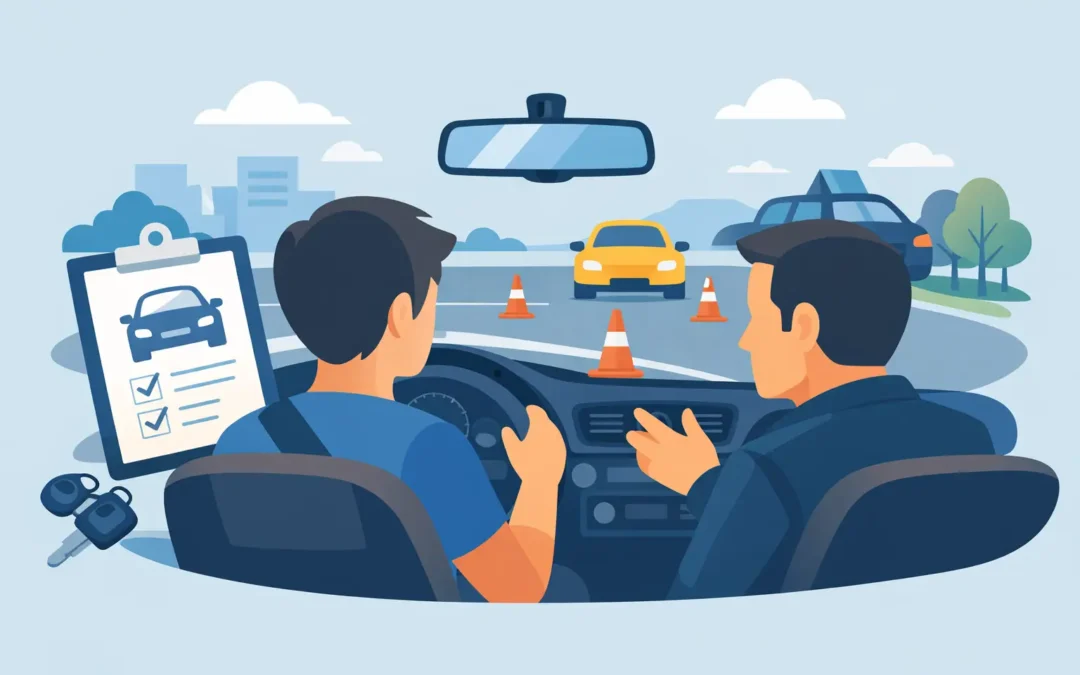
Your teen has a permit, the DMV rules are starting to feel real, and now the big question is what happens once they get in the driver’s seat. This guide to behind the wheel lessons explains what families should expect, what California teens need, and how to choose training that builds skill and confidence without adding unnecessary stress.
What behind-the-wheel lessons are really for
Behind-the-wheel lessons are not just practice drives. They are structured training sessions with a licensed instructor who teaches a new driver how to operate a car safely, follow traffic laws, handle common road situations, and prepare for the driving test.
That structure matters. A parent can absolutely help a teen practice, but a professional lesson brings consistency, corrected habits, and a clear progression from basic control to more demanding traffic conditions. For many families, that means fewer arguments, less guesswork, and a safer learning process overall.
In California, teens under 18 must complete a state-required amount of professional driver training before they can move forward in the licensing process. That makes lesson quality important, but so is convenience. If scheduling is difficult or the process is confusing, many teens end up delaying practice when they should be building momentum.
A guide to behind the wheel lessons in California
For California teens, the first step is making sure the timing is right. A student typically begins in-car training after earning a learner’s permit. Professional training is then combined with supervised practice outside of lessons, usually with a parent or guardian.
The professional portion is only part of the process. It gives the student a foundation, but real improvement comes from pairing those lessons with regular practice in different traffic, weather, and parking situations. That is why a good school does more than fill required hours. It gives teens a framework they can continue using between sessions.
For parents, it helps to think of lessons as the safest place for a new driver to make early mistakes. An experienced instructor can step in quickly, give calm corrections, and introduce skills in the right order. That can be harder to do in a family car when everyone is already balancing school, work, and busy schedules.
What happens during a typical lesson
Most first lessons start with the basics. The instructor will usually review seat position, mirror adjustment, hand placement, braking, turning, and scanning habits before moving into low-pressure driving. Even teens who have watched others drive for years are often surprised by how much there is to manage at once.
As lessons continue, the instructor builds on that foundation. Students may work on lane changes, traffic signals, residential driving, right-of-way decisions, unprotected turns, parking, backing up, and speed control. Later sessions often introduce more complex roads, busier intersections, and road test preparation.
Progress is not identical for every student. Some teens are comfortable with vehicle control right away but need help with judgment and awareness. Others are cautious and rule-focused, but slower to develop confidence in traffic. A good instructor adjusts the pace without lowering standards.
That balance is one of the main benefits of professional training. Pushing a nervous student too fast can make driving feel overwhelming. Moving too slowly can leave a confident student unprepared for real traffic. Strong instruction finds the middle ground.
What teens should do before the first drive
A little preparation makes the first lesson smoother. The student should bring the required permit, wear shoes that allow good pedal control, and be ready to focus. This is not the day for distractions or rushing out the door half-prepared.
It also helps to set expectations. The first lesson does not need to be perfect. The goal is to learn, not to impress anyone. Most new drivers feel awkward at the beginning because they are managing steering, braking, mirrors, signs, and traffic all at once. That is normal.
Parents can help by keeping the mood calm. Teens tend to absorb stress quickly, especially when they know the licensing process matters to the whole family schedule. A simple reminder works best: listen carefully, ask questions, and treat each lesson as progress.
How many lessons a teen may need
This depends on the student, the family’s practice schedule, and the level of support needed before the road test. Some teens benefit from completing only the required professional training and then doing plenty of supervised home practice. Others need a larger package because they start later, feel anxious, or have limited access to regular practice outside of school.
There is no one-size-fits-all answer. A student who practices consistently between lessons usually improves faster than one who only drives during formal sessions. On the other hand, if parents are short on time or uncomfortable coaching a new driver, adding extra professional lessons can be the easier and safer choice.
This is where structured packages can help. Instead of arranging one lesson at a time, families can choose a plan that fits the teen’s stage, whether that means getting started, building confidence, or preparing for the DMV test. The best option is the one that keeps the student driving regularly and progressing toward a license.
How to choose the right driving school
A driving school should make life easier, not more confusing. The basics come first. Look for a DMV-licensed school, properly licensed instructors, and a clear explanation of what is included in each package.
After that, convenience matters more than many families expect. Online booking, dependable scheduling, local coverage, and simple pricing can save a lot of friction. For busy parents, services like DMV test transportation and use of the school vehicle for the road test can remove one of the biggest logistical headaches in the licensing process.
Experience matters too, especially when the school works mainly with teens. Teen drivers are still building judgment, attention, and confidence. Instructors who teach permit holders every day usually know how to keep lessons calm, clear, and productive.
For families in North Orange County and nearby communities, it can also help to choose a school familiar with local roads, traffic patterns, and testing conditions. That local knowledge does not replace skill, but it can make practice and test prep more practical.
Common concerns parents have
Safety is usually the first concern, and it should be. Parents want to know who is in the car with their teen and whether that person is qualified, patient, and professional. Schools that emphasize instructor screening and DMV licensing give families a more reliable starting point.
The next concern is usually progress. Parents often wonder how to tell whether lessons are actually working. A strong program should make improvement visible. The teen should become more aware, more consistent, and more capable of handling common situations without constant prompting.
Cost also comes up, and that is fair. Professional lessons are an investment. But it helps to compare the cost with the value of structured instruction, reduced risk, and less family stress. If a school also offers bundled options or road test support, those services can save time and simplify the process enough to justify the price.
Getting the most from every lesson
The best way to improve is to keep practicing between professional sessions. Even short drives help if they are focused. One day might be for parking and backing up. Another might be for residential turns, lane positioning, or handling busier streets.
Students should also stay open to feedback. Early driving is full of correction, and that is a good thing. The fastest learners are usually the ones who listen carefully, ask questions, and avoid getting discouraged by small mistakes.
For parents, consistency matters more than perfection. A calm 30-minute practice drive is usually more useful than a long, tense session. If professional lessons create the roadmap, home practice is what turns those skills into habits.
Teen Driving Academy has worked with California teens and permit holders for decades, and that kind of specialization matters when families want a clear, efficient path from permit to license.
If your teen is ready to start, the smartest move is often the simplest one – choose a licensed school, book the first lesson, and begin building skill before nerves and delays take over. Confidence behind the wheel usually starts with one well-planned drive.