
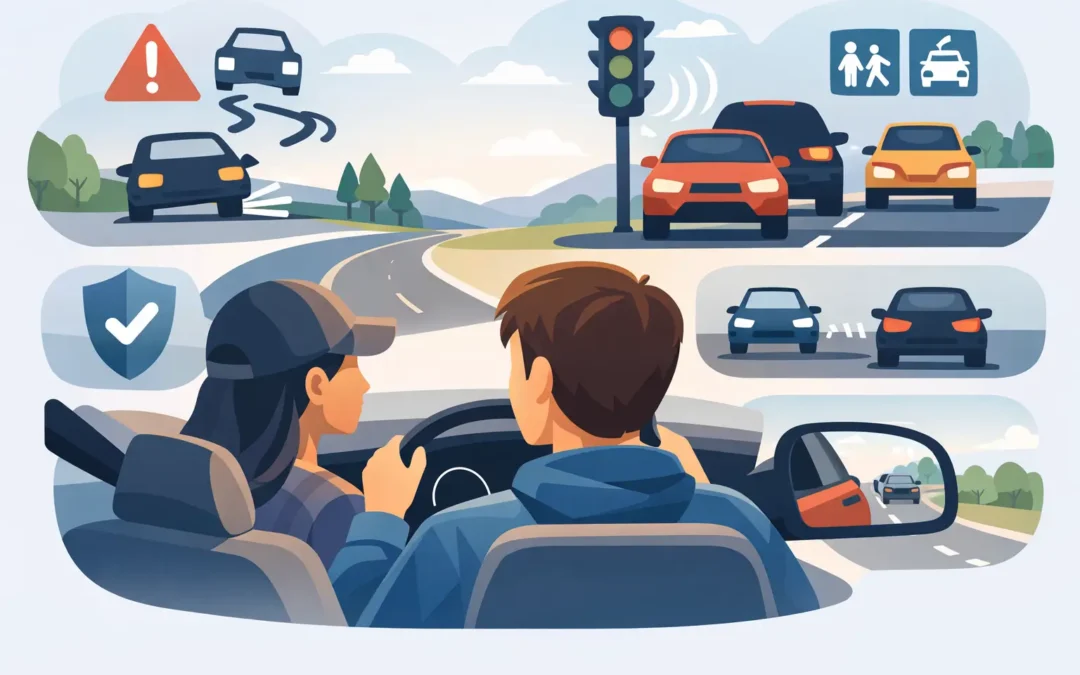
The first few months of driving are when small mistakes happen fast. A turn feels tighter than expected, a light changes sooner than you thought, or the driver next to you makes a move that makes no sense at all. That is why defensive driving tips for teens matter so much. Good drivers do not just react well. They learn how to spot trouble early, leave room for error, and make calm decisions before a situation gets worse.
For teens, defensive driving is not about driving scared. It is about driving prepared. In California traffic, especially on busy local streets and crowded shopping areas, that mindset can make a major difference. It helps new drivers protect themselves, their passengers, and everyone else on the road.
What defensive driving really means
Defensive driving means expecting the unexpected and adjusting before there is a problem. You assume that another driver may run a yellow light, stop suddenly, drift into your lane, or pull out without enough space. Instead of trusting that everyone will do the right thing, you stay alert and keep a safety cushion around your car.
That approach is especially important for teens because experience takes time. A new driver may know the rules but still need practice judging speed, distance, and timing. Defensive habits help close that gap. They give teen drivers a simple framework for making safer choices even before driving feels fully natural.
Defensive driving tips for teens that make the biggest difference
Keep your eyes moving
One of the most common mistakes new drivers make is looking only at the car directly ahead. That is not enough. You should be scanning far down the road, checking mirrors often, and watching what is happening at intersections, side streets, and parking lot exits.
When your eyes keep moving, you gain time. You might notice brake lights three cars ahead instead of slamming on your brakes at the last second. You might spot a pedestrian stepping toward a crosswalk before they are directly in front of you. Defensive driving often comes down to seeing a problem a few seconds earlier.
Leave more following distance than you think you need
Teens often underestimate how much space a car needs to stop. If traffic is moving steadily, a minimum three-second following distance is a smart baseline. In rain, at night, in heavy traffic, or when you feel tired, add more space.
Following too closely creates pressure. It limits your options and makes every sudden stop more dangerous. Extra space gives you time to brake smoothly, avoid panic, and reduce the risk of a rear-end collision.
Slow down before intersections
Intersections are one of the most unpredictable parts of any drive. Even if you have a green light, do not assume everyone else will stop. A distracted driver may try to beat the light. A car may turn across your lane. A cyclist or pedestrian may appear late.
Defensive drivers approach intersections ready to respond. That does not mean crawling through every green light. It means checking left, right, and ahead, easing off the gas when needed, and staying ready for something unexpected.
Watch for the driver, not just the vehicle
Cars give clues. So do drivers. A vehicle drifting within its lane, braking at odd times, or rolling through a stop sign tells you that the person behind the wheel may be distracted, confused, or aggressive.
This is where judgment matters. If another driver seems unpredictable, do not drive beside them longer than necessary. Create space. Let them go ahead if needed. Defensive driving is not about proving a point. It is about avoiding a bad situation entirely.
Put the phone completely away
Most teens already know they should not text and drive. The real issue is that quick checks still feel harmless. Looking at a screen for two seconds at 35 mph means you travel a long distance without fully watching the road.
If your phone is a temptation, place it out of reach before starting the car. Set navigation and music before you leave. If something cannot wait, pull over safely. Defensive driving only works when your attention is fully on the road.
Brake early and smoothly
Sudden braking usually means you saw something late or followed too closely. A defensive driver tries to avoid hard stops by reading traffic patterns early. That means noticing stale green lights, slowing traffic ahead, or cars edging out from driveways before they force a quick reaction.
Smooth braking helps in more ways than one. It keeps you in better control, gives drivers behind you more warning, and makes the ride safer for passengers. It also shows that you are planning ahead instead of reacting at the last second.
How teens can handle high-risk situations better
Night driving requires a different level of focus
Driving at night is not just daytime driving in the dark. Visibility is lower, depth perception changes, and it is harder to judge speed and distance. Headlights from oncoming traffic can also make it easier to miss pedestrians, cyclists, or debris.
For teen drivers, the best adjustment is simple. Slow down a little, scan farther ahead, and avoid outrunning your headlights. If you cannot stop within the distance you can clearly see, you are driving too fast for conditions.
Bad weather changes the rules
Rain is a big one in Southern California because many drivers do not adjust enough when roads first get slick. Tires have less traction, stopping distances increase, and visibility gets worse quickly.
In wet conditions, defensive driving means increasing following distance, braking earlier, and avoiding sudden lane changes. It also means recognizing when conditions call for patience. Getting somewhere a few minutes later is better than losing control because you drove like the road was dry.
Freeways demand planning, not panic
Freeway driving can be intimidating for teens because everything happens faster. Cars merge aggressively, lane changes stack up quickly, and exits appear sooner than expected. The answer is not to freeze or make last-second moves.
Plan ahead. Know your exit early. Stay in a lane that matches your comfort and traffic speed. Check mirrors regularly so you always know who is around you. If you miss an exit, keep going and take the next one. Unsafe corrections are far more dangerous than a longer route.
The habits that build confidence over time
Give yourself extra time
Running late makes every driving decision worse. Speeding, rolling stops, rushing turns, and forcing lane changes usually start with feeling behind. Leaving earlier is one of the easiest defensive habits to build, and it costs nothing.
For parents, this matters too. If a teen feels pressured to hurry, safety often drops. A calmer schedule leads to better choices behind the wheel.
Practice with purpose
Not all driving practice is equal. Repeating the same short route over and over can build basic comfort, but it does not expose a teen to enough situations. Defensive driving improves faster when practice includes left turns, lane changes, freeway merges, parking lots, school zones, and nighttime driving.
It also helps to talk through decisions out loud. Why are you slowing down here? What are you watching near that crosswalk? What could that driver do next? That kind of coaching builds awareness, not just vehicle control.
Stay humble even when you start feeling comfortable
A lot of teen driving mistakes happen after the first stage of nervousness wears off. Once a new driver feels more relaxed, it is easy to get casual about speed, distractions, or following distance. Confidence is good. Overconfidence is where trouble starts.
The best teen drivers keep learning. They treat every trip as a chance to sharpen habits instead of assuming they have it all figured out.
Why professional training helps with defensive driving tips for teens
Parents can and should be involved, but there is real value in structured instruction. A trained driving instructor knows how to correct habits early, teach scanning and space management, and prepare teens for common road situations in a calm, systematic way. That can be especially helpful when a teen is anxious or when parent practice sessions become stressful.
For families in North Orange County and nearby communities, working with a school that specializes in teen drivers can make the process more efficient and more consistent. Teen Driving Academy focuses on that kind of structured preparation, which helps students build safe habits before test day and beyond.
Defensive driving is not one trick or one lesson. It is a set of repeatable choices – scan early, leave space, slow down when needed, and never assume other drivers will do the right thing. The more a teen practices those habits, the more natural they become. Start with the basics, stay consistent, and let skill build the right way.