
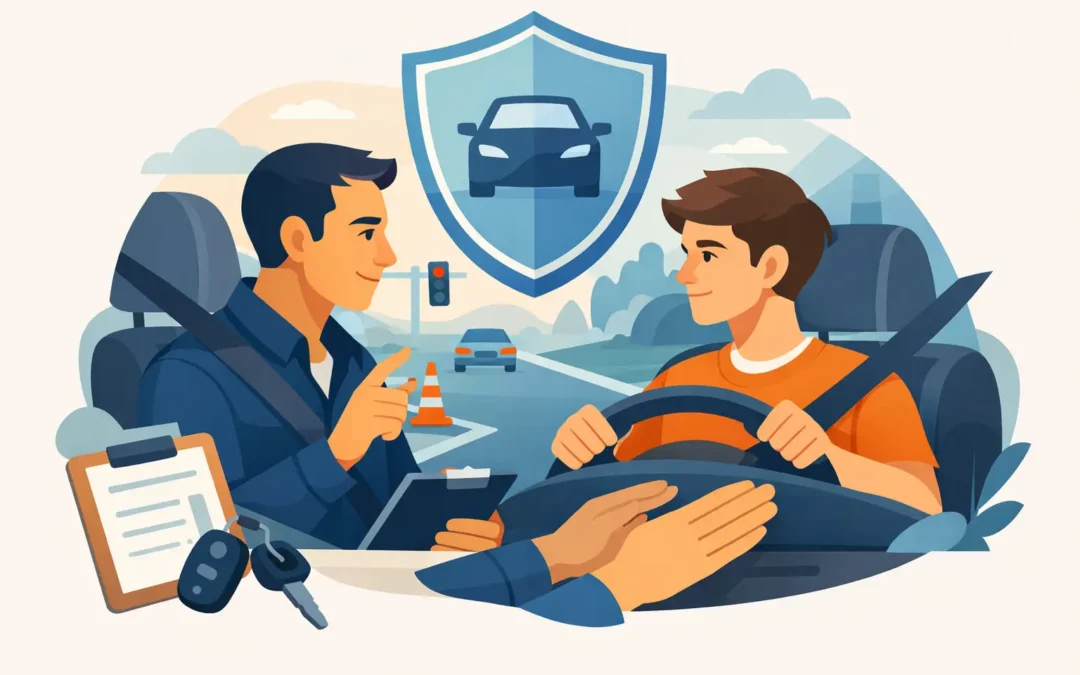
A teen’s first time driving on a busy street should not feel like an experiment. DMV licensed driving instructors give new drivers a structured, professional introduction to real traffic situations, from smooth turns and lane changes to parking, freeway entries, and defensive driving. For parents, choosing the right instructor means knowing that the person in the passenger seat has the credentials, training, and experience to teach safely.
For California families, professional instruction is not simply a helpful extra. It is part of the licensing path for minors. The right driving school can make the process clearer, reduce stress around scheduling, and help teens build habits that last beyond the DMV road test.
What DMV Licensed Driving Instructors Do
A DMV-licensed instructor works through a licensed driving school and is authorized to provide behind-the-wheel training under California requirements. This matters because driving instruction is more than telling a student when to brake or turn. A qualified instructor teaches a teen how to observe, decide, and respond while managing a vehicle.
During a lesson, an instructor evaluates the student’s current skill level and introduces new skills in a logical order. A first lesson may focus on vehicle controls, steering, braking, scanning intersections, and quiet residential streets. As the student becomes more comfortable, lessons can include busier roads, unprotected left turns, parking lots, lane changes, freeways, and driving near pedestrians and cyclists.
The instructor also gives immediate, practical feedback. A parent may notice that a teen is nervous or driving too fast, but an experienced instructor can identify the cause. Is the student braking late because they are looking too close to the hood? Are they missing speed-limit signs because they are focused only on the car ahead? Specific coaching helps turn a vague concern into a skill the student can practice.
Why Licensing and Screening Matter
A driving school license and instructor credentials help families separate professional training from informal arrangements. Before enrolling, parents should feel comfortable asking whether the school is DMV licensed, whether instructors have been screened, and whether the training vehicles are equipped and insured for instruction.
A professional school should have a clear process for scheduling lessons, documenting completed training, and communicating what students should bring. That organization is valuable when a family is trying to coordinate school, sports, work, practice drives, and DMV appointments.
Instructor experience matters, too. Teen drivers often make predictable mistakes: rolling through stops, turning too wide, stopping too abruptly, or forgetting to check mirrors before changing lanes. A seasoned instructor has seen those patterns many times and knows how to correct them calmly without overwhelming the student.
It also helps when instructors specialize in teens. First-time drivers need instruction that is patient and direct. They need to understand not just what action to take, but why it keeps them safer. “Check your blind spot” becomes more meaningful when a student understands how easily another vehicle, motorcycle, or bicycle can disappear from a mirror’s view.
California’s Required Professional Training
California requires drivers under 18 to complete at least six hours of behind-the-wheel training with a DMV-licensed driving instructor. Those hours are separate from the supervised practice teens complete with a parent, guardian, or another qualified adult.
The six professional hours are a minimum, not a guarantee that every student will be ready for the road test. Some teens gain confidence quickly but need more practice with parking or freeway driving. Others understand the rules but need time to make safe observations and decisions without reminders. The best lesson plan depends on the student.
California teen drivers must also complete supervised practice before taking the driving test, including 50 total hours of practice with 10 hours at night. Professional lessons can give families a strong foundation, while parent-supervised practice provides repetition. Both parts work better together than either one alone.
What a Good Lesson Plan Looks Like
A quality driving program should not repeat the same route for every lesson. Familiar roads are useful in the beginning, but students must eventually apply their skills in different settings. Real driving requires flexibility.
A thoughtful progression usually starts with basic control and awareness, then moves toward more complex traffic decisions. Students should practice intersections, right and left turns, changing lanes, backing up, parking, speed management, and sharing the road. Near the end of training, road-test preparation can help students understand the types of maneuvers they may be asked to perform at the DMV.
Road-test preparation should not be limited to memorizing a route. The purpose is to develop reliable habits: complete stops, steady steering, appropriate speed, mirror checks, blind-spot checks, signaling early, and looking far ahead. Those habits help a teen pass the test, but more importantly, they help protect the teen after the license is issued.
Questions Parents Should Ask Before Enrolling
Price is important, but the lowest-cost lesson is not always the best value if the instruction is rushed, poorly scheduled, or difficult to continue. Ask how long each lesson lasts, whether the school offers packages, and how the school tracks a student’s progress.
Parents should also ask whether lessons are private, how far in advance appointments are available, and whether the school serves their neighborhood. Families in Anaheim, Fullerton, Brea, Yorba Linda, Orange, Tustin, and nearby North Orange County communities may benefit from selecting a local school that can make regular lessons easier to schedule.
For a teen approaching the DMV test, ask whether the school provides test-day support. Transportation to the DMV and use of the school’s training vehicle can remove a major source of pressure, especially if the family vehicle is unavailable, unfamiliar to the student, or difficult to use for the test.
Finally, ask how the school communicates with parents. A brief progress update can help parents know what to practice between lessons. It also avoids mixed messages. If the instructor is working on smoother braking and earlier scanning, the supervising adult can reinforce the same skills during practice drives.
Professional Lessons and Parent Practice Have Different Jobs
Parents bring familiarity, encouragement, and valuable driving time. They know their teen’s personality and can practice frequently. However, teaching a family member can be stressful. A teen may take corrections personally, while a parent may become anxious during a difficult maneuver.
DMV licensed driving instructors provide a neutral, controlled learning environment. Their vehicle is designed for instruction, and their role is to coach rather than react emotionally. That does not replace parent practice. It makes parent practice more productive because the teen has already learned a consistent method for basic maneuvers.
A practical approach is to schedule professional lessons at key stages, then practice the same skills at home. After a lesson on lane changes, for example, a parent can reinforce mirror checks, signaling, speed adjustment, and blind-spot checks on familiar roads. Repetition helps the skill become automatic.
Signs Your Teen May Need More Instruction
Some students are ready after the required training and steady practice. Others benefit from additional lessons before the DMV test. More instruction may be worthwhile if your teen still needs frequent reminders to check mirrors, struggles with intersections, becomes overwhelmed in heavier traffic, or avoids freeway driving entirely.
Nervousness alone does not mean a teen is not ready. Many new drivers feel nervous at first. The concern is whether nerves interfere with safe decisions. A professional instructor can assess the difference and recommend focused practice rather than simply adding lessons without a purpose.
Teen Driving Academy has helped California students since 1990 with teen-focused driver education, behind-the-wheel lessons, package options, and DMV test support. For families, the goal is not to rush a teen into a license. It is to give them enough preparation to drive with sound judgment when an adult is no longer in the passenger seat.
A driver’s license creates independence, but safe independence is earned one decision at a time. Start with qualified instruction, practice consistently, and give your teen the time needed to become calm, observant, and prepared behind the wheel.