
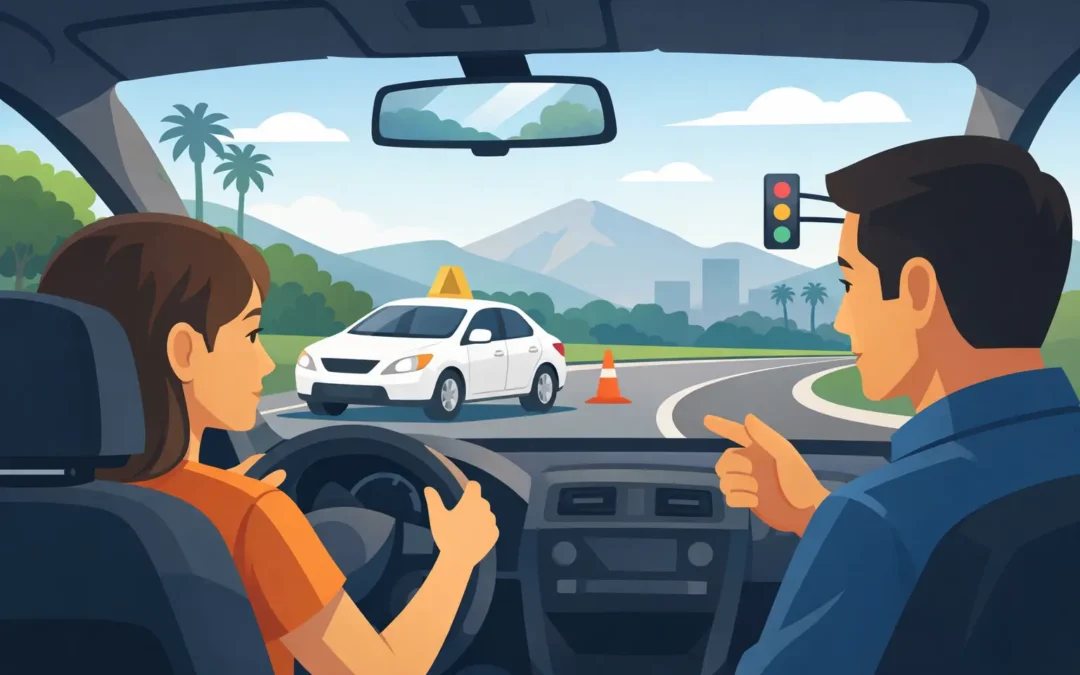
A learner’s permit is exciting, but it does not make a teen ready to manage a busy intersection, a tight parking space, or an unexpected stop. For families comparing Brea behind wheel lessons, the goal should be more than checking off California’s required training hours. The right instruction gives new drivers a calm, structured way to build judgment before they drive independently.
Brea offers the kind of real-world conditions that help teens develop those skills. A student may practice neighborhood driving one day, then work through busier routes near shopping areas, major streets, changing traffic patterns, and freeway entrances as they become ready. Lessons should progress at the student’s pace while keeping safety and California DMV requirements at the center of every session.
What Brea Behind-the-Wheel Lessons Should Cover
California requires permit holders under 18 to complete six hours of professional behind-the-wheel instruction with a licensed driving school. Those hours matter, but what happens during them matters just as much. A useful lesson plan does not spend the entire time driving the same quiet streets. It introduces skills in a logical order and gives the instructor time to correct habits before they become routine.
Early lessons generally focus on vehicle control. Teens learn how to adjust mirrors and seating, use the accelerator and brake smoothly, steer through turns, make complete stops, and keep proper space around the vehicle. These basics can feel simple when a parent is in the passenger seat, but a trained instructor can spot details a new driver may miss, such as braking too late, drifting within a lane, or looking only at the car directly ahead.
As confidence grows, driving lessons should move into more demanding situations. This may include protected and unprotected turns, lane changes, right-of-way decisions, busy intersections, residential areas with pedestrians, and safe parking. Freeway instruction is often appropriate later, once a student can consistently control the car and scan traffic effectively.
The best pace depends on the student. A teen who has practiced regularly with a parent may be ready to take on traffic sooner. A nervous first-time driver may need more repetition with turns, braking, and observation before moving to faster roads. Neither situation is a problem. The purpose of professional instruction is to provide clear feedback and a safe progression, not to rush a student into the next skill.
Instruction should be active, not passive
A lesson is most valuable when the instructor explains what the student is seeing and why a decision is needed. Rather than simply saying, “Turn here,” an instructor can teach a teen to identify lane markings, check mirrors, look for cross traffic, signal at the right time, and choose a safe gap.
That coaching builds habits that carry over to supervised practice at home. It also gives parents a clearer picture of what to reinforce between lessons. A student may need extra work on maintaining speed, checking blind spots, or parking in a crowded lot. Knowing that early is far better than discovering it during a road test.
How to Choose Brea Behind-the-Wheel Lessons
Parents should look first at licensing, instructor qualifications, and a school’s experience working specifically with teens. California DMV-licensed instruction is not just a label. It means the school is authorized to provide the training that counts toward the state requirement, and its instructors are held to professional standards.
Convenience also deserves serious consideration. Teen schedules already include school, homework, sports, jobs, and family commitments. A school that serves Brea and nearby North Orange County communities can make it easier to schedule consistent lessons instead of allowing weeks to pass between drives. Regular practice helps students remember feedback and steadily improve.
Ask how lessons are structured. A clear answer should include the length of each session, whether pickup and drop-off are available, what skills are addressed at different stages, and how the school communicates progress. Price matters, but the lowest-priced option is not automatically the best value if it provides limited instruction, unclear scheduling, or little preparation for the DMV road test.
It is also worth asking about the training vehicle. New drivers benefit from a well-maintained vehicle with instructor controls and a professional environment that lets them focus on driving. They should know where key controls are located, but they should not have to worry about whether the vehicle is appropriate for beginner training.
Teen Driving Academy has worked with California teens since 1990, providing DMV-licensed, pre-screened instructors and structured lesson packages designed for permit holders who need a straightforward path toward their license.
A Practical Plan From Permit to Road Test
Professional instruction works best when it is paired with steady practice at home. California teens under 18 must complete 50 hours of supervised driving practice, including 10 hours at night, in addition to their professional lessons. The hours are a requirement, but they also give a new driver the repetition needed to turn good advice into automatic habits.
Start with short practice drives in low-pressure conditions. A teen can work on smooth stops, turns, lane position, and scanning intersections in familiar neighborhoods. Once those actions are more consistent, add longer routes, busier streets, parking lots, and different times of day. Night driving should not be saved for the final week before the road test. Visibility, glare, and changing traffic conditions require their own practice.
A simple practice routine is more effective than occasional marathon drives. Two or three focused sessions each week can help a teen retain skills without becoming overwhelmed. After each drive, discuss one thing that went well and one skill to practice next time. Keep the conversation specific. “Check your mirrors before slowing for a turn” is more helpful than “Be more careful.”
Parents should also avoid treating a professional lesson as a pass-or-fail evaluation. If an instructor recommends additional practice or a few more lessons, that recommendation may save a teen from taking the road test before they are ready. Extra instruction can be especially useful for students who are anxious, have had long gaps between practice drives, or need support with freeway driving, parallel parking, lane changes, or defensive driving habits.
Prepare for the DMV test without practicing only for the test
Road test preparation should include the skills California examiners evaluate: safe backing, turns, stopping, speed control, lane changes, observation, and overall traffic awareness. But a teen should not memorize a route or focus only on a few test maneuvers. Safe drivers make sound decisions even when a route, traffic condition, or parking situation is unfamiliar.
Before scheduling the test, make sure the permit has been held for the required period and all state requirements have been met. Bring the necessary documents, and confirm that the vehicle used for the test is properly insured, registered, and in working order. For families managing work schedules or a vehicle that may not be suitable for a test, DMV test transportation and use of a school vehicle can reduce last-minute stress.
A final lesson close to the test date can be helpful, especially when it focuses on the student’s remaining weak points. It should be a tune-up, not the first time a teen drives in heavier traffic or attempts a challenging maneuver. Real readiness comes from consistent practice, calm decision-making, and the ability to recover safely from small mistakes.
Brea driving lessons are an investment in more than a DMV pass. With licensed instruction, regular supervised practice, and a plan that fits the student’s confidence level, teens can take the driver’s seat with the awareness and responsibility that independent driving requires.