
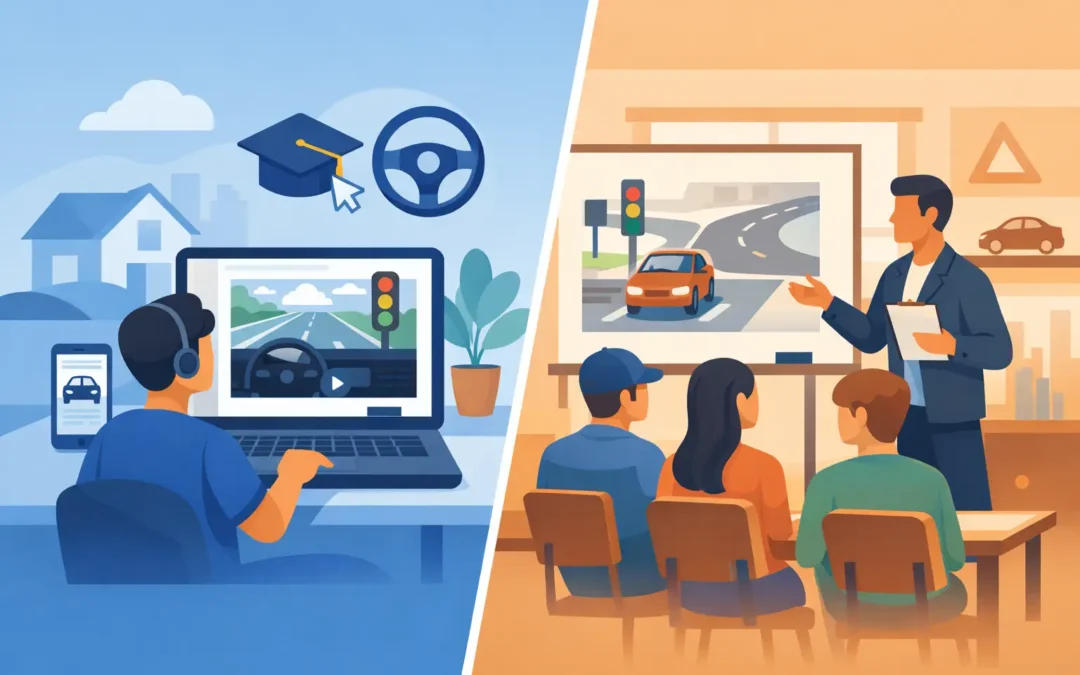
One of the first decisions many California families make is choosing between online drivers ed vs classroom course options. That choice affects more than where a teen studies. It changes how quickly they can get started, how easily parents can fit training into a busy week, and how comfortable a new driver feels learning the rules of the road.
For most teens, the right answer comes down to schedule, learning style, and how much support they need to stay on track. Both formats can meet California driver education requirements when offered by a qualified provider. The difference is in how the experience feels day to day.
Online drivers ed vs classroom course: the basic difference
A classroom course follows a set schedule. Students attend at specific times, learn in a group, and move through the material together. There is structure built in, which can be helpful for teens who focus better with live instruction and fewer at-home distractions.
Online driver education is more flexible. A student can log in from home, work through the lessons at their own pace, and fit study time around school, sports, and family commitments. For many families, that flexibility is the biggest reason online programs have become the preferred option.
In California, a teen still needs state-required driver education before qualifying for a learner’s permit if they are under 18. Whether the course is online or in a classroom, the provider should be legitimate, properly licensed, and clear about what the student receives after completion.
Why many California families choose online driver education
Convenience matters, especially for parents balancing work, school pickup, activities, and everything else that comes with raising a teenager. An online course removes the need to drive to a classroom several times a week. A teen can begin sooner and make steady progress without waiting for the next in-person session to open.
That flexibility also helps students learn when they are most alert. Some teens do better after school. Others prefer weekends or evenings. With online learning, they are not tied to one fixed timetable.
There is also a practical advantage if your goal is to move efficiently toward the permit test. A fast-start online course can help teens begin right away instead of waiting for a classroom calendar. For families who want a straightforward path from enrollment to permit prep to behind-the-wheel training, that can make the process feel much easier.
Where classroom courses still make sense
A classroom setting can work well for teens who need direct accountability. If a student tends to procrastinate, forget deadlines, or rush through material online, live instruction may keep them more engaged. Some students also learn better when they can immediately ask questions and hear other students’ questions in real time.
Parents sometimes prefer the classroom format because it feels more traditional. There is a teacher in front of the room, a set meeting time, and a clear routine. For families who want that structure, a classroom course can still be a solid option.
The trade-off is less flexibility. If the teen misses a class because of sports, illness, or another commitment, making up that time may take longer. Transportation can also become one more task for parents to manage.
Cost, time, and day-to-day logistics
When families compare online drivers ed vs classroom course formats, price is only part of the picture. The real question is how much time and coordination each option requires.
An online course often reduces indirect costs. There is no commuting to class, no added gas expense, and no need to rearrange family schedules around in-person sessions. For working parents, that convenience can be just as valuable as the course fee itself.
Classroom courses may or may not cost more depending on the provider, but they usually demand more calendar management. Even if the tuition is similar, the schedule is less forgiving. That matters when a teen already has homework, extracurriculars, and a packed week.
If your priority is getting started quickly and keeping things simple, online learning usually has the edge. If your priority is a set routine with live supervision, the classroom may be worth the extra coordination.
Learning style matters more than many people expect
Some teens are independent learners. Give them clear modules, a straightforward path, and enough time to absorb the material, and they do very well online. Others need the energy of a room, verbal explanation, and reminders to stay focused.
Parents should be honest here. A flexible course is only helpful if the student actually uses it. If a teen is likely to put things off until the last minute, online learning may need more parent involvement. That does not mean online is the wrong choice. It just means the family should plan for check-ins and progress reminders.
On the other hand, a classroom does not automatically guarantee better learning. Some students get distracted by the group setting or feel rushed by the pace. Online education gives them more control over review and repetition, which can improve retention.
Safety and quality are more important than format
The bigger issue is not only online vs in-person. It is whether the course provider is credible, compliant, and focused on teen drivers. Families should look for a school that is clear about licensing, course completion, and what comes next after driver education.
That matters because driver education is only one part of the process. Teens also need behind-the-wheel instruction, practice, and road test preparation. Choosing a provider that understands the full California licensing path can save time and reduce confusion later.
For example, a family may complete the education portion quickly, then need in-car lessons, permit guidance, and support getting ready for the DMV test. Working with a provider that specializes in teen training can make those next steps much easier to coordinate.
What parents usually care about most
Teens often focus on speed and convenience. Parents usually focus on safety, legitimacy, and whether the process will be easy to manage. Both concerns are reasonable.
Parents want to know that instruction is being handled by qualified professionals, not just presented as a box to check. They also want a process that does not create extra stress. If enrollment is confusing, scheduling is inconsistent, or the next step is unclear, confidence drops quickly.
That is why many families prefer schools that offer a complete, structured path. A clear online course, licensed instructors, and organized lesson packages are easier to trust than piecing the process together from multiple places. For local families, that trust matters even more when road lessons and DMV support are involved.
How to decide what is right for your teen
If your teen is self-motivated, busy, and ready to begin, online driver education is often the better fit. It is efficient, flexible, and easier to work into daily life. That is especially true for families trying to avoid unnecessary delays.
If your teen needs close supervision, learns better through live discussion, or struggles to stay consistent with online work, a classroom course may be the better choice. The structure can help them stay engaged.
In many cases, the best answer is simple: choose the format that your teen is most likely to complete successfully and choose a school that can support the next steps after the permit. Driver education should not feel complicated.
For California teens and parents, convenience matters, but trust matters just as much. A provider with real experience, screened instructors, and a straightforward enrollment process can make online learning feel organized instead of overwhelming. That is one reason many families choose a local teen-focused school such as Teen Driving Academy when they want a smoother path from driver education to the road test.
The better question is what gets your teen ready
The goal is not just finishing a course. The goal is helping a new driver understand the rules, build safe habits, and move confidently toward the permit and license process. Online and classroom options can both work, but they do not serve every student the same way.
A good choice is the one that fits your teen’s schedule, supports how they learn, and makes the licensing process easier for your family to manage. Start with the format your teen is most likely to stick with, then make sure the provider can help you keep moving forward without delays.