
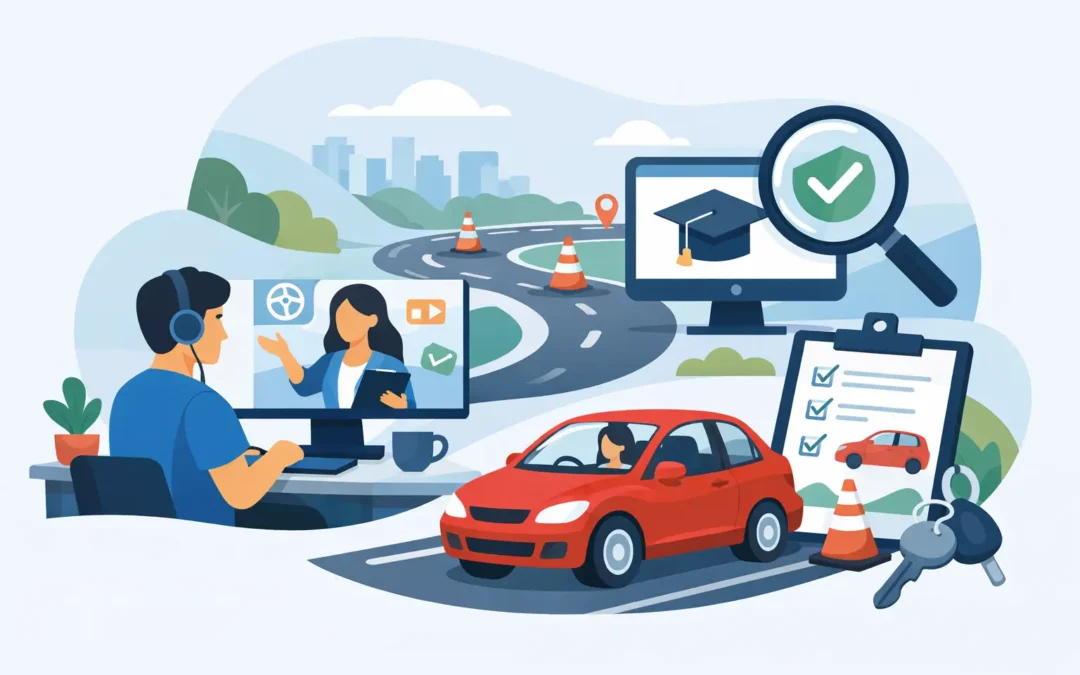
A flashy website can make any course look legitimate. That is exactly why families searching for the best online drivers ed programs should slow down and look past the marketing. For teens working toward a California learner’s permit, the right course is not just about finishing fast. It needs to be state-approved, easy to follow, built for teen learners, and backed by a school that can help with the next steps after the online portion is done.
For most families, the real question is not simply which course is cheapest. It is which program makes the licensing process easier, clearer, and safer from start to finish. That difference matters a lot when a parent is trying to balance work, school schedules, and DMV deadlines, and a teen is trying to get on the road without confusion.
What the best online drivers ed programs actually do
At the basic level, an online driver education program helps a teen complete the classroom requirement needed to apply for a California learner’s permit. But the better programs do more than check a box. They present the material in a way that teens can actually absorb, retain, and use when they begin driving.
That means the course should explain California rules of the road in plain language, pace information in manageable sections, and include quizzes that reinforce learning instead of just slowing students down. A good program should also make progress easy to track so students can stop and restart without losing their place.
Parents often focus on approval status first, and they should. If a course is not California-approved, it does not matter how polished the platform looks. But once that requirement is covered, usability becomes the next major factor. A course that is hard to navigate or overloaded with clutter creates frustration, and frustrated students tend to rush, skim, and miss important safety concepts.
Best online drivers ed programs for California teens
If you are comparing options for a California teen, the strongest programs usually share the same core traits. They are licensed or approved for the state requirement, they work well on common devices, and they are designed for first-time drivers rather than adult traffic school audiences.
Just as important, they fit into a bigger training plan. Online driver education is only one part of getting licensed. After the permit comes behind-the-wheel instruction, supervised practice, and eventually the DMV road test. Choosing a school that can support those stages can save families time and reduce stress later.
That is where trade-offs come in. A low-cost standalone course may look appealing, especially if a teen only needs the permit certificate. But if the provider offers little support beyond the online class, families may end up starting over with a separate school for driving lessons and test prep. In many cases, it is more efficient to choose a provider that specializes in teen training and offers a clear path from permit to license.
What to look for before you enroll
California approval comes first
This is non-negotiable. Before enrolling, confirm the course meets California’s driver education requirement for teens. If a provider is vague about approval, that is a problem. Reputable schools make this clear because it is one of the most important decision points for families.
The course should be built for teens
Not every online driving course is designed with teen students in mind. Some feel like compliance material written for adults. Others are packed with distractions that make the material feel less serious than it should.
The best format usually lands in the middle. It should be simple, clear, and engaging enough to hold attention without turning the course into entertainment. Teens need explanations they can understand, but they also need structure. A course that respects both tends to produce better results.
Convenience should be real, not just advertised
Families often choose online driver education because they want flexibility. That only works if the platform is actually convenient. Look for easy login access, mobile-friendly design, saved progress, and a straightforward certificate process once the course is complete.
Convenience also extends beyond the screen. If a teen will need in-car lessons soon after earning a permit, it helps when the same school can schedule those lessons without a lot of back-and-forth. That is especially valuable for busy parents who do not want to coordinate multiple providers.
Support matters more than families expect
Many parents do not think about customer support until they need it. Then it becomes urgent. Maybe the teen cannot access a certificate, maybe there is confusion about the permit process, or maybe a parent wants to know what comes after driver education.
A school that is responsive and experienced can make those moments much easier. This is one reason local, established providers often stand out. They are used to helping families through the full process, not just processing a one-time online payment.
Cheap programs vs. complete programs
Price matters, but context matters more. A very cheap course may still be a good fit if the only goal is meeting the minimum classroom requirement and the family already has a separate plan for behind-the-wheel training. For some households, that works.
But many families are not just buying a course. They are buying a smoother path. They want the permit requirement handled correctly, they want access to professional driving lessons, and they want less uncertainty about what comes next. In that case, a complete teen-focused program usually delivers better value even if the upfront cost is higher.
That is especially true when convenience services are available. For example, some schools can help with road test preparation, DMV transportation, or use of a training vehicle for the drive test. Those details can remove a surprising amount of stress near the end of the licensing process.
Why local experience still matters in an online course
Online education can be taken from anywhere, but local experience still counts. A school that regularly works with California teens understands the permit rules, the common pain points, and the sequence families need to follow. That can lead to fewer mistakes and faster progress.
For families in North Orange County and nearby communities, this can be even more practical. If the same provider offers online education, behind-the-wheel lessons, and road test support in the local area, it creates continuity. Teens learn with one system, one school, and one set of expectations instead of piecing everything together from different places.
That does not mean every national provider is a poor choice. Some are perfectly adequate for the online classroom requirement. But if personalized support, local scheduling, and teen-specific instruction are priorities, a community-rooted school often makes more sense.
Signs a program may not be the right fit
A few warning signs should make families pause. One is unclear approval information. Another is a course that seems designed to sell on gimmicks rather than instruction. If the website spends more time hyping speed than explaining compliance, curriculum, or support, be cautious.
Also watch for vague pricing. Families should be able to understand what they are paying for. If the online course is separate from every other service, that is fine, but it should be stated clearly. Hidden fees or confusing package descriptions can create frustration later.
Finally, pay attention to whether the provider seems focused on teen drivers or just offers teen driver education as one small add-on. Teaching a first-time teen driver is different from serving adults who need traffic school or license reinstatement help. The better schools understand that difference and build their services around it.
A practical way to compare your options
When comparing the best online drivers ed programs, keep the decision simple. First, confirm California approval. Next, check whether the course is clearly designed for teens. Then look at ease of use, support, and whether the school can help with behind-the-wheel training after the permit is earned.
After that, compare overall value rather than just sticker price. A program that saves time, reduces scheduling headaches, and gives families confidence is often the smarter buy. For many parents, that peace of mind is worth more than the smallest possible price tag.
Teen Driving Academy is one example of the kind of school families often prefer because it combines online driver education with structured behind-the-wheel training, DMV-licensed instruction, and practical support built around the California teen licensing process.
The best choice usually comes down to this: pick a program that helps your teen do more than finish a requirement. Pick one that helps them start driving with the right foundation, clear next steps, and support you can trust when the process gets busy.