
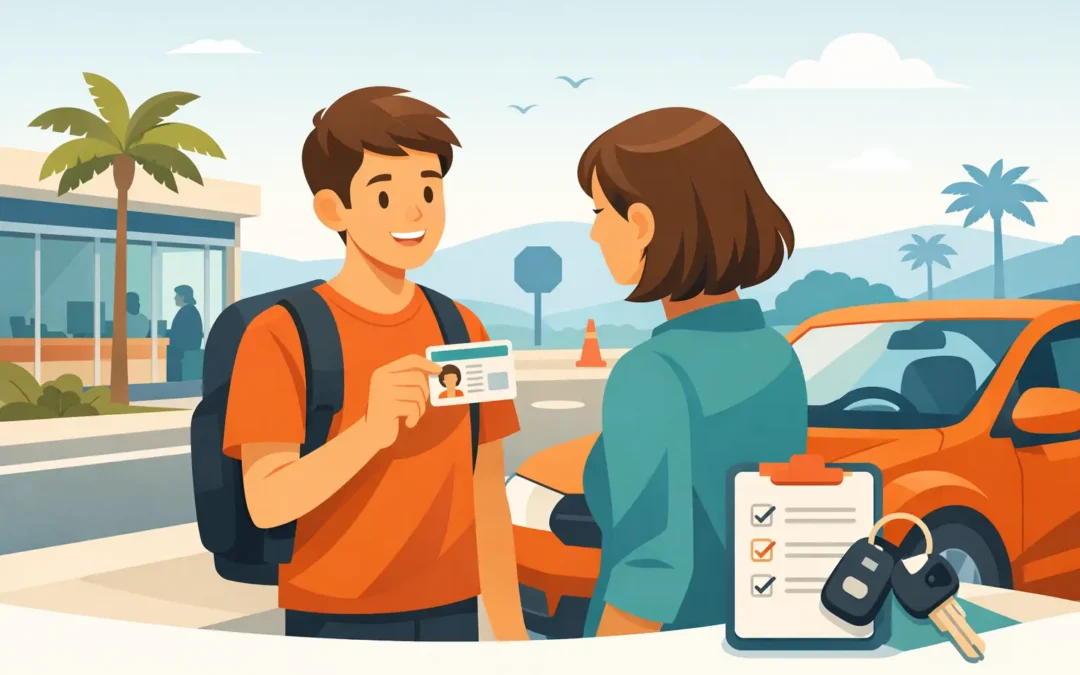
A learner’s permit is exciting for a teen and often a scheduling challenge for a parent. The California process has several steps, and doing them out of order can mean a wasted DMV appointment or a delay in starting driving lessons. This Orange County permit help guide explains what families need to complete before the permit test, what happens after a teen passes, and how to keep the process moving safely.
Orange County Permit Help Starts Before the DMV
For most California teens, the first major requirement is driver education. A teen must generally be at least 15 1/2 years old to apply for a provisional instruction permit, and they must complete an approved driver education course before taking the knowledge test. Online driver education can be a practical choice for busy families because students can work through the required material at their own pace instead of coordinating a classroom schedule.
Do not wait until the week of the DMV appointment to finish the course. The final certificate is part of the permit process, and rushing through lessons can leave a student less prepared for the knowledge test. A good course should cover California traffic laws, signs, right-of-way rules, distracted driving, alcohol and drug awareness, and the responsibilities of sharing the road.
Once driver education is complete, the student should review the current California Driver’s Handbook. The DMV knowledge test is not simply a test of common sense. Questions can cover speed limits, school zones, freeway entry, parking restrictions, bicycles, pedestrians, and what to do at intersections without clear signals. Practice tests are useful, but the handbook should remain the main study resource because rules and testing procedures can change.
Prepare the paperwork before the appointment
Parents should review the DMV’s current permit requirements before booking an appointment, since documentation rules can change. In general, families should be ready to provide the teen’s proof of identity, proof of California residency when required, a completed application, and a driver education completion certificate. A parent or legal guardian must sign for an applicant under 18.
The teen will also need to pass a vision screening and the knowledge test, pay the applicable application fee, and have a photo taken. Bringing original, acceptable documents matters. A photocopy or an outdated document may not be accepted, and an appointment can end quickly if an item is missing.
A simple family checklist can prevent last-minute problems: confirm the appointment, place all documents in one folder, verify that the online course certificate is available, and make sure the teen has reviewed the handbook. This preparation is especially helpful for working parents who cannot easily make a second trip to the DMV.
What a Permit Allows and What It Does Not
Passing the knowledge test is a milestone, but it is the beginning of supervised driving, not independent driving. A California teen with a provisional instruction permit may drive only with a licensed California driver who is at least 25 years old seated close enough to take control if needed. That supervising driver must be prepared to actively coach, not just ride along.
Teens should also understand that a permit does not remove the need for formal behind-the-wheel instruction. California requires minors to complete at least six hours of professional behind-the-wheel training with a DMV-licensed driving instructor. Those lessons are separate from the 50 hours of practice a teen must complete with a parent, guardian, or other qualified adult before taking the driving test. Ten of those 50 practice hours must be completed at night.
The two types of training serve different purposes. Professional lessons teach correct techniques, including mirror use, lane changes, turns, parking, and defensive driving habits. Family practice builds repetition and confidence in real driving conditions. One cannot fully replace the other.
Build a Realistic Practice Plan After the Permit
A permit holder needs time behind the wheel, not a few long drives just before the road test. Starting with short, regular practice sessions usually works better. A teen may begin in a quiet parking lot or low-traffic neighborhood, then progress to residential streets, busier intersections, multilane roads, freeway driving, and night driving as skills improve.
Parents can make each drive more productive by choosing one or two goals. One session may focus on smooth stops and turns. Another can cover scanning intersections, keeping a safe following distance, or changing lanes. Giving too many corrections at once can overwhelm a new driver, while specific feedback helps them know what to improve next time.
Orange County driving conditions also vary widely. A teen who has only practiced on calm neighborhood streets may feel unprepared for dense traffic near shopping areas, complex freeway ramps, or fast-moving multi-lane roads. Practice should gradually include the conditions the student is likely to face after earning a license. That does not mean forcing a nervous teen into the hardest route first. The right pace depends on the student’s comfort level and progress.
Use professional lessons to correct habits early
Parents are valuable practice partners, but they may not know current DMV evaluation standards or may have habits that are difficult to explain. A DMV-licensed instructor can give objective feedback and teach the routines examiners expect to see, such as complete stops, proper lane positioning, observation at intersections, and safe backing.
For families in North Orange County and nearby communities, Teen Driving Academy provides teen-focused online driver education and behind-the-wheel lessons with DMV-licensed, pre-screened instructors. Lessons can help a new permit holder move from basic vehicle control to real traffic situations with a structured plan.
Professional instruction is particularly helpful when a teen is anxious, has not driven for several weeks, or keeps making the same mistake during family practice. It can also reduce tension at home. The goal is not to replace parent practice, but to give both the teen and parent a clearer foundation for it.
Know the Timeline for a Provisional License
A teen cannot receive a provisional driver’s license immediately after getting a permit. California generally requires the permit to be held for at least six months before the driving test, along with completion of the six hours of professional instruction and the required 50 hours of supervised practice. Teens must also be at least 16 years old to take the driving test.
This is why an early start is useful. A student who completes driver education, passes the permit test, and begins lessons promptly has more time to practice without cramming everything into the final month. Families should keep a careful practice log from the start. Waiting to recreate hours from memory can cause confusion and may reveal that night-driving requirements were missed.
The road test appointment should be booked only when the student is consistently ready. A teen should be able to drive safely with minimal prompting, not just complete a familiar route. They should be comfortable with turns, stops, lane changes, parking, backing, traffic checks, speed control, and responding calmly to changing traffic conditions.
Avoid Common Permit Delays
Most delays come from preventable issues rather than a teen’s ability to learn. Incomplete paperwork, an unfinished driver education course, a missed appointment, or waiting too long to schedule lessons can all push the timeline back. A student may also pass a knowledge test but lose momentum by not practicing consistently afterward.
Another common issue is treating the permit as a license. A teen must follow permit supervision rules every time they drive. Safe practice means choosing an alert supervising adult, limiting distractions, putting phones away, and stopping the session if weather, fatigue, or frustration makes the drive unsafe.
Families should also avoid scheduling the road test before the teen has practiced in a variety of settings. A rushed test attempt can add stress, require another appointment, and delay the license. It is better to use a final lesson or road test preparation session to identify any remaining weaknesses first.
Getting a permit is a process, but it does not have to feel confusing. Start driver education early, organize the DMV documents, schedule professional lessons soon after the permit is issued, and make steady supervised practice part of the weekly routine. Those small steps give teens the experience they need and give parents greater confidence every time the car leaves the driveway.